What Have Your Food Habits Been Trying to Tell You?
Nov 01, 2026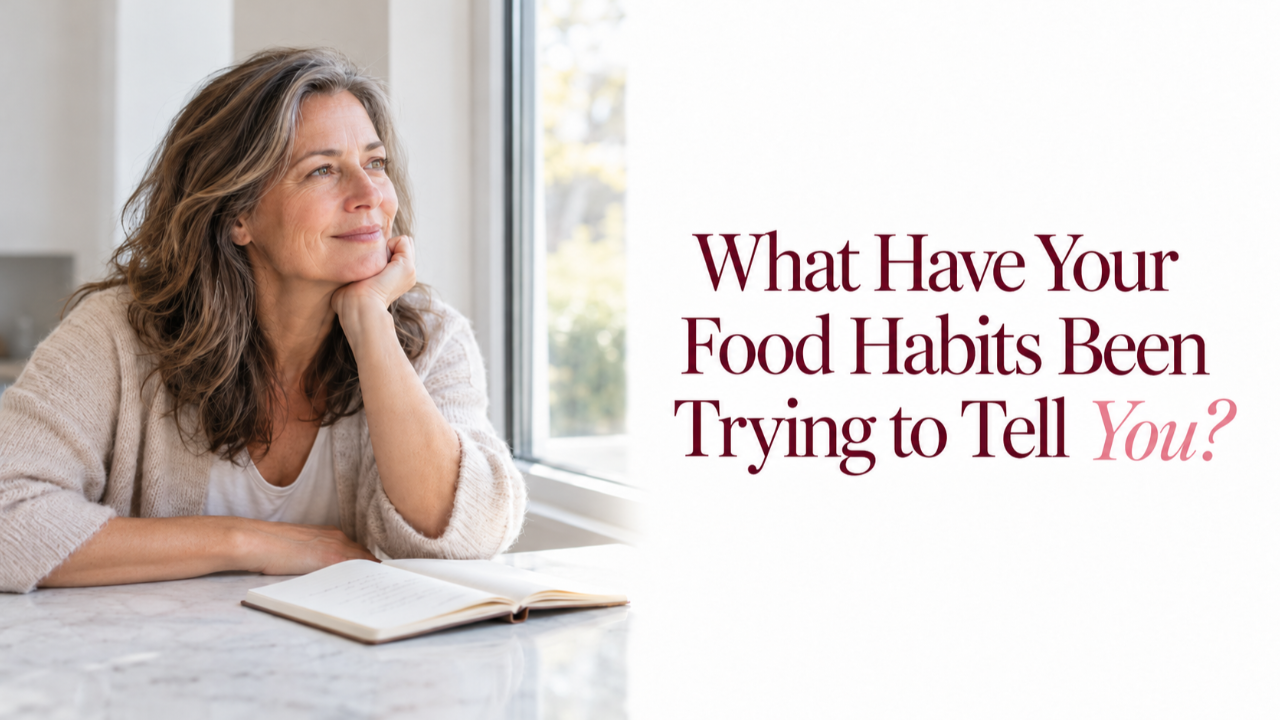
Understanding your food habits is one thing. Learning how to use that knowledge to feel healthier, more confident and more comfortable in your own body is where the real change begins.
It's Sunday evening, and perhaps you've had the sort of week that seems to disappear almost as quickly as it begins. There have been meals prepared in a hurry, cups of tea between responsibilities, a lunch that didn't quite happen and possibly something lovely enjoyed with friends. Some days you ate well and felt satisfied, while on others you barely gave food a second thought until you realised you were hungry.
And somewhere along the way, you may have found yourself wondering why certain eating habits seem so difficult to change.
Perhaps you reach for something sweet when you're exhausted, finish food that you don't particularly want or spend more time worrying about what you've eaten than actually enjoying it. You may have tried different diets, promised yourself that Monday would be a fresh start or decided that the answer must be greater discipline. Yet despite your best intentions, familiar patterns have a way of returning.
What if those patterns aren't simply habits you need to break?
What if they're providing useful information about your needs, your routines and the way you're living your life?
Throughout this week, we've explored emotional eating, automatic habits, missed meals, the influence of our surroundings, restrictive food rules and the guilt that can follow enjoyable food. Each subject has offered a slightly different perspective, but they share something important. Our eating behaviours are influenced by far more than whether we know which foods are nutritious.
And perhaps one of the most valuable things we can do in midlife is stop approaching our relationship with food as something that constantly needs correcting.
Instead, we can begin using what we notice to make changes that genuinely support our lives.
Your eating habits tell a story about your everyday life
Think about the woman who regularly skips lunch because her working day is too demanding. She may know perfectly well that a balanced meal would help her feel nourished, yet she continues to prioritise meetings, messages and other people's needs. By the afternoon, she's tired and hungry, but she interprets her desire for food as evidence that she lacks discipline.
Now think about another woman who has spent thirty years trying different diets. She knows the calorie content of almost everything she eats, but she struggles to enjoy an ordinary restaurant meal without wondering what she should do to compensate afterwards. Her problem is unlikely to be a lack of nutritional knowledge.
Then there's the woman who has spent years looking after everybody else. The children may be grown, her career may be changing and menopause may have introduced unfamiliar challenges. She finds herself reaching for familiar foods during the few quiet moments when nobody needs anything from her.
These women have different circumstances, but each may benefit from understanding the wider context of her eating habits.
One might need more reliable opportunities to eat. Another could benefit from challenging unnecessarily restrictive beliefs. The third may need more enjoyment, connection or personal space during the day.
The food itself is only part of the picture.
When we begin recognising that connection, we can make changes that are more personal, practical and sustainable.
Perhaps you don't need another diet. Perhaps you need a different question.
For many women, the first response to feeling dissatisfied with their eating habits is to ask what they should stop doing.
Should I stop eating bread? Should I avoid snacking after dinner? Should I cut out sugar, reduce my portions or follow a stricter eating schedule?
These questions may come from a genuine desire to improve health. However, they can also keep our attention fixed on removing foods rather than understanding the circumstances influencing our choices.
What happens if we ask different questions?
Instead of asking why you can't stop eating in the evening, you might consider whether you're eating enough throughout the day. Rather than feeling frustrated that you snack while working, you could examine whether your work environment provides opportunities for proper meals and breaks.
If you regularly feel guilty after enjoying dessert, perhaps the most useful question isn't how to avoid dessert next time. It may be why enjoying something pleasurable has become associated with doing something wrong.
These questions don't remove the importance of nutrition, portion sizes or health considerations.
They simply give you a more complete picture.
And a more complete picture makes it easier to identify changes that address your actual needs, rather than repeatedly treating the consequences.
What have we learned about food and midlife this week?
One of the clearest lessons is that our eating habits rarely exist in isolation.
On Monday, we explored how food can become a familiar source of comfort when the day finally becomes quiet. Sometimes the desire to eat is about physical hunger, but at other times it may be connected to tiredness, stress or the need for a little personal enjoyment.
Tuesday introduced a different idea. Some eating behaviours become automatic because we've repeated them in familiar situations for years. Making tea, checking emails or clearing dinner plates can become connected with eating, even when we haven't consciously decided what we want.
By Wednesday, we turned our attention to nourishment. Skipping meals to save calories may seem sensible, but it can leave some women feeling hungry, tired or less satisfied later in the day. Eating adequately deserves consideration, particularly when we want to support our health through menopause and beyond.
Thursday reminded us that our surroundings matter. A kitchen only a few steps from our desk, a lunch break that never happens or a home filled with competing responsibilities can influence how easily we look after ourselves.
On Friday, we explored what happens when sensible food choices become rigid rules. Sometimes moving biscuits to the highest cupboard shelf doesn't solve the underlying difficulty, particularly when ordinary foods have become surrounded by guilt or fear.
And yesterday, we considered how easily we can spoil an enjoyable meal by spending the following hours criticising ourselves.
These aren't six separate problems that every woman needs to fix.
They're six opportunities to become more aware of the influences surrounding our eating habits.
You may recognise yourself in several of them, or perhaps only one. That is enough.
The goal isn't to discover everything you could improve. It's to identify what would make the most meaningful difference to you.
What does science tell us about making lasting changes?
Changing an established behaviour is rarely as simple as deciding to try harder. Our routines develop within the circumstances of everyday life, and those circumstances can either support or complicate the changes we want to make.
Research into behaviour change has repeatedly examined techniques such as goal setting, self-monitoring, feedback and planning. These approaches can help people recognise patterns, develop achievable intentions and review whether changes are working.
A 2024 rapid review of systematic reviews, published in Obesity Reviews, examined evidence about the components of behavioural weight-management programmes. It included 22 reviews and found that self-monitoring and goal setting were commonly studied, although their effects varied. Combining these methods with other self-regulation strategies appeared more useful than relying on individual techniques alone.
It's important to recognise that this research focused on weight-management interventions rather than women navigating menopause specifically. Nor does it mean that every woman needs to monitor her food intake or weight. For some people, detailed tracking can be useful, while for others it may be unnecessarily stressful or inappropriate.
The lesson I would take from this research is that meaningful change benefits from having a clear intention, choosing a realistic action and reviewing what happens.
You don't need to change six habits simultaneously.
You need a manageable starting point that fits your circumstances.
Start with what is already working
Before identifying anything you want to change, think about the things you already do that support your wellbeing.
Perhaps you enjoy a nourishing breakfast most mornings. You might prepare vegetables regularly, take pleasure in cooking or have developed a habit of making time for a proper evening meal.
Maybe you enjoy walking, practise yoga, attend a fitness class or have begun including strength training in your week. Perhaps you have become more confident about asking for the foods you want when eating out, or have stopped describing yourself as naughty whenever you enjoy chocolate.
These achievements deserve recognition.
We can become so preoccupied with what needs improving that we overlook the habits we've already developed.
Think about what helps those positive behaviours happen. Perhaps you prepare breakfast ingredients the night before, arrange to walk with a friend or keep a few reliable meals in your weekly routine.
The same principles may help you introduce another supportive change.
There is no need to disregard everything you've learned simply because some parts of your routine remain challenging.
You are not starting from nothing. You are building on the experience, knowledge and strengths you already have.
Create your own food-confidence plan
Rather than beginning November with an ambitious list of dietary rules, I would encourage you to create something far simpler.
A small personal plan built around what you've discovered about yourself.
This is not a meal plan, a weight-loss challenge or a collection of foods you must avoid. It's a way of taking one or two useful observations and turning them into realistic action.
First, recognise the pattern that matters most to you
Think back over the past week and consider which article made you stop and recognise something familiar.
Perhaps it was the discussion about skipping lunch, because you regularly find yourself arriving at four o'clock having eaten very little. Maybe it was the article about automatic habits, because you realised how frequently you eat while doing something else.
You might have recognised the guilt that follows an enjoyable meal or the way your working environment influences your routine.
Choose one area that feels relevant to your life at the moment.
You don't have to select the behaviour that seems most serious or the one somebody else thinks you should address.
Choose something that matters to you and feels manageable.
Next, consider what would genuinely help
This is where we move beyond simply identifying what happens.
Imagine you've noticed that you regularly miss lunch. You could tell yourself to be more organised, but that may not be particularly useful if your working day is already full.
A better question might be: what would make eating lunch easier?
Perhaps you could prepare an extra portion of dinner the evening before. Maybe a twenty-minute appointment in your diary would help, or keeping suitable ingredients available would remove the need to decide what to eat when you're busy.
Now consider another example.
You may have noticed that you often feel guilty after eating out. The change you need might not involve food preparation at all. Perhaps it would help to stop mentally categorising your meals as successful or unsuccessful, and practise returning to your usual routine without compensating.
The most useful action depends on what you've learned about yourself.
This is why individual reflection matters.
Then choose one action small enough to repeat
Ambitious plans can be exciting, particularly when we're feeling motivated to make a fresh start.
We decide to overhaul our eating habits, exercise every day, prepare all our meals in advance and finally become the organised, healthy person we've been imagining.
Then real life intervenes.
A meeting runs late, somebody needs help, we've slept badly or the week becomes unexpectedly demanding. Suddenly, the beautiful plan no longer fits our circumstances.
Instead, choose an action that can survive an ordinary week.
You might decide to prepare lunch before your busiest working day, sit away from your laptop for one meal or replace self-critical thoughts after eating out with a more balanced response.
You don't need to make the change perfectly every day.
You need an action that is realistic enough to return to.
Finally, decide what success would actually look like
This is an important part of the process.
If your goal is to make time for lunch, success might mean having a satisfying midday meal on three working days rather than constantly reaching late afternoon hungry.
If you're trying to become more comfortable around favourite foods, success may mean enjoying dessert without spending the following morning planning how to compensate.
Perhaps you're working on making your home environment more supportive. Success might be preparing a convenient lunch, making time for a genuine break or feeling more comfortable eating away from your desk.
Notice that none of these examples requires the scales to move.
Weight can be a relevant health measure in some circumstances, but it isn't the only way to assess progress.
Greater confidence, more satisfying meals, improved routines and less anxiety around food can also be meaningful outcomes.
A practical seven-day plan for November
Now that you've chosen something to work on, consider giving yourself seven days to explore it.
Not seven days of perfection. Seven days of paying attention to one manageable change.
For example, imagine your focus is making lunch more reliable.
On Sunday, you identify two or three lunches you genuinely enjoy and can prepare without much effort. You check whether you have the ingredients available and make a little space in your diary where possible.
On Monday, you prepare lunch before your busiest period begins. You notice whether having food ready makes the afternoon feel easier.
Tuesday may become unexpectedly demanding, and you don't manage to take the break you'd planned. Rather than treating the day as a failure, you consider what prevented you from eating and whether another arrangement might be more realistic.
On Wednesday, you try again with a simpler option. Perhaps leftovers work better than preparing something from scratch.
By Friday, you may have discovered that your biggest challenge isn't knowing what to eat. It's allowing yourself to stop working long enough to enjoy it.
That is useful information.
At the end of the week, you can decide whether to continue, adjust or replace your original plan.
The same approach can work for many other habits. You might experiment with eating one snack away from screens, planning a more satisfying breakfast or enjoying a restaurant meal without compensatory restrictions afterwards.
The purpose is to learn what works for you.
And importantly, if a particular form of observation makes you preoccupied or anxious about food, you can stop. Reflection should support your wellbeing, not become another source of pressure.
What if November doesn't go according to plan?
It probably won't go perfectly.
There will be busy days, unexpected appointments, family responsibilities and evenings when you're simply too tired to think about the habits you've been trying to develop.
There may also be days when you return to familiar patterns without even noticing.
This is part of ordinary life.
The temptation is often to interpret these moments as evidence that we haven't tried hard enough. We abandon the plan, wait until Monday and promise ourselves that next time will be different.
But what if we approached an interrupted routine with curiosity instead?
Perhaps you missed lunch because your work schedule was unrealistic. Maybe you didn't prepare the meal you'd planned because you were exhausted after a difficult night. Perhaps a food choice you regretted was influenced by hunger, distraction or simply a situation you hadn't anticipated.
The useful response is to consider what could make the next occasion easier.
Sometimes that means adjusting the plan. Sometimes it means asking for support, allowing more flexibility or accepting that a difficult day doesn't need to become a difficult week.
A routine that only works when everything else is going well may not be the best routine for your life.
Why being kinder to yourself matters
There is growing research interest in the relationship between self-compassion and eating behaviour.
A 2024 meta-analysis published in the International Journal of Eating Disorders examined associations between disordered eating, self-criticism and self-compassion. The researchers found meaningful relationships between these psychological factors, supporting further investigation of how kinder, less critical responses may contribute to eating-related wellbeing.
This research doesn't mean that self-compassion alone will change your eating habits, nor does it suggest that ordinary food preferences should be treated as disordered eating.
It does, however, reinforce the importance of considering how we respond to ourselves when eating doesn't go according to plan.
Think about the difference between two responses.
One woman misses lunch and later eats more than she intended. She tells herself she has no discipline, feels disappointed and decides she'll need to be stricter tomorrow.
Another woman experiences the same situation but recognises that she hadn't eaten enough during a demanding day. She decides to prepare something convenient for lunch the following morning and carries on without criticising herself.
Neither response changes what happened earlier.
But one creates another cycle of judgement, while the other identifies a practical opportunity for improvement.
Being kind to yourself doesn't mean abandoning responsibility.
It means approaching change in a way that allows you to learn rather than repeatedly making yourself feel inadequate.
You are allowed to have different needs at different stages of life
Something else deserves recognition as we bring this series to a close.
The woman you are today may have very different needs from the woman you were twenty years ago.
Perhaps you once worked long hours and could rely on a predictable routine, but now you are caring for an ageing parent. Maybe your children have left home and you're learning how to cook for yourself again after years of preparing family meals.
You may be adjusting to retirement, rebuilding your confidence after a relationship change or balancing a demanding career with menopausal symptoms.
Your body may also be asking for different things.
You might need to pay greater attention to strength training, muscle health, bone-supporting nutrients, sleep or your cardiovascular wellbeing. Some women will have specific medical or nutritional requirements that deserve personalised guidance.
You don't have to follow the eating habits you developed in your thirties simply because they once worked.
Nor do you need to adopt every new dietary trend aimed at menopausal women.
Your circumstances, health and preferences provide a much better starting point.
If you're also trying to create more personal space in a demanding life, our earlier article How to Make Space for Yourself When Life Already Feels Full explores practical ways of reclaiming time for your own wellbeing.
Sometimes the change we need isn't another food rule.
It's permission to organise our lives in a way that gives our own needs a little more consideration.
Think about what you want your relationship with food to feel like
Imagine yourself six months from now.
Not necessarily lighter, wearing a smaller dress size or following a perfect eating plan.
Instead, imagine feeling more comfortable around everyday food choices.
You recognise when you're hungry and make time to eat. You enjoy nourishing meals that leave you satisfied, and you're able to adapt when life doesn't follow your usual schedule.
You can have lunch with friends without mentally reviewing every mouthful afterwards. You understand which routines support your wellbeing and feel comfortable making small adjustments when they don't.
Perhaps you still enjoy biscuits with your afternoon tea, cake at a celebration or a favourite takeaway on Friday evening.
Those foods no longer need to become the centre of a conversation about whether you've been good or bad.
You have more confidence in your ability to make balanced decisions and less need to constantly start again.
What would that freedom mean for you?
Perhaps you'd spend less time worrying about food and more time enjoying the people around you. Maybe you'd have more mental energy for hobbies, movement, friendships or the personal goals you've been putting aside.
This is where food confidence becomes about something much bigger than eating.
It's about creating more space in your life for the things that matter.
Before you begin another week, make yourself one promise
Not a promise to eliminate sugar, avoid every biscuit or follow a strict meal plan.
Make yourself a promise that is more useful.
Perhaps you'll begin taking your lunch break seriously. Maybe you'll prepare a satisfying meal before your busiest day, or stop describing yourself as naughty whenever you enjoy dessert.
You might decide to question one food rule that no longer feels helpful, or make time to enjoy a meal without simultaneously working.
Choose something that comes from understanding your own needs.
And if the week doesn't unfold as planned, allow yourself the flexibility to begin again without declaring the previous day a failure.
You have enough responsibilities, expectations and demands to manage.
Your relationship with food doesn't need to become another measure of whether you've lived up to them.
The most important lesson from this week
Over the past seven days, we've examined some of the small behaviours that can quietly influence how we eat.
We've considered the emotional needs that sometimes accompany eating, the familiar habits that develop over time and the importance of providing our bodies with adequate nourishment. We've looked at our surroundings, questioned rigid food rules and explored the freedom of enjoying food without unnecessary guilt.
But beneath all these discussions lies one message that I hope you'll carry forward.
You do not have to approach your eating habits as evidence of everything you're getting wrong.
They can also be a source of information about what you need, what you enjoy and which parts of your life deserve a little more attention.
Perhaps your afternoon hunger tells you that lunch needs to become a priority. Maybe your rushed meals suggest that you need a proper break from work. Perhaps your guilt after eating out reflects years of food rules that no longer serve you.
Not every habit carries a deeper meaning, and not every eating decision needs examining.
Sometimes a biscuit is simply a biscuit.
But when a pattern repeatedly leaves you feeling uncomfortable, dissatisfied or frustrated, you have an opportunity to respond with understanding rather than criticism.
You can look after your health without turning food into a constant battle. You can make nutritious choices while allowing room for enjoyment, and you can develop new habits without expecting yourself to be perfect.
Most importantly, you can begin from wherever you are today.
Not from the woman you were at thirty. Not from the woman you think you should be. And certainly not from a collection of rules somebody else believes you ought to follow.
Begin with the woman you are now, the life you're actually living and the health you want to enjoy in the years ahead.
Because the greatest change may not be learning how to control your food habits more strictly. It may be learning how to understand yourself well enough that looking after your health feels less like a struggle and more like a natural part of your life.
And that is a wonderful place to begin November.
Your Next Step Towards Midlife Wellbeing
If this week's articles have encouraged you to think differently about your nutrition, habits and everyday wellbeing, I'd love to help you take the next step.
My Free 7-Day Midlife Hormone & Wellness Reset opens on 10 November 2026 and is designed to help women begin making practical, manageable changes to support their nutrition, movement, energy and overall wellbeing.
You don't need another complicated plan or a promise that everything will be different on Monday. You need a supportive starting point that fits your life and allows you to move forward with greater confidence.
Join the Free 7-Day Midlife Hormone & Wellness Reset interest list
Warm wishes,
Monica Rafiq
Founder, Fitness Inspiration for Women
Certified Menopause Coach | Nutrition & Weight Loss Specialist | Life Coach & NLP Practitioner
Research and further reading
Hawkins and colleagues (2024). Which components of behavioral weight management programs are essential for weight loss in people living with obesity? A rapid review of systematic reviews. Obesity Reviews. Read the research.
Paranjothy, S.M. and Wade, T.D. (2024). A meta-analysis of disordered eating and its association with self-criticism and self-compassion. International Journal of Eating Disorders, 57(3), 473–536. Read the research.
Krukowski, R.A., Denton, A.H. and König, L.M. (2024). Impact of feedback generation and presentation on self-monitoring behaviors, dietary intake, physical activity, and weight: A systematic review and meta-analysis. International Journal of Behavioral Nutrition and Physical Activity, 21, article 3. Read the research.
This article provides general educational and wellbeing guidance. It does not replace individual medical, psychological or nutritional advice. If food-related thoughts, restrictive eating or feelings of loss of control cause significant distress, seek support from your GP or an appropriately qualified eating disorder specialist.
Stay connected with news and updates.
Join our mailing list to receive the latest news and updates from our team.
Don't worry, your information will not be shared.
We hate SPAM. We will never sell your information, for any reason.