Are You Stretching a Muscle That Actually Needs Strengthening?
Sep 15, 2026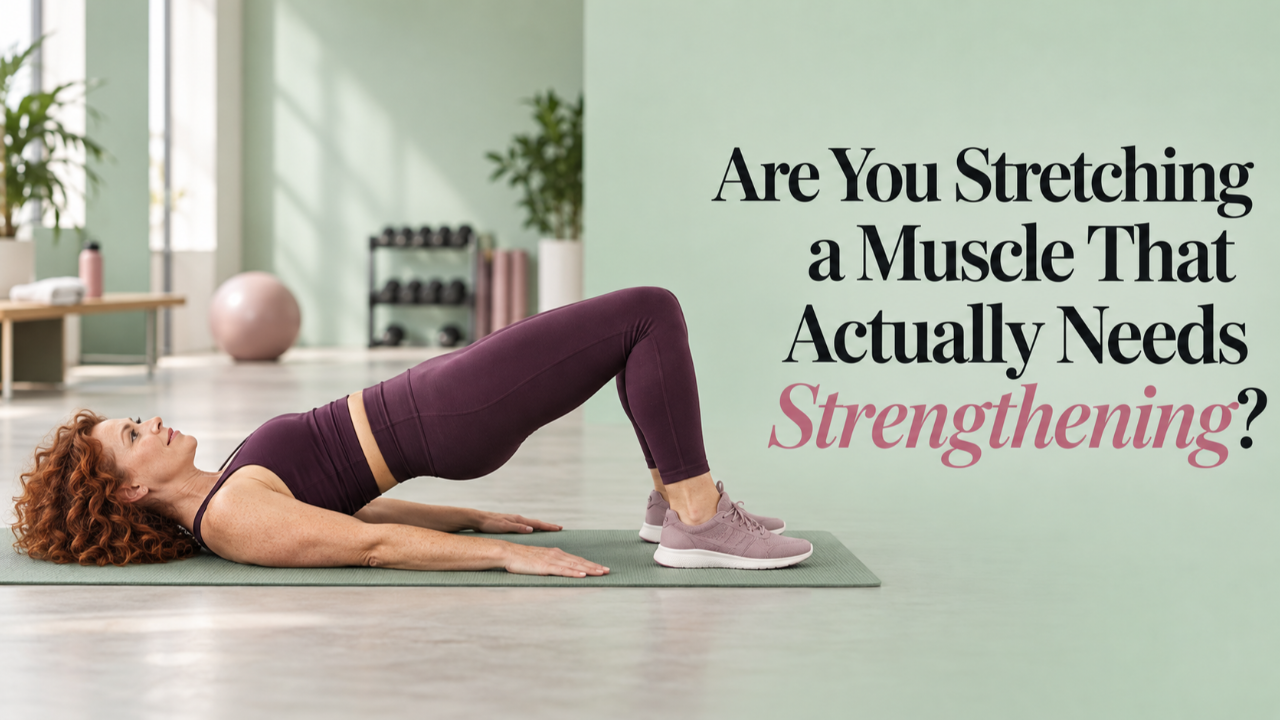
You feel a familiar pull across the back of your legs, so you stretch your hamstrings. Your hips feel tight after a day at your desk, so you sink into a deeper lunge. Your shoulders feel tense, so you pull one arm across your chest. Because stretching provides some relief, you repeat the same response whenever the tightness returns.
For a few minutes, it may work. You feel looser, lighter and able to move more freely. Then the familiar sensation begins to return, sometimes before the end of the day. You stretch again, but the relief never seems to last.
If that sounds familiar, it may be time to ask a different question. Does this muscle genuinely need more flexibility? Could it be tired, underused or struggling to control the movement you are asking it to perform? Perhaps what feels tight actually needs to become stronger.
Feeling tight does not always mean a muscle is too short
When something feels tight, it is natural to assume that the muscle has physically shortened. Sometimes a genuine restriction in range of movement is part of the problem. Regular stretching can improve flexibility and may feel particularly welcome after hours of sitting. However, the sensation of tightness is more complicated than muscle length alone.
A muscle can feel tight because it is tired, weak, overloaded or working hard to provide stability for a joint. The nervous system may also create a guarded feeling when it is uncertain about a movement. This can be particularly noticeable after pain, injury or a period of reduced activity. The feeling is real, but stretching is not the only possible response.
The area may need more regular movement, greater strength, improved control or better recovery. It may also be reacting to a repetitive position at work or during exercise. In some cases, persistent stiffness can indicate a joint or musculoskeletal condition that needs assessment. This is why the same stretch will not be the right answer for every woman.
Why stretching can feel good without solving the problem
Stretching can temporarily increase range of motion and change how a movement feels. It may reduce the sensation of tension and help you feel more comfortable after being still. These are worthwhile benefits, and there is no need to dismiss something that genuinely helps you. The problem begins when temporary relief is treated as proof that the underlying cause has been corrected.
Imagine that your upper back and shoulders ache after several hours at your laptop. Stretching your chest may feel wonderful because it moves you away from the position you have held all day. However, the muscles around your shoulder blades may also lack the endurance needed to support you through a long working day. Stretching the front of your body will not automatically strengthen the muscles that are tiring at the back.
The same pattern can occur around your hips. A hip-flexor stretch may provide relief after sitting, but your hips still need strength for walking, climbing stairs and standing. If your gluteal and leg muscles tire easily, the area may continue to feel guarded. You may have changed the sensation briefly without increasing the area’s capacity.
Strength and flexibility are not opposites
Many women have been taught to think of stretching and strengthening as separate goals. Stretching is supposed to make you flexible, while weights are assumed to make you strong but stiff. The science presents a far more interesting picture. Strength and mobility can develop together when exercises are performed through an appropriate range.
A 2023 systematic review and meta-analysis examined 55 studies comparing resistance training with stretching or no intervention. Resistance training using external loads improved range of motion, and there was no significant difference between resistance training and stretching for increasing flexibility. The studies involved different populations and programmes, so the results should not be interpreted as proof that every strength exercise can replace every stretch. They do show that appropriate resistance training does not automatically reduce flexibility. Resistance Training and Range of Motion review
A later review of 36 studies also found that resistance training improved flexibility in healthy adults. However, the researchers found considerable variation between the studies, and none had a low overall risk of bias. The precise size of the benefit therefore remains uncertain. The balanced conclusion is that strengthening can support mobility, but the programme still needs to suit the individual. Resistance Training and Joint Flexibility review
A muscle can be both tight and weak
A muscle does not have to be either tight or weak. It can be both at the same time. If it is unaccustomed to producing force through a particular range, that position may feel vulnerable or uncomfortable. Your body may respond by limiting the movement or creating a protective sensation of tension.
Stretching may temporarily reduce that sensation. Strengthening can help the muscle learn to produce and control force within the range. Over time, the movement may begin to feel safer and more familiar. This is one reason building strength can sometimes create a more lasting change than repeatedly seeking a deeper stretch.
Consider a woman who avoids bending because her lower back feels stiff. She may stretch her back every morning but rarely practise a controlled hip hinge or strengthen her legs. Her body may not need to be pushed further into a passive stretch. It may need gradually increased confidence and capacity for the movement she is avoiding.
The most useful question is therefore not simply, “Which stretch will release this?” Ask what that part of your body needs to do during an ordinary day. Consider whether it can perform that task with strength and control. The answer may reveal why stretching alone has not been enough.
Signs that strengthening may deserve more attention
There is no reliable home test that can diagnose weakness as the cause of tightness. A physiotherapist or other qualified professional can assess persistent, painful or complex symptoms. However, certain patterns may suggest that strengthening deserves a place alongside stretching. The way your body responds during everyday tasks can provide useful clues.
Perhaps the area feels better immediately after stretching but tightens again as soon as you walk, climb stairs or return to your desk. You may notice that a muscle tires quickly, shakes during an exercise or struggles to control the lowering phase of a movement. You might also feel flexible in a passive position but less confident when you have to use that range actively. These experiences do not prove weakness, but they suggest that flexibility may not be the entire answer.
Everyday tasks can also reveal a lack of capacity. You may struggle to rise from a low chair without using your hands or feel uncertain when walking downstairs. Your shoulders may tire while carrying bags, or your body may feel unstable when you balance to put on a shoe. These are practical reasons to build strength rather than focusing only on how far you can stretch.
The hips that always feel tight
Tight hips are a common complaint among women who spend much of the working day sitting. Stretching the front of the hips can feel helpful after a long meeting or car journey. However, your hips also need strength to help you stand, walk, climb, lift and balance. Pairing mobility with strength can provide a more complete approach.
Begin with controlled sit-to-stands from a stable chair. Place your feet comfortably, lean forwards slightly from your hips and press through your feet to stand. Lower yourself slowly instead of dropping back into the chair. Use your hands for support if that helps you maintain control.
A glute bridge provides another accessible option. Lie on your back with your knees bent and your feet resting on the floor. Press gently through your feet, lift your hips to a comfortable height and lower slowly. Aim to feel controlled muscular effort rather than squeezing or lifting as high as possible.
The hamstrings you stretch every day
The backs of your legs may feel tight whenever you bend forward or attempt to touch your toes. A gentle hamstring stretch can improve that range and may feel pleasant. However, your hamstrings also help to extend your hips, bend your knees and control your body as you lean forwards. A supported hip hinge can begin developing this strength.
Stand with your feet around hip-width apart and place your hands lightly on your hips. Soften your knees, send your hips backwards and allow your upper body to tip forwards while keeping your spine comfortably long. Move only as far as you can control, then press through your feet and stand tall. You may feel your hamstrings lengthening as you lower and working as you return.
This is strength being developed through range rather than range being approached only through passive stretching. Once the movement feels confident, you can gradually add suitable resistance. A band, dumbbells or another manageable load can make the exercise more challenging. Technique and control should remain more important than the amount of weight used.
The shoulders that creep towards your ears
When your neck and shoulders feel tense, stretching can provide immediate relief. Yet your upper body also needs endurance to support your working position and daily activities. If you spend hours reaching towards a keyboard, the muscles controlling your shoulder blades may become tired. Regular movement and strengthening may therefore be as important as stretching.
Wall press-ups are a useful place to begin. Stand facing a wall with your hands slightly wider than your shoulders and around chest height. Step your feet back, keep your body in a comfortable straight line and bend your elbows as your chest moves towards the wall. Press away with control without allowing your shoulders to creep towards your ears.
A safely performed resistance-band row can also strengthen the upper back. Draw your elbows backwards while keeping your neck relaxed and your ribs comfortable. Imagine your shoulder blades moving gently towards one another rather than forcing them together. Pair these exercises with a comfortable chest stretch and regular breaks from your desk.
The calves and ankles that feel stiff on the stairs
Your calves may feel tight after walking, wearing different shoes or sitting for a long period. Limited ankle movement can also make squatting, walking uphill and climbing stairs more difficult. A supported calf stretch may improve the feeling of length through the back of the lower leg. Calf raises help the same muscles become stronger.
Stand behind a stable chair and hold it lightly for balance. Rise slowly onto the balls of your feet, pause briefly and lower your heels with control. Begin with both feet and use a range that feels comfortable. Avoid dropping your heels quickly during the lowering phase.
The controlled lowering part of the exercise helps your muscles manage force. This ability is important for walking, stairs and maintaining balance. As the exercise becomes easier, increase the repetitions gradually or progress with professional guidance. A deeper stretch is not the only sign that your calves and ankles are improving.
When stretching is still the right choice
Stretching remains useful when you want to improve range of motion or restore movement after being inactive. It can also help your body feel more comfortable after a long day. A 2023 analysis of 77 studies found that regular stretch training produced a moderate improvement in range of motion. Static stretching and proprioceptive neuromuscular facilitation appeared particularly helpful for longer-term flexibility. Stretch Training and Range of Motion review
The important point is that stretching and strengthening do not need to compete. You can stretch an area that feels restricted and then strengthen it through the range you can control. Dynamic movements can prepare you for exercise, while slower static stretches may suit a separate mobility session. Each method has a different purpose.
Stretching asks whether you can access a particular range. Strengthening asks whether you can control and use it. Mobility for everyday life requires both access and control. Greater range is not automatically helpful if your body feels unable to manage it.
Try the stretch, strengthen and reassess approach
The next time a muscle feels tight, begin with gentle movement rather than forcing an immediate deep stretch. Walk for a minute, circle the joint or move through a small, comfortable range. Notice whether warmth and movement begin to change the sensation. This first step may tell you whether the area simply disliked being still.
Use a gentle stretch if it continues to feel helpful. Avoid bouncing, and stop before the sensation becomes painful, sharp or pinching. Breathe normally and allow the stretch to develop gradually. More intensity does not necessarily produce a better result.
Next, add one simple strengthening movement for the same general area. Tight hips might be paired with sit-to-stands or bridges, while tight calves could be paired with calf raises. Tense shoulders might be paired with wall press-ups or rows. Choose a movement that feels steady and appropriate for your current ability.
Do not judge the result after one attempt. Notice the pattern over several weeks of consistent practice. Ask whether the area tires less quickly, moves with greater control or tightens less frequently. Improvements in ordinary tasks matter more than achieving an impressive stretch.
How much strengthening do you need?
The NHS recommends muscle-strengthening activities for all the major muscle groups on at least two days each week. Suitable activities can include weights, resistance bands, body-weight exercises, yoga, stair climbing and heavy gardening. The activity needs to make your muscles work harder than they are accustomed to working. Your starting point should still reflect your health, experience and confidence. NHS strength and flexibility guidance
Eight to twelve controlled repetitions can provide a practical starting range for many exercises. The final repetitions should feel challenging while your technique remains steady. You might begin with one or two sets and gradually progress towards more. Allow enough recovery before training the same muscles hard again.
Progress does not have to mean lifting dramatically heavier weights. You can add a repetition, slow the lowering phase or use a slightly greater range. You might al
Stay connected with news and updates.
Join our mailing list to receive the latest news and updates from our team.
Don't worry, your information will not be shared.
We hate SPAM. We will never sell your information, for any reason.