Are You Eating on Autopilot? The Habits You Barely Notice
Oct 27, 2026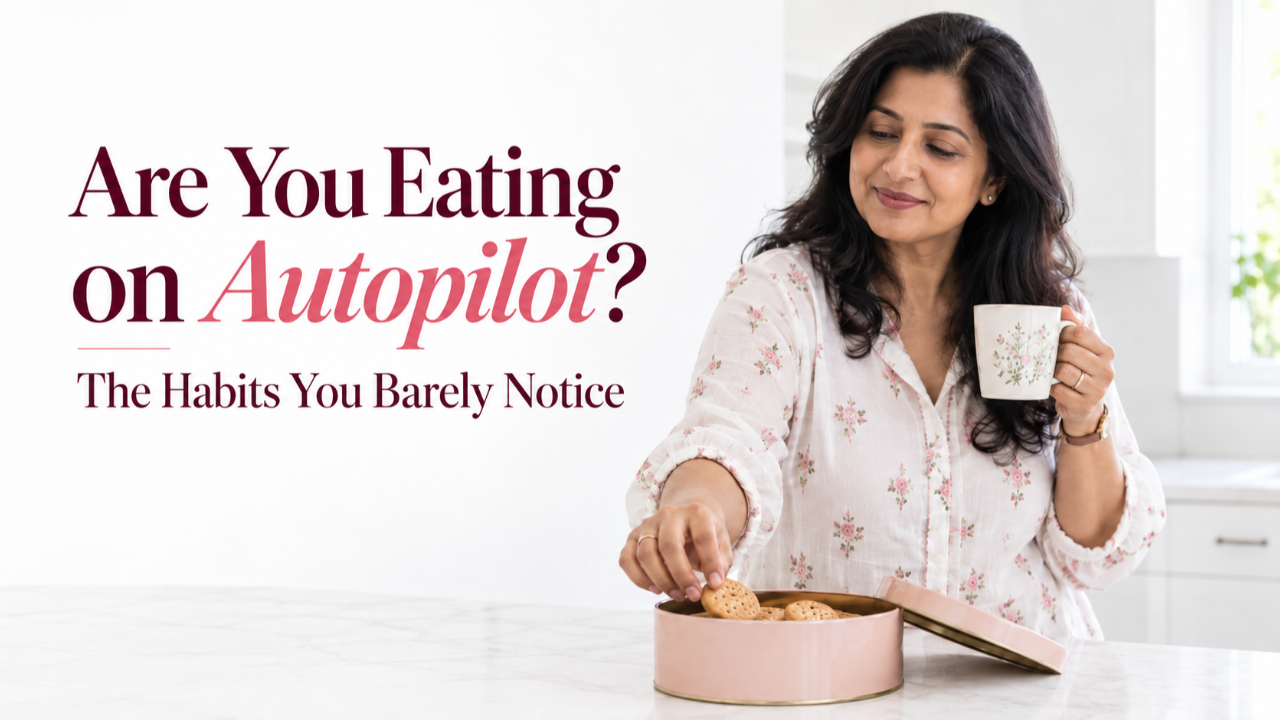
From finishing leftovers to snacking while answering emails, discover how everyday food habits develop and how to make more conscious choices without following another set of food rules.
There is a moment many women will recognise. You're standing in the kitchen, clearing away the dinner plates, when you notice a few leftover potatoes. Rather than putting them away, you eat one, then another, and perhaps a little cheese left on the chopping board. By the time the kitchen is tidy, you've eaten several things you barely remember tasting.
Or perhaps your habit happens during the working day. Every time you make a cup of tea, you reach for a biscuit, or you sit down to answer emails with a handful of nuts beside your laptop. Before long, the bowl is empty, although you have been so focused on your work that you scarcely noticed eating them. You might even wonder afterwards whether you enjoyed them at all.
These moments rarely seem particularly important because they are simply part of everyday life. We repeat small behaviours so frequently that they become familiar routines, almost like switching on the kettle or reaching for our keys before leaving the house. Yet some of these routines can influence our relationship with food more than we realise. And by midlife, we may have been practising them for decades.
What if some of your eating habits have less to do with hunger and more to do with routines your brain has quietly learned over the years?
Understanding this connection can be surprisingly helpful. Not because every automatic habit needs correcting, but because recognising what you do gives you more freedom to decide whether it still works for you.
The small eating habits we rarely question
Think about the number of things you do each day without making a conscious decision. You probably brush your teeth in a familiar order, take the same route around the supermarket and reach for your phone when you wake up. These actions have become so well practised that they require very little thought. Your brain has learned how to carry them out efficiently.
Eating habits can develop in much the same way. Perhaps you grew up in a household where everyone enjoyed biscuits with afternoon tea, or Friday evenings always involved a takeaway. Maybe you were encouraged to finish everything on your plate because wasting food was considered unacceptable. Years later, these early experiences can continue influencing what you do around food.
Consider a woman who spent years preparing meals for her children. She may have become accustomed to finishing the crusts from their sandwiches, tasting food while cooking or eating what remained on their plates. Her children may now be adults, yet some of those behaviours continue because they have become part of her routine. She is not necessarily making a deliberate decision to eat each time.
Another woman might automatically buy chocolate whenever she stops for petrol. Someone else may reach for crisps whenever she settles down to watch her favourite television programme. These are familiar associations between particular situations and particular behaviours. And because they feel so ordinary, we rarely question them.
Your brain loves a familiar routine
There is a fascinating reason why habits can feel almost automatic. Researchers studying habit formation describe how repeated behaviours gradually become associated with particular situations, environments and cues. When we encounter those familiar circumstances again, the behaviour may come to mind without requiring much deliberate thought. This process helps explain why habits can feel effortless once they are established.
A well-known study by researchers at University College London, published in the European Journal of Social Psychology, followed 96 volunteers over twelve weeks. Participants selected an everyday behaviour involving eating, drinking or physical activity and repeated it in a consistent context. The researchers found that behaviours became more automatic through repetition, although the time required varied considerably between individuals. Their modelling produced estimates ranging from 18 to 254 days to approach maximum automaticity.
You can explore the research here: How Are Habits Formed? Modelling Habit Formation in the Real World.
This challenges the popular idea that every new habit takes exactly twenty-one days to establish. Some routines become familiar relatively quickly, while others take much longer. The complexity of the behaviour, individual circumstances and consistency of repetition can all make a difference. Missing one opportunity to practise a habit also does not necessarily undo the progress already made.
Now consider something as ordinary as making your afternoon coffee. If you've enjoyed a biscuit alongside it for years, the smell of the coffee, the familiar cupboard and the time of day may all become reminders of that routine. You might find yourself reaching for a biscuit before you've consciously decided whether you want one. The behaviour has become closely connected to its surroundings.
There is nothing inherently wrong with enjoying biscuits alongside your coffee. The interesting question is whether you are choosing them because you genuinely fancy them or simply following a familiar sequence. Sometimes the answer will be both. Recognising that distinction gives you the opportunity to decide what feels right on a particular day.
Could you be eating without really tasting your food?
Picture yourself sitting at your laptop during a demanding afternoon. You have several documents open, an email waiting for a reply and a telephone beside you. You reach for a packet of crackers and begin eating while concentrating on your work. A few minutes later, the packet is empty, but you can barely remember eating them.
This is an example of distracted eating, something researchers have investigated for many years. When our attention is focused on another activity, we may be less aware of the food we are consuming. We might notice its taste less clearly or have a weaker memory of the eating experience. This does not happen in precisely the same way for everyone, but it provides an interesting explanation for some familiar behaviours.
A systematic review and meta-analysis published in The American Journal of Clinical Nutrition in 2026 examined 50 studies investigating distracted eating. The researchers found that distraction during eating was associated with greater food intake at a later eating occasion. However, the overall effect on the amount eaten during the distracted meal itself was not statistically significant. This distinction is important because it shows that the relationship between attention and eating is more complicated than simply assuming distraction always makes us eat more.
You can read the research here: Eating While Distracted: A Systematic Review and Meta-Analysis.
The findings do not mean that watching television while eating is automatically unhealthy or that every meal must take place in silence. Many women enjoy sharing dinner while watching a favourite programme or having lunch while reading. The practical lesson is that occasionally giving food more of our attention may help us recognise how satisfying the experience actually feels. Sometimes we discover that we enjoy something much more when we are properly aware of eating it.
The everyday habits that may be happening without you noticing
Eating while preparing somebody else's food
Perhaps you are preparing dinner, making sandwiches or putting together a family meal. While cooking, you nibble a little cheese, taste the sauce several times or finish something that would otherwise be left over. By the time everybody sits down to eat, you may have already eaten several things without really registering them. It is such a familiar part of cooking that you hardly notice it happening.
Of course, tasting food during preparation is perfectly normal, and you may genuinely enjoy those little mouthfuls. But if you find yourself eating because food happens to be within reach, it can be useful to notice the difference. Sometimes you may discover that you are hungry and need something to eat before preparing dinner. On other occasions, you may simply be following an established routine.
The cup of tea that always comes with something
There is something wonderfully familiar about sitting down with a cup of tea and a biscuit. For many women, the two have been connected since childhood, perhaps through memories of family kitchens, grandparents or afternoon conversations. Tea time may bring a welcome sense of comfort and routine to an otherwise busy day. There is no reason to remove that pleasure simply because it has become habitual.
However, have you ever noticed yourself reaching for a biscuit almost automatically whenever you make tea? Perhaps you find that you want one sometimes, but not every time. Becoming aware of that small difference can help you make a more deliberate choice. The biscuit can remain an enjoyable part of your day rather than something you feel compelled to have.
Snacking while scrolling through your phone
You sit down with your phone and something to eat, intending to spend a few minutes catching up with friends or reading the news. Before long, you've watched several videos, replied to messages and finished the snack. Your attention has moved rapidly between different things, leaving little opportunity to appreciate the food itself. It is an experience that has become increasingly familiar in modern life.
Rather than deciding you must never combine eating and screen time, experiment with giving one snack your full attention. Notice the flavour, texture and whether you are enjoying what you've chosen. You might find it more satisfying than expected, or discover that you weren't especially interested in it. Either observation can help you understand your preferences.
Finishing food because leaving it feels wasteful
Many women grew up hearing that they should finish everything on their plates. Perhaps food was expensive, family budgets were tight or wasting something prepared with care was simply unacceptable. These messages often came from a place of practicality and respect for food. But they can remain influential long after our circumstances have changed.
You might find yourself finishing the last spoonfuls of dinner even when comfortably satisfied, or eating leftovers because throwing them away feels wrong. Yet eating food you no longer want is not the only way to avoid waste. Serving a smaller portion initially, saving suitable leftovers or planning another meal around them may work just as well. You can respect food while also respecting your appetite.
Eating because the clock says it is time
Some of our eating routines are organised around particular times and activities rather than immediate feelings of hunger. Perhaps you always have something at eleven because that is when your colleagues take a break. Maybe you automatically reach for a snack as soon as you arrive home, regardless of what you ate earlier. These habits may have developed around work schedules, family routines or years of doing things in a familiar order.
Regular meals and snacks can be extremely helpful, especially when you have a demanding day or find it difficult to recognise hunger until it becomes intense. There is no need to abandon a useful routine simply because it involves eating at a familiar time. The question is whether the pattern supports your energy, nourishment and enjoyment. A little flexibility can help when your circumstances or needs change.
Why this matters during midlife
By the time we reach our forties, fifties and beyond, many routines have been practised for decades. We may have organised meals around children, demanding careers, partners, caring responsibilities and the preferences of everybody else in the household. Sometimes our own eating patterns have developed almost by accident, fitted into whatever time or opportunity was available. It is hardly surprising that we occasionally find ourselves eating without giving it much thought.
Perhaps you spent years eating lunch quickly because you needed to collect children from school. Maybe you worked in an environment where breaks were unpredictable, or you became accustomed to preparing meals around other people's preferences. Now your circumstances may be changing, but some of those routines remain. You may have more freedom to make different choices without quite realising it.
Menopause can bring additional challenges through changes in sleep, energy, mood and body composition. However, automatic eating habits are not unique to menopause, and it would be misleading to suggest that hormonal fluctuations directly cause every familiar food routine. The psychology of habit formation applies across adulthood. What makes midlife particularly interesting is the opportunity to review behaviours that may no longer reflect the way you live.
This does not mean your entire approach to food needs rebuilding. Some routines may make your life easier, help you eat regularly and provide enormous enjoyment. Others may be less satisfying than they once were. The aim is simply to recognise the difference.
A practical exercise: Discover your three automatic eating triggers
For the next three days, try noticing a few moments when you find yourself eating almost without thinking. You do not need to record every meal, count calories or keep a detailed food diary. Instead, choose three ordinary situations that catch your attention. Treat the exercise as an opportunity to learn something about yourself rather than an assessment of how well you eat.
Perhaps the first moment happens when you make your afternoon tea. You notice yourself opening the biscuit tin before deciding whether you actually want anything. Rather than stopping yourself or feeling guilty, simply recognise what happened. The kettle, the time of day and the familiar routine may all have contributed to the decision.
The second moment might occur while clearing the dinner plates. You find yourself finishing a few leftovers because they are there, even though you have already enjoyed a satisfying meal. You realise that you have followed this habit for years without considering it. That discovery alone gives you something useful to think about.
The third moment might happen while watching television. You reach for a packet of crisps, but this time you notice that you are genuinely hungry and thoroughly enjoy eating them. That is an equally valuable observation. Not every familiar eating routine represents something that needs changing.
At the end of the three days, consider whether any particular situations appear repeatedly. You may notice that eating is closely connected to certain locations, activities, times of day or people. Perhaps the kitchen counter is where you regularly nibble, or your laptop has become closely associated with snacking. These observations can help you understand which environmental cues are most influential in your daily life.
If writing helps you reflect, you could record a single sentence such as, I noticed I always reach for something when I put the kettle on, even when I haven't decided whether I want food. That is enough information to begin exploring the habit. You do not need pages of notes or a complicated tracking system. Simple awareness is the starting point.
How to change a habit without relying on willpower
One of the encouraging lessons from habit research is that our surroundings can influence how behaviours develop and continue. Rather than expecting yourself to make a completely new decision every time, you can experiment with adjusting the situation in which the behaviour normally happens. Small changes in routines or environments can sometimes make different responses easier. This may be particularly useful when you are busy, tired or mentally occupied.
Imagine that you regularly eat while answering emails. Perhaps food sits beside your keyboard because you rarely take a proper lunch break. Instead of deciding that snacking at work is forbidden, you could experiment with taking a short break when you want something to eat. You might find that sitting somewhere comfortable allows you to enjoy the food more fully.
Or perhaps you automatically finish leftovers while clearing the dinner table. You could begin putting suitable leftovers directly into a storage container before continuing with the washing-up. This changes the familiar sequence without requiring you to avoid particular foods. You can still choose to eat more if you are hungry or simply want some.
There may also be routines you would like to keep but enjoy more deliberately. If afternoon tea and biscuits are a favourite part of your day, perhaps you could occasionally sit down and savour them rather than eating while moving between household tasks. The change is not about removing pleasure. It is about allowing yourself to experience it.
And if a new routine does not work immediately, there is no need to regard that as failure. Habits develop through repetition, and long-established behaviours may take time to change. Some days you may return to the familiar pattern without even realising it. You can simply notice what happened and try a different approach another time.
Make room for the habits that actually help you
It is easy to become so focused on changing habits that we forget how useful many of them are. Having breakfast at a regular time may help you feel ready for the day, while preparing lunch in advance can make busy afternoons easier. Keeping convenient, nourishing foods available may support you when work or family responsibilities become demanding. An afternoon tea break may also provide a welcome opportunity to rest and reconnect.
Rather than labelling habits as good or bad, consider how they influence your wellbeing. Do they help you feel nourished, comfortable and satisfied? Do they fit your lifestyle and provide enjoyment? Or do they sometimes leave you wondering why you made a particular choice?
You may discover that only one or two routines are worth adjusting. That is perfectly acceptable. Meaningful changes do not require an entire lifestyle overhaul, particularly when you already have plenty of responsibilities. Sometimes a small adjustment to something you do every day can make a noticeable difference to how you experience it.
Not every eating habit needs fixing
We live in a culture that frequently encourages women to improve, optimise and monitor almost every part of their lives. Our meals should supposedly be perfect, our exercise consistent, our sleep restorative and our habits carefully managed. It can become exhausting, particularly during a life stage when so much else may already be changing. Food should not become another area where we feel constantly under examination.
You do not need to analyse every biscuit, question every snack or insist that every meal takes place without distractions. Some eating habits are harmless, some are pleasurable and others help make everyday life manageable. What matters is whether you feel comfortable with them and whether they support your needs. You are allowed to enjoy familiar food rituals simply because they make you happy.
Equally, you are allowed to recognise that something you have done for years no longer feels particularly satisfying. Perhaps you would rather sit down to enjoy lunch instead of eating at your desk, or save leftovers rather than finishing them automatically. Maybe you would like to give yourself more time to enjoy the food you prepare. None of these changes requires guilt, restriction or an elaborate plan.
Food confidence is not about controlling every choice. It is about understanding your needs well enough to make decisions that feel satisfying, enjoyable and supportive of your wellbeing.
One small thing today
Choose just one eating routine that you suspect happens automatically. It could be reaching for a biscuit when you make tea, finishing leftovers, snacking while working or eating while scrolling through your phone. When that familiar moment arrives, simply notice what you are doing and what may have prompted it. There is no requirement to change your behaviour immediately.
Then ask yourself, If I were making this choice deliberately today, would I still want to do the same thing?
Sometimes your answer will be yes, and you can enjoy the food without another thought. Sometimes you may realise that you would prefer something different, or that you would like to eat in a more relaxed setting. You may even discover that you are hungry and need a proper meal rather than a little something grabbed in passing. All of these are useful insights.
The important thing is not whether you ate the food. It is that you have started recognising the small influences surrounding your decisions. With greater awareness comes the opportunity to make choices that better reflect what you want. And that is a much more supportive approach than trying to manage every habit through willpower alone.
Small moments of awareness can create meaningful change
There is something encouraging about recognising a habit you have followed for years. What once seemed like an automatic part of your personality becomes something you can understand. You may discover that you eat while standing because you are accustomed to rushing, or that certain snacks have become closely associated with particular activities. These observations are not evidence that you have been doing anything wrong.
They simply show how everyday life shapes our behaviour, often in ways we barely notice. And once we begin recognising those patterns, we have the opportunity to decide whether they still work for us. We can keep the habits that bring pleasure, adjust those that no longer feel helpful and gradually establish routines that suit our lives today. There is no need to change everything at once.
Midlife can be a valuable time to rediscover what feels right for you. After years of organising life around responsibilities and other people's needs, you may finally have an opportunity to reconsider some familiar routines. Perhaps you would enjoy taking more time over lunch, having a proper break in the afternoon or making mealtimes a little more relaxed. These are small changes, but they can make everyday life feel more satisfying.
You do not need to become a woman who thinks about every mouthful. You simply deserve the freedom to enjoy your food, recognise your needs and make choices that genuinely work for you.
Because the goal is not to stop living on autopilot altogether. It is to make sure that the habits you carry through life are still helping you live the life you want.
Begin Your Midlife Wellbeing Reset
Understanding your everyday habits is a valuable starting point, but looking after yourself during midlife involves more than food alone. Your nutrition, movement, energy, sleep and emotional wellbeing all deserve attention, particularly when life feels demanding. Small, manageable changes can help you begin looking after yourself without adding unnecessary pressure.
My Free 7-Day Midlife Hormone & Wellness Reset opens on 10 November 2026 and is designed to help women take practical steps towards supporting their everyday wellbeing.
If you would like to begin making positive changes with greater confidence and less pressure, I would love to welcome you to the interest list.
Join the Free 7-Day Midlife Hormone & Wellness Reset interest list
Warm wishes,
Monica Rafiq
Founder, Fitness Inspiration for Women
Certified Menopause Coach | Nutrition & Weight Loss Specialist | Life Coach & NLP Practitioner
Research and further reading
Lally, P., van Jaarsveld, C.H.M., Potts, H.W.W. and Wardle, J. (2010). How are habits formed? Modelling habit formation in the real world. European Journal of Social Psychology. Read the research.
Gough, T. and colleagues (2026). Eating while distracted: A systematic review and meta-analysis of the effect of distraction on concurrent and later energy intake in adults. The American Journal of Clinical Nutrition. Read the research.
Wood, W., Quinn, J.M. and Kashy, D.A. (2002). Habits in everyday life: Thought, emotion, and action. Journal of Personality and Social Psychology. Read the research.
This article is intended for general education and wellbeing and does not replace individual medical, psychological or dietary advice.
Stay connected with news and updates.
Join our mailing list to receive the latest news and updates from our team.
Don't worry, your information will not be shared.
We hate SPAM. We will never sell your information, for any reason.