Could You Be at Risk of Osteoporosis? What Every Woman Over 50 Should Ask
Oct 24, 2026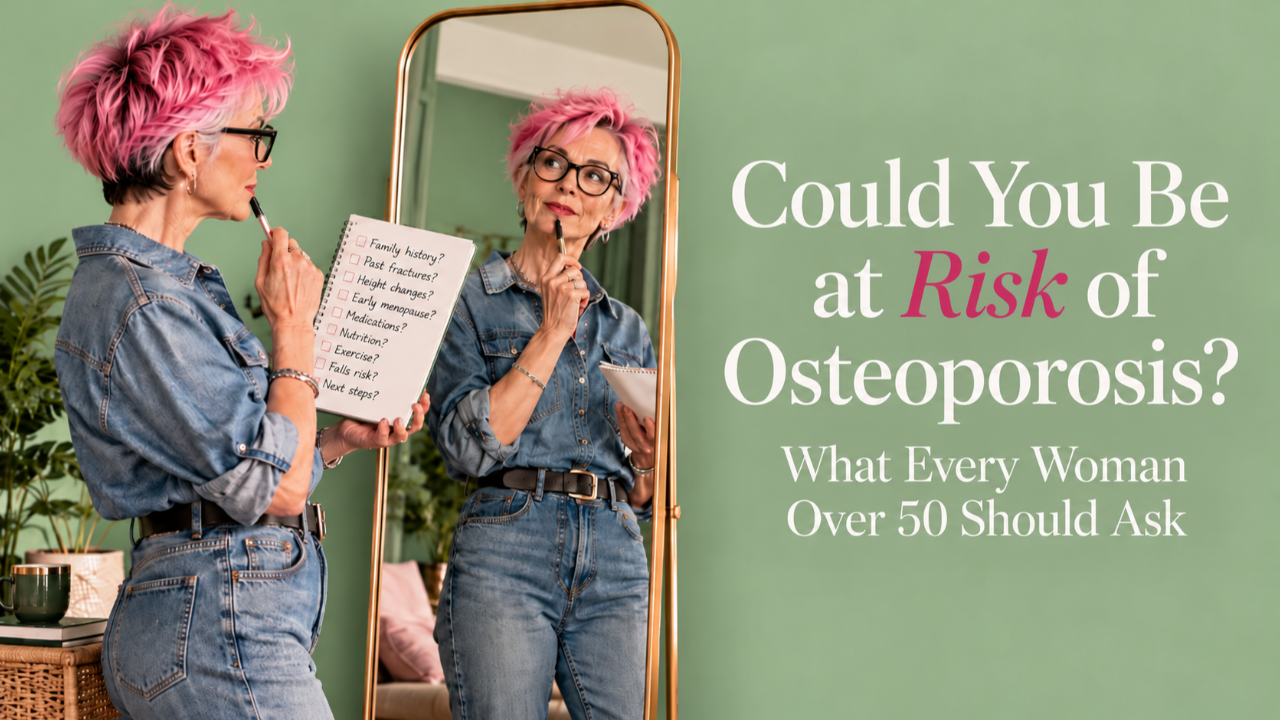
A fracture that seemed like bad luck. A small change in height. A medicine taken for years. Sometimes the most useful clues to bone health are hiding in our everyday history.
The things we remember, and the things we overlook
You can remember exactly where you were when you broke your wrist. Perhaps you slipped on a wet pavement, put out your hand and told everyone it was just one of those things. You healed, life moved on, and the incident became another story about an inconvenient few weeks. What if it was also a useful piece of information about your future health?
When we talk about osteoporosis, it can sound like a condition that belongs to somebody much older. Many women in their 50s feel fit, walk regularly and have busy lives that leave little time for another health concern. There is no reason to approach the subject with fear. But there is good reason to be curious about the clues your body and your personal history may already be offering.
Earlier this week, we explored why bone loss may develop without symptoms and what bone scans can tell us. Today I want to focus on something different. Which details from your own life might be worth bringing into a conversation about bone health, even if you currently feel perfectly well?
A small fracture may deserve a second look
A fracture after a fall from standing height or less can sometimes be described as a fragility fracture. It matters because a previous fragility fracture is one of the strongest clinical clues that another fracture may be more likely. Not every broken bone is caused by osteoporosis, and the circumstances of the injury are important. A major collision is not the same as a gentle fall onto the pavement.
If you have broken a wrist, upper arm, hip or another bone after a relatively minor accident, bring up the event with your GP, even if it happened some years ago. Try to recall your age, how the injury occurred and whether anyone considered your bone health afterwards. The goal is not to rewrite the past or worry over an old injury. It is to make sure an important detail is not lost.
The UK National Osteoporosis Guideline Group specifically identifies previous fragility fracture as an important risk factor. That is why the story behind a fracture can matter just as much as the fact that it happened.
Have you noticed a change in your height or posture?
We all expect some changes as we age, but a noticeable reduction in height should not automatically be dismissed as ordinary ageing. Some vertebral fractures in the spine cause surprisingly little pain, while others cause sudden back pain or lead to a more rounded upper back. Women may not realise a fracture has occurred.
A useful practical habit is to know your current height and, if possible, compare it with a reliable measurement from earlier adulthood. The UK guideline recommends consideration of spinal imaging in people with a history of at least 4 cm of height loss or other relevant signs, including changes in spinal curvature. This is a clinical threshold for assessment, not a home diagnosis.
If you notice new significant back pain, a sudden change in posture or height loss, seek medical assessment rather than trying to stretch or exercise the problem away. It is possible to be strong and active while still needing a proper investigation.
What was your menopause journey really like?
You may remember menopause mainly through disturbed sleep, hot flushes, changes in mood or the frustration of clothes fitting differently. Your bone health may never have been part of the conversation. Yet the timing of menopause is relevant because oestrogen helps maintain bone. Loss of oestrogen around menopause can speed bone loss, and an unusually early menopause can mean more years with lower oestrogen exposure.
If your periods stopped before age 45, or especially before 40, it is worth sharing that history with your clinician. The same applies if you have had both ovaries removed or received treatment that affected ovarian function. This does not mean you will develop osteoporosis. It means your history may change how your overall risk is understood.
It may be helpful to write down approximately when your periods became irregular, when they stopped, and whether you had surgery or treatment that contributed to the change. You do not need perfect dates. A clear outline is often enough to start a more useful conversation.
Could a medicine or health condition be part of the picture?
Some medicines are essential for keeping us well, yet they can also affect bone health. Long courses of oral glucocorticoids, such as prednisolone, are an established example. Certain breast cancer treatments that reduce oestrogen levels can matter too. Conditions that affect nutrient absorption, including coeliac disease, and some inflammatory or endocrine disorders can also influence risk.
This is not a reason to stop prescribed medication. Please do not alter treatment on the basis of an article. Instead, make a straightforward list of your regular medicines, the approximate dose and how long you have taken them. Include any major long term medical conditions, particularly those involving inflammation, digestion or hormones.
A good question is simply, “Does anything in my medical history change how I should look after my bones?” That invites a discussion about the whole picture rather than trying to diagnose yourself.
Family history is worth asking about
Perhaps you know that your mother broke her hip in later life, but you never thought of it as family health history. A parental hip fracture is an established marker used in fracture risk assessment. Other family stories can prompt useful questions too, although they do not all carry the same evidence or weight.
You might ask an older relative whether there were hip fractures or repeated fractures after small falls. There is no need to interrogate your family or turn a conversation into a medical investigation. A simple note of what you know can make your own health appointment more informative.
And if you know little about your family history, you have not failed some test. Plenty of women do not have access to that information. A clinician can still consider the details that are available.
The factors that do not fit neatly into a single label
Smoking, high alcohol intake, very low body weight and poor nutrition can affect bone health. So can repeated falls, impaired balance and some medical conditions. Importantly, not all risk factors are captured completely by a single calculation. UK guidance explicitly notes that clinical judgement matters when other risks, including falls and certain conditions, are present.
It is tempting to think a woman who is slim, active and eats well must have strong bones, or that someone carrying more weight cannot develop osteoporosis. Neither assumption is reliable. Appearance does not tell us bone density, and bone density alone does not tell us everything about whether someone will fall or fracture.
The best approach is to move away from judging bodies and towards understanding personal circumstances. Your story matters more than whether you look like the person on a health poster.
A ten minute personal history check
Before your next routine appointment, find a quiet moment and jot down the details you can remember. You do not need a complicated spreadsheet or a medical vocabulary. Think of it as creating a clear picture of your health, just as you might prepare notes before an important meeting.
- Have I ever broken a bone after a relatively minor fall or accident? What happened?
- Have I noticed a meaningful change in height, posture or unexplained back pain?
- When did menopause occur, and was it unusually early or caused by surgery or treatment?
- Do I take medicines, or have medical conditions, that could affect bone health?
- Is there a family history of hip fracture, and have I had falls or balance problems?
You might be able to answer only two or three questions. That is still useful. You are not trying to assign yourself a risk score. You are gathering information that helps a healthcare professional offer more personalised advice.
What should you do with the answers?
If any of these clues apply, mention them to your GP or another appropriate clinician and ask whether they change your fracture prevention plan. If you have experienced a possible fragility fracture or concerning changes in your back or height, do not put off the conversation just because you feel generally well. You can make a routine appointment for non urgent questions, but sudden severe back pain or a suspected new fracture deserves more prompt assessment.
If a clinician identifies osteoporosis or elevated fracture risk, there are effective medical treatments as well as lifestyle measures. Treatment choices depend on your overall risk, other conditions and personal preferences. Healthy eating and appropriate exercise remain valuable, but they should not be expected to replace prescribed bone protection when it is indicated.
If your personal history is reassuring, that is not a reason to abandon good habits. It is a reason to continue moving, strengthening your muscles, eating sufficiently and paying attention to your health without allowing worry to take over.
A future built on awareness, not anxiety
I think many women recognise a familiar pattern. We become excellent at remembering everybody else's appointments, medicines, concerns and changing needs. Yet when someone asks about our own health history, we sometimes struggle to find the time to put the pieces together.
You deserve that same thoughtful attention. Knowing the story of your bones is not about becoming preoccupied with what might go wrong. It is about giving yourself the best possible information for the years ahead. It is an act of care for the woman you are today and the woman you hope to be in twenty years.
One appointment, one remembered detail or one question can be a worthwhile beginning. You do not have to be frightened to be proactive. You only have to believe that your future health deserves a place on your list.
Keep exploring strength in midlife
If this article has made you think about the physical strength you want to preserve, my earlier piece Do Women in Midlife Really Need to Lift Weights? explains how muscle strengthening can fit into ordinary life.
Your next chapter of feeling stronger starts here
Bone health is one part of feeling well in midlife. If you are ready to take a little more care of your movement, nutrition and everyday habits, my FREE 7 Day Hormone & Wellness Reset opens on 10 November 2026. Join the interest list now so you can hear when it is available.
Join the Free 7 Day Reset Interest List
About the author
Monica Rafiq is the founder of Fitness Inspiration for Women. With 15 years of experience in pharmaceuticals and healthcare, she is a certified Menopause Coach, Nutrition and Weight Loss Specialist, Life Coach and NLP Practitioner. She helps midlife women make realistic, informed changes to their wellbeing.
Research and further reading
National Osteoporosis Guideline Group: UK clinical guidance
NOGG: Medicines and glucocorticoid related bone risk
NOGG 2024 peer reviewed clinical guideline
This article is for general education and is not a substitute for personal medical advice.
Stay connected with news and updates.
Join our mailing list to receive the latest news and updates from our team.
Don't worry, your information will not be shared.
We hate SPAM. We will never sell your information, for any reason.