Are You Eating Enough to Protect Your Bones After Menopause?
Oct 22, 2026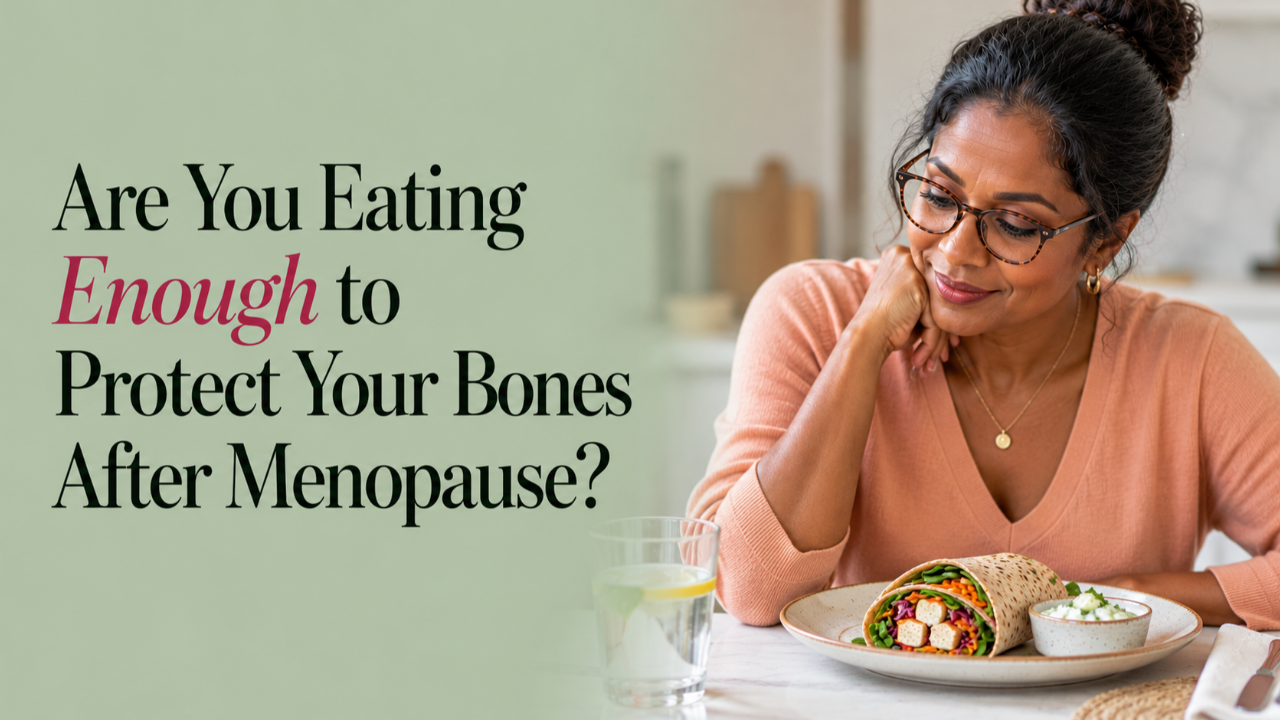
A warm, realistic guide to calcium, vitamin D, protein and nourishing yourself well in midlife.
When did eating well become another thing to worry about?
You are standing in the kitchen at half past six, deciding what to have for dinner. Perhaps you have spent the day answering messages, juggling work, caring for someone else or trying to keep everyone fed. You would like something satisfying, but a little voice is already asking whether it contains too many calories, too much carbohydrate or the wrong kind of fat.
For many women, food in midlife becomes a conversation about what to cut out. Yet there is another question worth asking, particularly after menopause: am I actually giving my body enough of what it needs?
Your bones may not send you a reminder when your nutrition falls short. They are living tissue, constantly being renewed, and the nutritional support they require is easy to overlook amid promises of quick fixes and smaller waistlines. Looking after them is not about eating perfectly. It is about regularly putting the right building blocks on your plate, while enjoying your food.
Why menopause makes this conversation important
Oestrogen helps regulate the normal process of bone renewal. As oestrogen falls around menopause, the rate of bone loss can accelerate, especially in the early postmenopausal years. Food alone cannot stop this process, and not every woman will develop osteoporosis. But adequate nutrition, suitable exercise and individual risk assessment can all contribute to protecting long-term bone health.
Think about your bones and muscles as a team. Calcium provides a major mineral component of bone. Vitamin D helps your body absorb calcium. Protein supports the muscles that keep you moving, and protein is also part of bone tissue itself. A varied diet adds other nutrients that matter too, including phosphorus, magnesium and vitamin K.
The aim is not to memorise a list of nutrients. It is to recognise where the everyday opportunities are.
First, are you getting enough calcium?
For most adults in the UK, the NHS recommends around 700 mg of calcium a day. That is a general population recommendation, not a personalised prescription. Needs may differ according to medical conditions and specialist advice. Calcium is best approached through a varied diet when possible rather than by assuming a large supplement is necessary.
Good options include milk, yoghurt and cheese; calcium fortified plant drinks; calcium-set tofu; and tinned sardines or salmon when the edible bones are included. Some green vegetables contribute calcium too, although the amount absorbed differs between foods. Check labels on plant alternatives, since not every product is fortified.
A practical habit is to notice whether a calcium containing food appears in more than one meal. Yoghurt with breakfast, a fortified drink in a smoothie or calcium set tofu with dinner can be easier to sustain than trying to rescue the entire day with one last-minute addition.
A useful label-reading tip
Look at the calcium amount per serving, not just the words “source of calcium” on the front. A fortified plant drink may provide roughly 120 mg per 100 ml, but products vary. A 200 ml serving would then supply around 240 mg. These are examples, not fixed values, so the pack is your best guide.
Vitamin D matters, especially during a British winter
Vitamin D helps the body absorb calcium. The NHS recommends that adults consider a daily 10 microgram vitamin D supplement during autumn and winter because sunlight in the UK is generally insufficient for the skin to make enough at that time. Some people, including those with darker skin, little sun exposure or certain medical circumstances, may need to consider supplementation throughout the year.
Oily fish, eggs and some fortified foods provide vitamin D, but it can be difficult to obtain enough from food alone. More is not necessarily better, and high doses can be harmful. If you have concerns about deficiency, kidney disease, medicines or supplements, ask your GP or pharmacist for individual advice.
Do not forget protein while you are thinking about bones
If your meals are quite small, especially when you are trying to lose weight, protein may quietly slip down the priority list. This matters because our muscles help us climb stairs, catch ourselves when we stumble, lift shopping and remain active. During midlife, muscle preservation deserves the same attention as changes on the scales.
You do not need protein powders or an elaborate meal plan to begin. Eggs, beans, lentils, fish, poultry, tofu, Greek-style yoghurt and other protein-rich foods can all be useful. Aim to include a meaningful protein source at breakfast, lunch and dinner rather than leaving almost all of it for your evening meal.
If you have kidney disease or another condition requiring dietary restrictions, seek personalised advice before increasing protein intake.
What could a bone-friendly day of eating actually look like?
Here is one flexible example. It is not a calorie-controlled menu and it does not promise to meet every individual nutrient requirement. Use it as a starting point for your own preferences, appetite, allergies, culture and schedule.
Breakfast that does more than keep you going until ten
Try natural or Greek-style yoghurt with oats, berries and a spoonful of nuts or seeds. If you prefer porridge, make it with milk or a calcium-fortified soya drink and add a protein source. If mornings are rushed, prepare the oats the evening before.
Lunch that fits around a real working day
A wholegrain wrap filled with calcium set tofu, crunchy vegetables and a yoghurt-based dressing can be quick. Alternatively, try a jacket potato with beans and a side salad, adding a suitable calcium source elsewhere in the day. A good lunch should leave you nourished, not counting the hours until dinner.
Dinner you would genuinely look forward to
Consider salmon with roasted vegetables and potatoes, or a lentil and vegetable curry with calcium-set tofu. Tinned fish with edible bones is another useful calcium option. Build the meal around vegetables, a protein source and satisfying carbohydrate, rather than treating carbohydrates as something you have to earn.
If you want a snack
Fruit and yoghurt, a small portion of cheese with wholegrain crackers, or a fortified plant drink may fit comfortably. You do not need to eat a snack simply because a sample plan includes one. Appetite, routine and your overall intake matter.
What does the clinical research say about supplements?
One of the largest relevant studies was the Women’s Health Initiative calcium and vitamin D trial. Researchers randomly assigned 36,282 postmenopausal women aged 50 to 79 to calcium plus vitamin D supplements or placebo and followed them for about seven years. The supplement group had a small increase in hip bone density, but the main analysis did not show a statistically significant reduction in hip fractures.
That distinction is important. It would be misleading to say that taking calcium and vitamin D tablets guarantees fracture prevention. The trial tested a particular supplement regimen in a particular population, not whether eating a nourishing diet is worthwhile. Women with deficiency, osteoporosis or specific medical risks may need a different approach based on professional assessment.
The more useful message is that food quality, appropriate vitamin D intake, progressive strength work, weight-bearing movement and fall prevention complement one another. None is an all-purpose substitute for the others or for medical treatment when needed.
Five small changes that are realistic enough to repeat
- Choose one calcium-rich food you enjoy and make it easy to keep in the house.
- Include a protein source in your first meal, particularly if breakfast is usually just toast or coffee.
- Check whether your usual milk alternative is calcium-fortified.
- Consider the NHS autumn and winter vitamin D guidance, and ask for individual advice if your circumstances differ.
- Avoid making your diet so restrictive that you struggle to meet your nutritional needs.
Notice what is already working. Maybe you eat yoghurt most mornings or love lentils, leafy vegetables and fish. You are not starting from nothing. Build around the foods you enjoy and the meals that fit your life.
What if you are also trying to lose menopause weight?
It is understandable to want to feel comfortable in your clothes again. But eating as little as possible can make it harder to obtain essential nutrients and maintain muscle. If you are working towards weight loss, a moderate, nourishing approach is generally more sustainable than repeatedly skipping meals or removing whole food groups.
If you have ever wondered whether menopause means you need a completely different way of eating, this is a good moment to ask a simpler question: can my current meals support my energy, my muscles and my bones? Healthy eating need not become a collection of rigid rules.
And nutrition does not stand alone. If you would like to explore the movement side of the picture, my article Do Women in Midlife Really Need to Lift Weights? explains how strength training can support the capable body you want to keep.
A gentle question for tonight
Before planning tomorrow’s meals, take a look at what you ate today. Not to judge it or assign it a score, but to notice. Was there a reasonable calcium source? Some protein across the day? Enough food to feel well and function properly? Is there one realistic change you would be happy to repeat?
There is a lot we cannot control about ageing, and there is no diet that can promise to prevent osteoporosis. But it is reassuring to know that everyday choices can support the health and strength we hope to enjoy for years to come.
You do not have to eat perfectly to begin caring for your future self. You can start with your next ordinary meal.
Your next chapter of feeling stronger starts here
If you would like help making practical, manageable changes to your nutrition, movement and everyday wellbeing, I would love you to join the interest list for my FREE 7 Day Hormone & Wellness Reset, opening on 10 November 2026. It is designed for women navigating midlife who want realistic support without another overwhelming set of rules.
Join the free 7 Day Hormone & Wellness Reset interest list
Monica Rafiq | Founder, Fitness Inspiration for Women
Monica brings 15 years of experience in pharmaceuticals and healthcare to her work as a certified menopause, nutrition and weight-loss management coach, life coach and NLP practitioner. She combines evidence-informed guidance with a practical understanding of the changes women navigate in midlife.
Research and further reading
Royal Osteoporosis Society: Eating well for your bones
Women’s Health Initiative: Calcium plus vitamin D and fracture risk (randomised trial)
This article offers general education, not individual medical advice. If you have osteoporosis, a previous fragility fracture, persistent dietary restrictions or concerns about supplements, seek individual assessment.
Stay connected with news and updates.
Join our mailing list to receive the latest news and updates from our team.
Don't worry, your information will not be shared.
We hate SPAM. We will never sell your information, for any reason.