Your Clothes Fit Differently, but Your Habits Haven’t Changed: Where Do You Begin?
Oct 07, 2026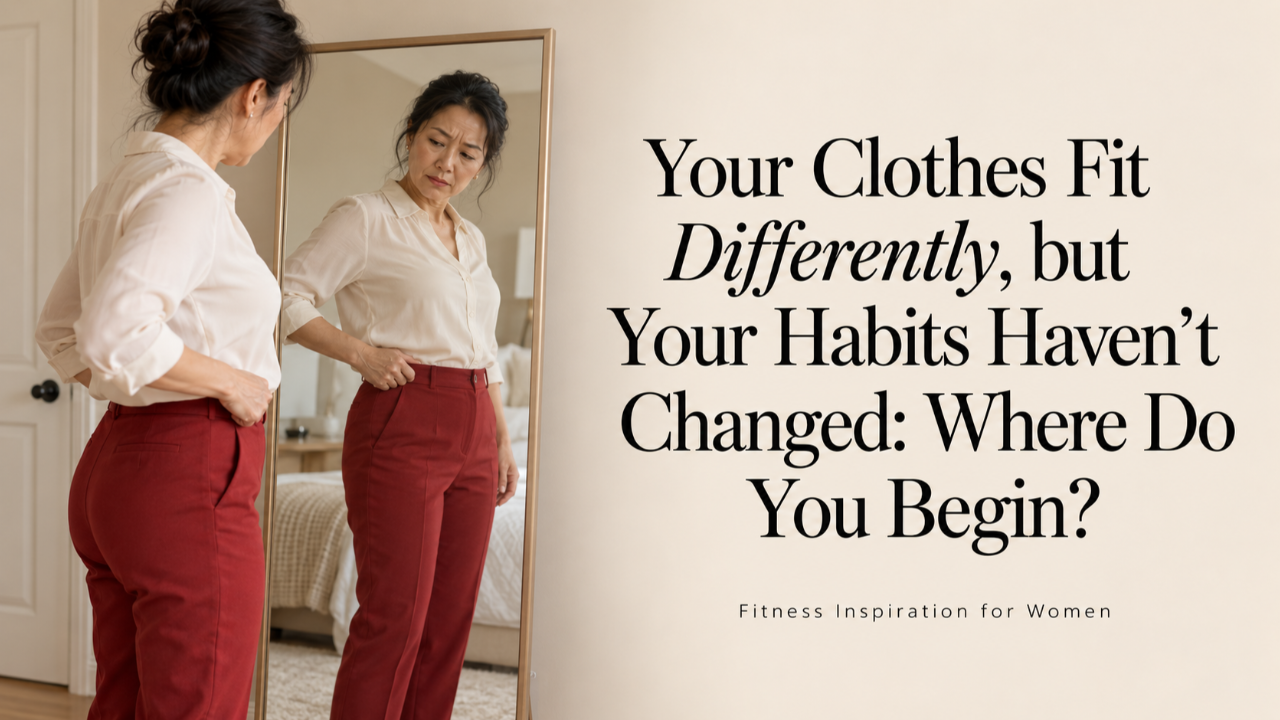
You reach for the trousers that usually make getting dressed straightforward. This morning, the waistband presses against your stomach and the shirt you liked last year seems to sit differently. You have not consciously changed how you eat, and you are still trying to stay active. Before you have even left the bedroom, you are wondering what you have done wrong.
Perhaps the frustration is strongest because you are already making an effort. You walk when you can, cook reasonably balanced meals and rarely feel that you are doing anything particularly excessive. Yet your body seems to be changing without consulting you. It can feel unfair to be told to “eat less and move more” when the advice takes no interest in the life or body you actually have.
The first step is to understand what has changed, rather than immediately making your rules stricter. Clothes can reveal a change in shape, but they cannot tell you its cause. A tighter waistband might reflect gradual changes in body composition, digestive discomfort or simply the fit of that garment. Those possibilities deserve different responses.
During perimenopause and menopause, changes around the middle are common. The NHS menopause guidance recognises that weight gain often occurs around the stomach and upper body. Mayo Clinic explains that hormonal changes influence where fat tends to accumulate, while ageing, activity, sleep and other factors also contribute to weight changes. Age-related loss of muscle can change energy needs, so familiar habits do not always produce familiar results.
That does not mean every woman will gain weight, or that your metabolism has stopped working. It means the situation can be more complicated than whether you have been disciplined. Your daily routine may feel similar while containing fewer walks, more sitting or less recovery than it once did. Looking at those details is a way to find useful choices, not to catch yourself out.
Begin by noticing the pattern of the change. Has your waist gradually become less comfortable over several months, or does your stomach feel fuller and tighter at particular times of day? Are there digestive symptoms, changes in medication or other symptoms you have been dismissing? Make a short note of what you observe before deciding that weight loss is the only answer.
If bloating is frequent or does not go away, the NHS advises seeing your GP, especially if it accompanies unintentional weight loss or blood in your stool. A sudden or unexplained change also deserves a medical conversation rather than an assumption that it is menopause. Describe when it began and any symptoms alongside it. You can explore helpful habits while getting a concern checked.
Next, give yourself permission to be comfortable while you work out what is happening. Put aside the garment that digs into you every time you sit down and choose something that fits your body today. You do not have to earn a comfortable waistband through weight loss. Getting dressed should help you participate in your life, rather than start the morning with a daily test you cannot pass.
If the change in your clothes has affected how you see yourself, read What Happens to Your Confidence When Your Body Changes in Midlife?. It offers a useful place to reflect on the emotional side of an unfamiliar body. Wanting to improve your health and treating your current body respectfully can exist together. You can make changes without making your appearance the condition for enjoying your day.
For the next week, look at your ordinary routine rather than designing an ideal one. Record a few brief notes about meals, movement, sleep and the points when hunger or stress feels hardest to manage. Include a typical working day and a weekend day, because their patterns may differ. You do not need to weigh food or count calories to notice that lunch often disappears between meetings.
Choose one meal to make more dependable. If breakfast leaves you hungry soon afterwards, try a meal containing a protein food and a source of fibre, such as plain yoghurt with oats and fruit, or eggs with wholegrain toast. For lunch, combine foods you can assemble easily, such as beans or chicken, wholegrain bread or rice, and vegetables. Adjust amounts to your appetite, needs and any dietary advice you have been given.
The NHS Eatwell Guide offers a useful foundation for variety across the day or week, rather than demanding a perfect balance at every meal. It includes starchy foods, fruit and vegetables, protein foods, dairy or alternatives, and small amounts of unsaturated oils. You do not need to remove bread or rice simply because your clothes fit differently. If you have medical or specialist dietary needs, ask a registered dietitian how to adapt the guidance.
My article Before You Cut Out Another Food, What Could You Add to Your Plate? can help you turn that approach into everyday meals. Use it to identify one useful addition before starting a list of exclusions. At the same time, be honest about portions, drinks and habitual extras that may have changed without much notice. A balanced plate still needs to suit your individual energy needs.
Suppose you arrive home hungry, prepare dinner and repeatedly nibble while cooking. The practical starting point might be a proper lunch and a planned afternoon snack if you need one, rather than a promise never to eat between meals. You could portion the snack onto a plate and sit down to enjoy it, so eating becomes a decision rather than something that happens around another task. Test whether the arrangement helps your hunger and evening routine instead of assuming one rule suits everybody.
Give strength a place in the plan, especially if your movement is mostly walking. The NHS activity guidelines for adults aged 19 to 64 recommend strengthening the major muscle groups on at least two days each week, alongside aerobic activity. Strength work supports what your body can do, even when changes in clothing size are slow or absent. If you are new to it, the first task is learning suitable movements and building gradually.
Put two manageable appointments in your diary on separate days, allowing recovery between them. To begin learning, you might practise a few controlled rises from a stable chair and wall press-ups, resting as needed and stopping if there is pain. These are examples to explore, not a complete programme for every muscle group. A qualified instructor can help you build a balanced routine and adapt it if you have joint problems, osteoporosis or other concerns.
If you are unsure why lifting matters, Do Women In Midlife Really Need to Lift Weights? explains the role of strength in more detail. Read it before buying equipment or deciding that you need demanding gym sessions. The NHS also advises speaking to your GP first if you have not exercised for some time or have medical concerns. The useful programme is one you can perform appropriately and return to consistently.
Look beyond formal workouts at how much of the day happens in a chair. Working from home may have removed your walk to the station, while a busy office day may keep you at the desk through lunch. Choose one place to restore movement, such as a short walk after lunch or a brief movement break between calls. Start where you are and build towards activity guidance without making ten thousand steps a compulsory starting line.
Sleep deserves attention too, especially if night sweats or repeated waking have become normal to you. Mayo Clinic notes that insufficient sleep can contribute to eating more and being less active. Notice whether tired evenings make food decisions or movement harder, and discuss persistent menopause symptoms with your clinician. HRT can be considered for appropriate symptoms, but it is not a weight-loss treatment.
Now turn the ideas into a two-week starting plan with just two actions. For example, make lunch more dependable on working days and protect two beginner strength appointments each week. Write down when each will happen, what you need ready and a smaller version for a difficult day. A simple lunch assembled from the cupboard and a shorter session may keep the plan workable when the diary changes.
At the end of each week, review the actions before judging your body. Did you eat lunch more consistently, complete the planned movement and feel more comfortable managing hunger or getting through the day? If you choose to track weight or waist measurements, use consistent conditions and look at trends over time rather than repeatedly checking throughout the day. Leave measurements aside if they increase distress, and use wellbeing, function and professional guidance to help assess progress.
Two weeks is a chance to learn whether your plan fits, not a deadline for fitting back into old trousers. If an action repeatedly fails, identify the obstacle and adjust the arrangement before blaming your willpower. If you want support with weight management, a qualified professional can help you decide on suitable goals and a nutritionally adequate approach. Progress should not require you to spend every day hungry, exhausted or preoccupied with food.
The trousers may have drawn your attention to a change, but they do not get to define the whole response. Begin with what you can understand, what needs checking and one or two habits that fit your current life. You are allowed to want better health and greater comfort without treating yourself as a problem to fix. The next step can be measured, practical and kind.
If you would like support as you begin, my free 7 Day Hormone and Wellness Reset opens on 10 November 2026. Join the interest list, and I will let you know when it is ready. It offers a starting point for exploring your midlife wellbeing without needing to change everything at once. You can begin making room for your health while still living the life you have today.
Stay connected with news and updates.
Join our mailing list to receive the latest news and updates from our team.
Don't worry, your information will not be shared.
We hate SPAM. We will never sell your information, for any reason.