Your Bones Could Be Getting Weaker Without You Knowing. Here's What Matters
Oct 20, 2026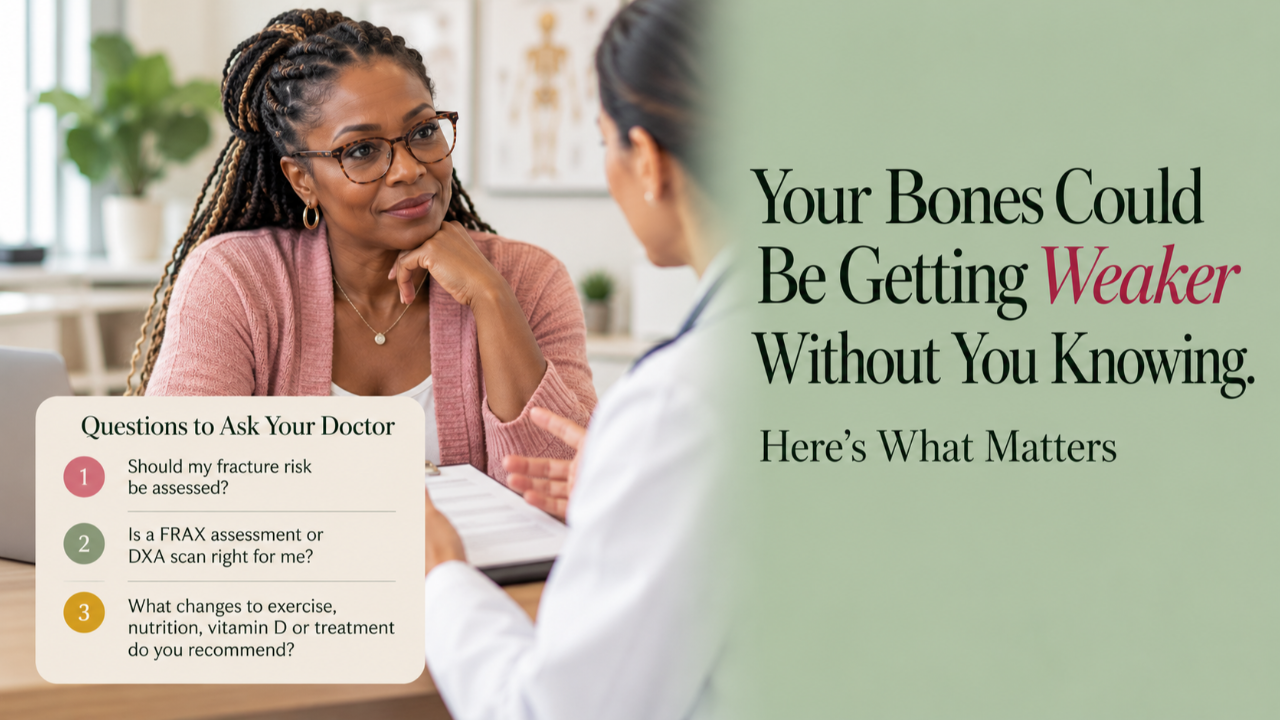
You remember the last time your back felt stiff. You might notice when your energy dips, your jeans fit differently or your sleep becomes disrupted. But can you remember the last time you thought about the health of your bones?
For many women, the answer is probably never. Not because they have been careless, but because bones rarely demand our attention. They quietly support us as we work, walk, lift, travel and get on with life. We tend to assume that if nothing hurts, nothing needs checking.
Here is the surprising part. Bone density can decrease for years without causing pain or obvious warning signs. Sometimes the first indication of osteoporosis is a fracture after a relatively minor fall. That is why understanding your risk matters long before something goes wrong.
This is not another reason to worry about getting older. It is an opportunity to ask better questions and take sensible steps while you still feel well.
Why can bone loss happen without symptoms?
Bones are living structures. Throughout adulthood, our bodies remove older bone tissue and replace it with new tissue. As we age, that balance can change. When more bone is removed than replaced, bone density can decline.
Osteoporosis describes a condition in which bones become less strong and more vulnerable to fractures. Osteopenia means bone density is lower than expected, although it has not reached the diagnostic threshold for osteoporosis. Neither condition has to produce pain. In particular, uncomplicated low bone density does not usually make your bones ache.
That distinction matters. It would be misleading to assume that ordinary stiffness or sore knees means you have osteoporosis. It would be equally misleading to assume that because you feel strong, your bones must be healthy. How you feel and what a bone-density assessment reveals are not always the same.
What changes around menopause?
Oestrogen helps regulate the balance between bone breakdown and formation. As levels fall around the menopause, bone loss can speed up. This is one reason postmenopausal women have a higher risk of osteoporosis, especially as they get older.
Still, menopause is not a diagnosis. Your own risk depends on several things working together, including age, family history, previous fractures, body size, medications and certain medical conditions. Someone who had an early menopause or has taken long-term oral steroids may need a conversation about bone health earlier than another woman of the same age.
It is tempting to treat our 50th birthday as a switch that changes everything overnight. Real life is not that neat. Bone health develops over decades, which is precisely why a thoughtful assessment is more useful than a frightening headline.
Five clues worth knowing, even when you feel fine
Rather than trying to diagnose yourself, think of the following as reasons to raise the subject with your GP.
- You have broken a bone after a relatively minor fall or everyday accident, particularly after age 50. A fragility fracture can be an important warning sign.
- One of your parents has had a hip fracture, or osteoporosis runs in your family. Family history can influence your risk.
- You experienced menopause unusually early, have had prolonged periods without periods for medical reasons, or have another condition affecting hormones or nutrient absorption.
- You have used oral corticosteroids, such as prednisolone, for several months, or take medication or have a medical condition known to affect bone health.
- You have developed a noticeable stoop, lost significant height or experienced new unexplained back pain. These symptoms deserve medical assessment because spinal fractures can sometimes go unrecognised.
No single item proves that you have osteoporosis. Nor is this a complete risk checklist. It is a prompt for a more informed conversation, rather than another online test to leave you anxious.
What does a proper bone health assessment involve?
In the UK, a GP may use a fracture-risk assessment tool such as FRAX to estimate your probability of having a major osteoporotic fracture or hip fracture over the next ten years. FRAX takes account of factors such as age, previous fracture, family history and certain treatments or conditions. Your GP will interpret the result in the context of your overall health.
Depending on the risk assessment, you may be referred for a DXA scan. This is a low-dose X-ray test that measures bone mineral density, usually at the hip and spine. Not every woman over 50 automatically needs a scan. UK guidance recommends targeted assessment, with bone-density testing according to risk rather than age alone.
If a scan shows osteoporosis, there are effective medical treatments that reduce fracture risk. Food and exercise remain important, but they are not substitutes for treatment when your fracture risk is high. This is a hopeful point: identifying a problem gives you and your clinician options.
What can you do this week, without overhauling your life?
You do not need to wait for a test result before giving your body sensible support. If you have no exercise restrictions, begin with the ordinary habits that contribute to long-term bone and muscle health.
Make strength a regular appointment
Aim to work towards muscle-strengthening activity on at least two days each week, using controlled exercises matched to your current ability. A sturdy chair, resistance bands or a pair of dumbbells can be enough to start. Progress matters over time, but heavy lifting or impact exercises should be individually adapted if you have osteoporosis or previous fractures.
If you wonder whether weights are really necessary, I explain the different benefits of resistance exercise in Do Women in Midlife Really Need to Lift Weights? It is a useful companion to this article if the gym has never felt like your natural home.
Keep moving in ways you enjoy
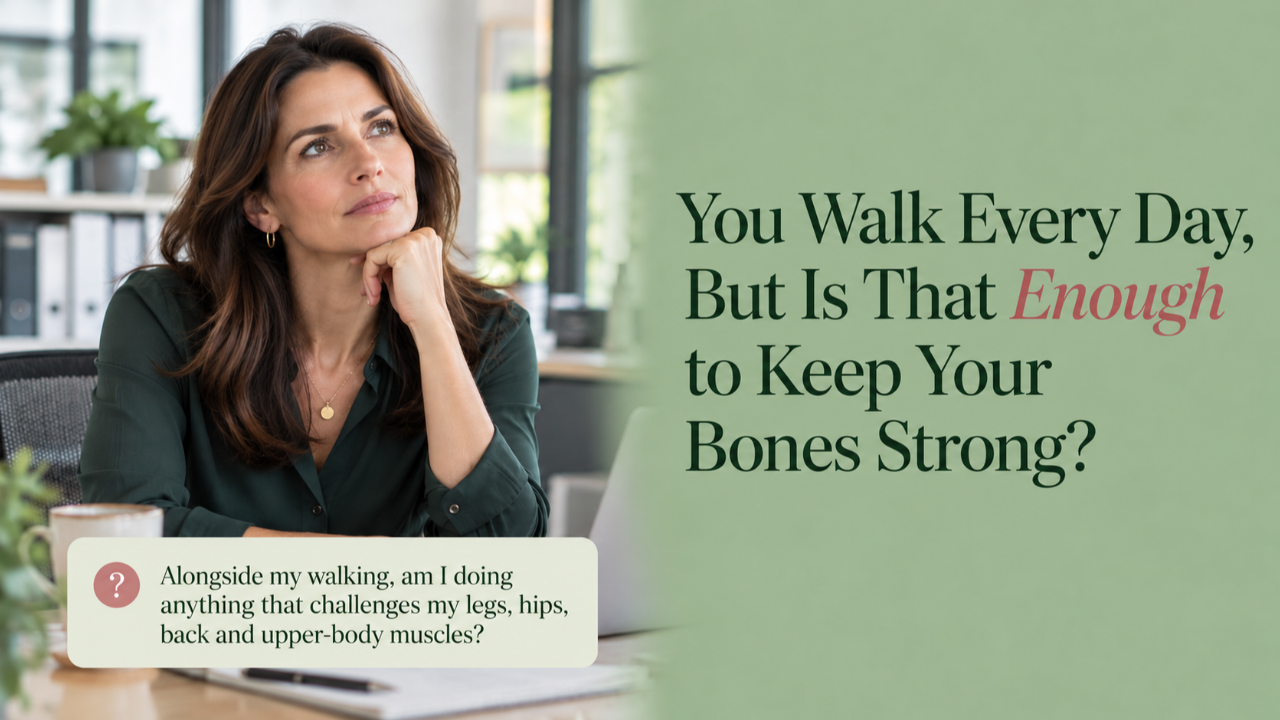
Walking, dancing and suitable weight-bearing activities help keep you active. Strength exercises and balance training add benefits that walking alone may not provide. You do not have to choose between the activities you love and looking after your bones. A good routine makes room for both.
Check the foundations of your meals
Calcium, vitamin D, protein and adequate overall nutrition all matter. In the UK, adults are generally advised to obtain around 700 mg of calcium daily, preferably through a balanced diet. The NHS advises considering a daily 10 microgram vitamin D supplement in autumn and winter. Individual needs can differ, especially if you have osteoporosis or another health condition.
A practical first step is to notice whether you regularly include calcium-rich foods such as yoghurt, milk, fortified alternatives or calcium-set tofu, alongside varied sources of protein. You do not need to chase expensive supplements or make your meals complicated.
Protect your balance and reduce avoidable falls
Take a look at the everyday environment you move through. Are there loose rugs on the stairs, dim hallways or shoes that make you unsteady? Consider practising simple balance exercises beside a reliable support, or asking for guidance if you have already fallen. Preventing fractures is about reducing falls as well as caring for bone density.
Three questions to take to your GP
You can make a useful appointment without arriving with a long list of medical terminology. Try asking:
- Given my menopause history, family history and any medicines I take, should my fracture risk be assessed?
- Would a FRAX assessment or DXA scan be appropriate for me, and what would the results mean?
- Are there any changes to exercise, nutrition, vitamin D or treatment that you recommend for my personal risk?
Bring a list of medicines, note any fractures you have had and mention significant height loss or new back pain. That small amount of preparation can help make the conversation more productive.
A quiet kind of confidence
It is easy to think that looking after yourself means waiting until something feels wrong. But perhaps one of the strongest choices we make in midlife is to pay attention before there is a crisis.
There may be no dramatic moment when your bones ask for help. No urgent message that appears between school runs, meetings or family commitments. That is why a little awareness now is worthwhile.
You do not need to be frightened of your future body. You deserve to understand it. And whether your next step is adding a strength session, improving your meals or booking a conversation with your GP, you can begin from the life you are living today.
Your bones may be quiet, but your choices do not have to be.
Your next chapter of feeling stronger starts here
Bone health is just one part of wellbeing in midlife. If you would like a gentle, practical way to reconnect with your nutrition, movement and everyday habits, I would love you to join the interest list for my FREE 7 Day Hormone & Wellness Reset, opening on 10 November 2026.
Join the Free 7 Day Hormone & Wellness Reset Interest List
Small, manageable changes are a meaningful place to begin.
About the author
Monica Rafiq is the founder of Fitness Inspiration for Women, a certified Menopause Coach, Nutrition and Weight Loss Management Coach, Life Coach and NLP Practitioner. Drawing on 15 years of experience in pharmaceuticals and healthcare, she offers practical, compassionate support to women navigating midlife. Her articles combine researched guidance with an understanding of the everyday realities women face.
Research and further reading
These sources support the key clinical points in the article. They are provided for readers who would like to explore the evidence in greater detail.
National Osteoporosis Guideline Group: fracture risk assessment and case finding
National Osteoporosis Guideline Group: main recommendations
Royal Osteoporosis Society: information and support
This article offers general educational information, not a personal diagnosis. A clinician should assess new unexplained back pain, possible fragility fractures or concerns about osteoporosis.
Stay connected with news and updates.
Join our mailing list to receive the latest news and updates from our team.
Don't worry, your information will not be shared.
We hate SPAM. We will never sell your information, for any reason.