Strong at 50 and Stronger at 70, The Choices You Make Today Matter
Oct 19, 2026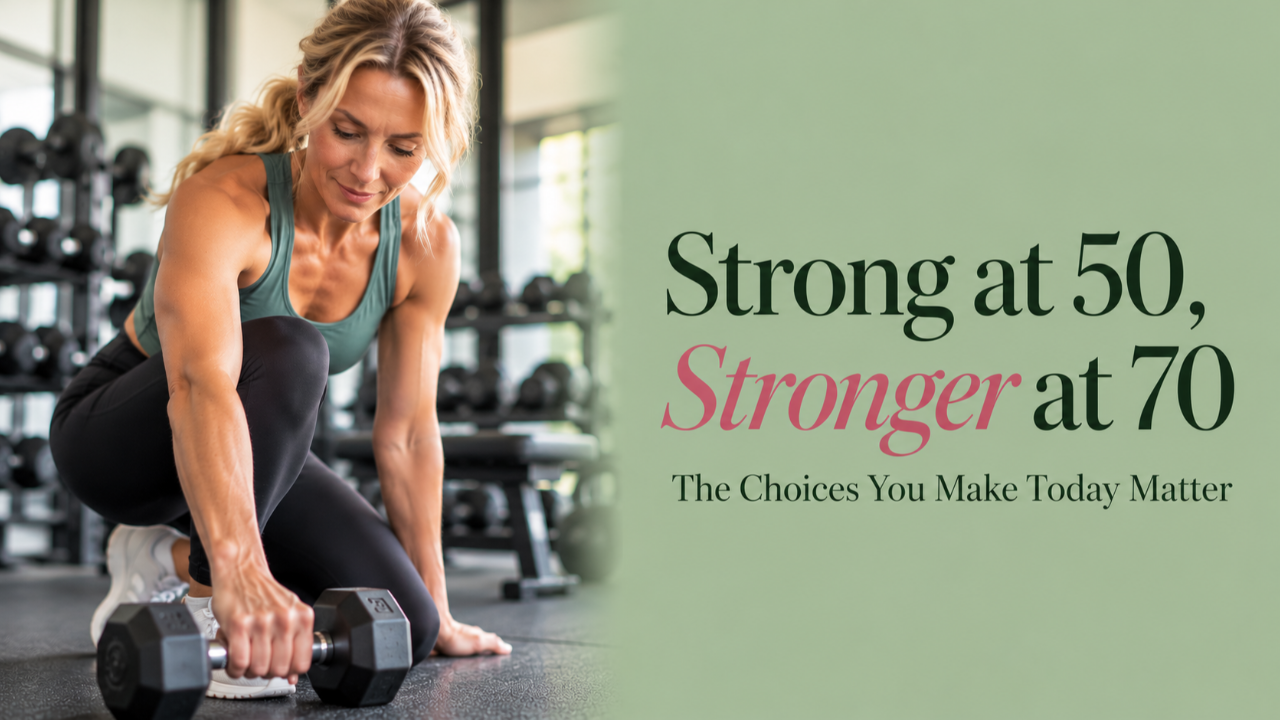
Imagine yourself at 70. Not a stranger in a distant future, but you: perhaps walking in the hills, boarding a plane for a long-awaited trip, tending a garden, or getting down on the floor to play with a grandchild. What would you love your body to let you do?
Most of us have spent years being strong for other people. There have been careers, children, relationships, ageing parents, deadlines and a hundred things that needed our attention before we even thought about ourselves. It is hardly surprising that bone health rarely appears on the to-do list.
Yet your bones are working quietly for you every day. And one of the most hopeful messages from research is that, even after menopause, sensible choices can support our strength, mobility and independence. You do not have to become a gym enthusiast overnight. You do have to give yourself permission to begin.
Why your bones deserve attention now
Bone is living tissue, constantly renewed through a process called remodelling. When we are younger, the balance between building and breaking down bone generally favours growth. Later in life, more bone can be removed than replaced. Falling oestrogen levels around menopause can accelerate that loss.
This is not a prediction that every woman over 50 will develop osteoporosis. It is an explanation of why the menopausal years matter. Bone loss usually has no symptoms until a fracture occurs, so feeling fine does not always tell us how strong our bones are.
Some factors, such as age and family history, are outside our control. Others give us room to act, including movement, nutrition, avoiding smoking, limiting alcohol and identifying treatable medical risks. Importantly, lifestyle choices help, but they do not replace assessment or medication when fracture risk is high.
A surprising piece of research: we can still respond to strength training
The LIFTMOR randomised controlled trial followed 101 postmenopausal women with low bone mass, averaging around 65 years old. Over eight months, one group undertook supervised resistance and impact training twice a week; the comparison group followed a lower-intensity home programme.
The supervised group gained about 2.9% in lumbar-spine bone mineral density on average, while the comparison group lost about 1.2%. The researchers also measured improvements in physical function. These are encouraging findings, but this was a relatively small, carefully supervised trial: it does not prove that any heavy lifting routine is suitable for everyone, or that exercise eliminates fracture risk.
The strongest practical message is that our bodies can remain trainable. The right programme depends on your current health, previous fractures, technique and confidence, rather than merely your age.
Think of strength as freedom, not appearance
Strength is carrying a suitcase upstairs without dreading the next step. It is lifting the shopping, getting up from a chair, walking on uneven ground and saying yes to a day out rather than worrying that your body will let you down.
Bone strength and muscle strength are different, but connected. Muscles exert force on bones during resistance exercise; stronger muscles also make daily tasks easier. Balance training helps reduce falls, which can turn low bone density into a life-changing injury.
A useful question to ask yourself is not “How much should I weigh?” but “What would I love to feel capable of doing a year from now?” That is a far more generous starting point.
Three kinds of movement to make room for
1. Resistance training: give your body a reason to adapt
Squats to a chair, wall press-ups, resistance-band rows and progressively loaded exercises can strengthen muscles. With suitable loading and progression, resistance training can also support bone health. Aim to build towards sessions that work major muscle groups at least twice a week, leaving recovery time between challenging sessions.
If lifting weights feels intimidating, you’re certainly not alone. Many women wonder whether strength training is really necessary, especially when they’re already walking, practising yoga or keeping active. In my article, Do Women in Midlife Really Need to Lift Weights?, I explore why resistance training matters and how you can begin without feeling overwhelmed.
2. Weight-bearing activity: keep moving on your feet
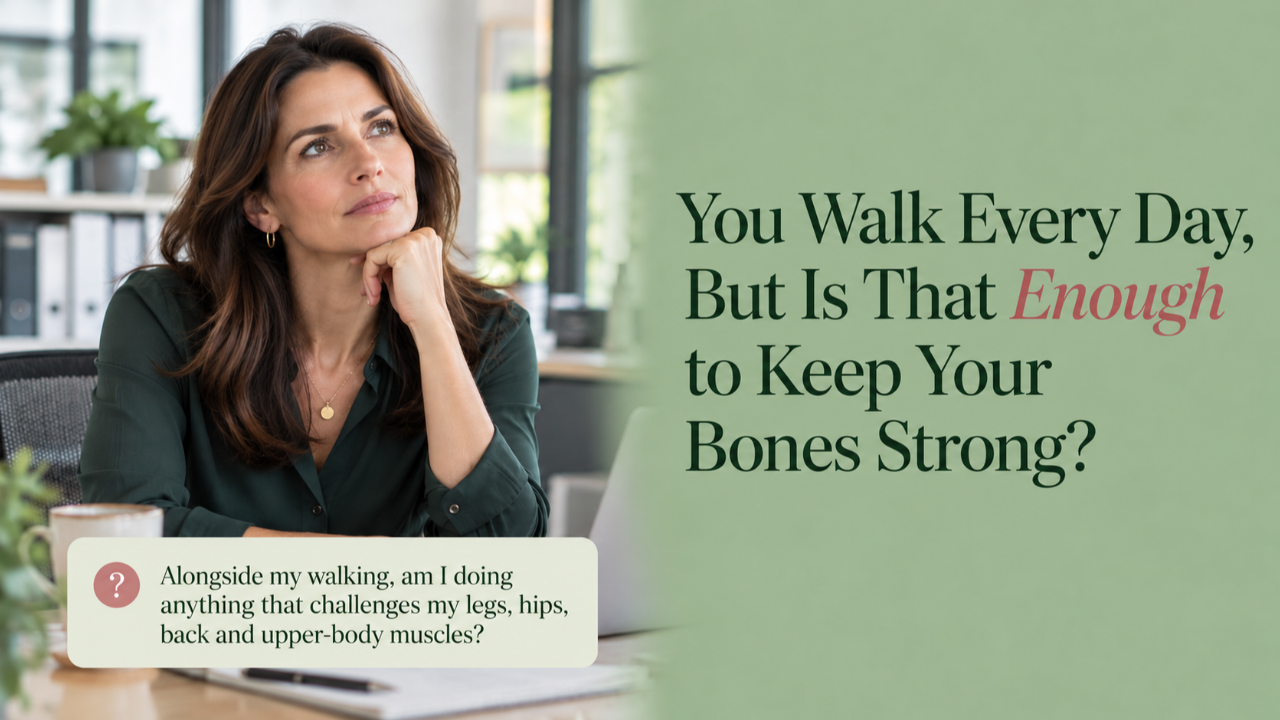
Walking, dancing and stairs are valuable ways to move, and walking has many benefits for overall health. But comfortable walking alone may not provide enough stimulus to improve bone density significantly. Depending on your health and fracture risk, a professional may suggest additional resistance or impact loading. Swimming and cycling are excellent for fitness, though they do not load the skeleton in the same way.
3. Balance: protect the mobility you value
Balance matters because avoiding falls matters. Tai chi, supported single-leg stands and balance practice that gradually becomes more challenging can all have a role. Keep a stable support close by and never practise an exercise that makes you feel unsafe.
What about a week when you barely have ten minutes?
Perhaps Monday becomes a ten-minute introduction to strength, Wednesday a short walk and a few supported balance exercises, and Friday another ten minutes of strength. That is not the final destination; it is a way of turning an intention into a habit.
Here is a beginner-friendly ten-minute session for women who are generally well, steady on their feet and have no known exercise restrictions:
- Two minutes: warm up with easy marching and gentle shoulder and ankle movements.
- Two minutes: sit-to-stand from a stable chair at a controlled pace, resting when needed.
- Two minutes: wall press-ups with comfortable, steady technique.
- Two minutes: a light resistance-band row, if you know the movement and the band is securely anchored.
- Two minutes: easy walking and supported balance practice, with rests whenever needed.
Progress is individual. Over time, add repetitions or resistance when movements become comfortable and controlled. This introductory routine is not a substitute for a progressively challenging full-body programme. If you have osteoporosis, a vertebral fracture, recent fragility fracture or significant pain, get individual guidance before starting unfamiliar loading or impact exercises.
Feed the future you, too
Bones need adequate nutrition. Calcium helps maintain bone structure; vitamin D helps absorb calcium; protein supports muscles and healthy functioning. A restrictive diet that cuts out food groups without replacing their nutrients can work against the very strength you hope to preserve.
Think simple: yoghurt or a fortified alternative at breakfast; a balanced lunch with beans, eggs, fish or tofu; and a dinner that includes protein and vegetables. Milk, yoghurt, cheese, calcium-set tofu and fortified plant drinks can all contribute calcium. NHS guidance recommends 700 mg calcium daily for most UK adults and advises considering 10 micrograms of vitamin D daily in autumn and winter. Individual requirements may differ, and high-dose supplements should not be taken automatically.
You do not need a perfectly planned menu. You need meals you can return to, even on busy days.
When to speak to your GP
If you experienced menopause early, have had a fracture after a minor fall, have a parent with a hip fracture, have taken oral steroids for a prolonged period, or have other relevant conditions, ask about your fracture risk. A GP may use a risk assessment tool and decide whether a DXA bone-density scan is appropriate. Healthy habits and medical treatment can work together when needed.
There is something empowering about going into an appointment with a question rather than waiting for a problem to announce itself.
The woman you will be deserves a little attention today
You may have spent years looking after everybody else. This is a reminder that your future self belongs on that list, too.
Perhaps you cannot find an hour for the gym this week. Perhaps ten minutes is realistic. Perhaps the first step is asking about your family history or improving breakfast. Small steps are not a failure to do more. They are how a sustainable routine begins.
No lifestyle can promise perfect health at 70. But there is meaningful opportunity to strengthen your muscles, support your bones and help protect the freedom to live life on your terms. You have not missed your chance to begin.
Strong at 50. More capable at 60. Still curious, active and adventurous at 70. What will your first step be?
Your next chapter of feeling stronger starts here
If you are ready to make more room for your wellbeing, join the interest list for my FREE 7 Day Hormone & Wellness Reset, opening 10 November 2026. It is designed to help women navigate midlife with approachable steps around nutrition, movement and everyday habits, without another overwhelming to-do list.
Join the free 7 Day Hormone & Wellness Reset interest list
Monica Rafiq | Founder, Fitness Inspiration for Women
About the author
Monica Rafiq is the founder of Fitness Inspiration for Women, a certified Menopause Coach, Nutrition and Weight Loss Management Coach, Life Coach and NLP Practitioner. Drawing on 15 years of experience in pharmaceuticals and healthcare, she translates health research into realistic, compassionate support for women navigating midlife. Her focus is helping women build lasting habits around nutrition, movement and confidence.
Educational information only; not individual medical advice. If you have osteoporosis, fracture history or medical concerns, discuss exercise and treatment options with a qualified healthcare professional.
Stay connected with news and updates.
Join our mailing list to receive the latest news and updates from our team.
Don't worry, your information will not be shared.
We hate SPAM. We will never sell your information, for any reason.