Want to Get Fitter After 50? How to Begin Without Wearing Yourself Out
Oct 09, 2026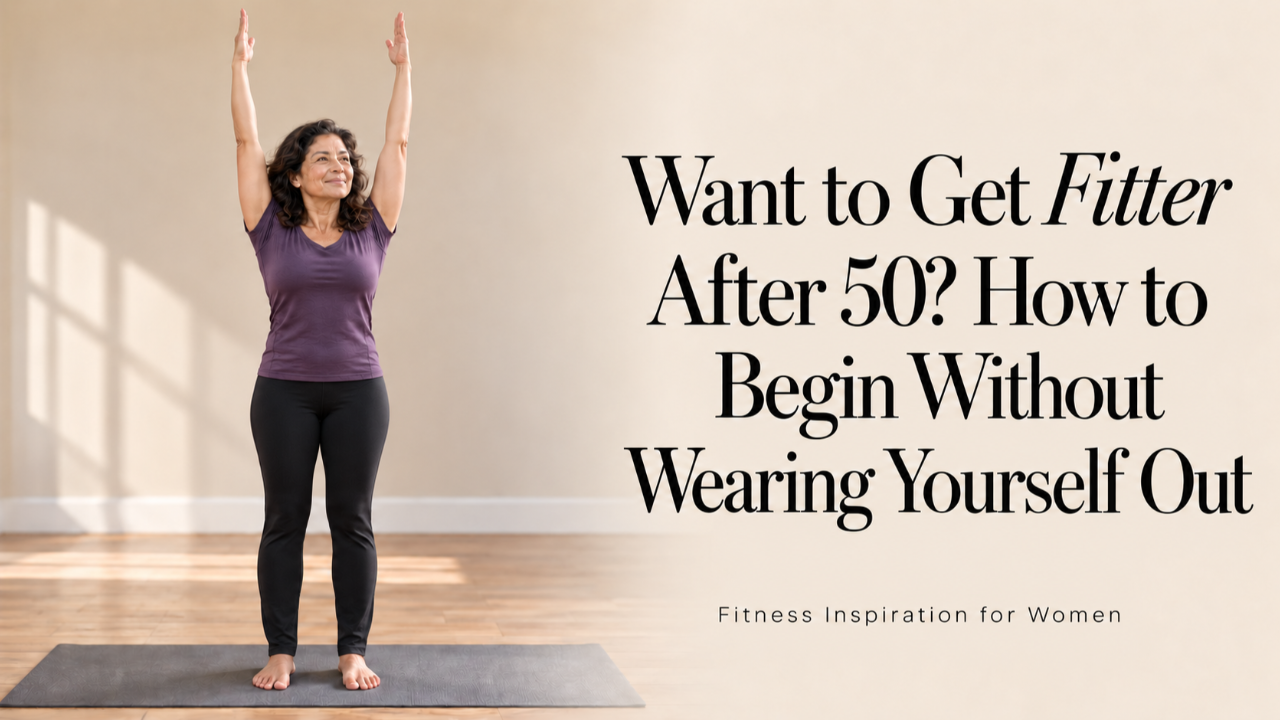
You want to feel stronger walking uphill, less stiff after sitting and more confident carrying the shopping. You have probably thought about starting several times, perhaps even put your trainers by the door. Then you imagine the demanding class, the aching legs or another commitment in a diary that is already full. You wonder whether getting fitter will take energy you are struggling to find.
Perhaps you remember a version of exercise that meant pushing hard and finishing exhausted. Or you used to enjoy being active, but broken sleep, changing symptoms and a long pause have made returning feel uncertain. There may be a small voice telling you that anything short of a proper workout will not count. That can make the first step feel much larger than it needs to be.
A useful beginning gives you an amount of movement you can manage, recover from and return to. Your first sessions are a chance to learn about your current capacity. That matters whether you are starting for the first time or returning to something you once did regularly. Fitness develops through an appropriate challenge repeated over time, so the plan needs somewhere to begin and room to grow.
Start by choosing something you want daily life to feel easier doing. You might want to walk with a friend without worrying about the pace, get up from a low chair more comfortably or carry a suitcase with confidence. Write down that task before choosing a class or exercise video. It gives your effort a purpose beyond completing a session or changing the number on the scales.
Then look at what you are already doing. If you walk regularly, you may have a useful foundation and need help adding strength or varying the pace. If most days are spent sitting and you have been inactive for a while, a short walk may be a meaningful start. Your plan should reflect that difference rather than treating every woman over 50 as the same beginner.
The NHS activity guidelines for adults aged 19 to 64 recommend at least 150 minutes of moderate activity a week, alongside strengthening the major muscle groups on at least two days. They also advise interrupting long periods of sitting. For adults aged 65 and over, strength, balance and flexibility deserve regular attention too. These are goals to build towards, not a requirement to complete the full amount in your first week.
If you have not exercised for some time or have medical conditions or concerns, speak to your GP before starting, as the NHS recommends. That conversation can help you decide whether advice or an adapted programme is needed. If unexplained tiredness has lasted a few weeks or is affecting daily life, seek advice about the tiredness itself. More exercise is not automatically the answer to every kind of exhaustion.
Choose one activity you are reasonably willing to repeat. It might be walking on a familiar route, swimming at a quieter time or joining a suitable beginner class. Consider the practical details, including travel, cost, comfort and whether the activity suits your joints and confidence. The activity you can actually reach on an ordinary Tuesday is a better starting choice than one that depends on a perfect week.
For your first walk, choose a short route with an easy way to return home. If five to ten minutes feels comfortable for your current fitness, begin there; if it is too much, shorten it. Walk easily at first and notice your breathing, comfort and steadiness. The purpose is to find a manageable starting dose, not to see how much discomfort you can tolerate.
As you build towards moderate activity, the NHS offers a useful guide to effort: you should still be able to talk, although singing would be difficult. You do not have to reach that level throughout every early session. If you are struggling to speak comfortably, slow down and reassess the pace. Do not use someone else's speed or a watch notification as the only measure of what is suitable for you.
Make the beginning and ending of each session gradual. Start with a few minutes of easy movement before asking more of your body, and reduce the pace towards the end. Choose footwear and a surface that let you move securely, with enough time to avoid rushing. Small practical preparations can make returning feel less complicated.
If a ten-minute gap is all you have between responsibilities, read Only Ten Minutes to Move? What Can You Do That Will Actually Make a Difference?. It offers ways to give a short session a useful purpose. Choose one idea for the time available instead of spending the gap deciding what to do. Short sessions can contribute to a growing routine, even when they are not yet the whole plan.
Include an opportunity to learn strength movements, especially if your usual activity is mainly walking. The NHS beginner strength guide includes chair rises, supported calf raises and wall press-ups, with instructions for building slowly. Use a solid chair that cannot slip or roll, clear the space and practise controlled movement. These exercises offer a starting point, while a balanced strength programme needs to cover the major muscle groups.
For a first learning session, select one or two movements that suit you and practise a small amount with pauses. Follow the instructions in the linked guide, stop if there is pain and ask a qualified instructor if you are uncertain about technique or adaptations. Your early goal is to become familiar with the movements, not to rush through as many as possible. As confidence develops, get help choosing resistance and a fuller routine that is appropriately challenging.
You can also include comfortable mobility and supported balance practice when they fit your needs. That might mean gently moving your shoulders after desk work or practising steadiness beside a secure support. Avoid forcing a stretch or trying an unsupported pose because it looks impressive. If your balance is uncertain or you are worried about falls, ask for suitable guidance before choosing exercises.
Here is one possible first week for a generally well beginner whose starting level suits it. Plan three short walks on separate days and two brief strength-learning sessions, allowing a recovery day between the strength sessions. A walk and a short learning session can share a day if that feels manageable, leaving other days less scheduled. Choose days around your actual responsibilities rather than adding a session every time a free space appears.
The time should be set by what you can currently manage. Five to ten minutes per walk and a brief movement practice may be enough to establish the routine, while someone already active may start with more. If you need a shorter session or a different activity, adapt the example. It is a planning illustration, not an individual exercise prescription or a complete long-term programme.
After each session, ask how you feel later that day and the following morning. Note whether you could still manage normal tasks, whether anything hurt and whether the amount felt reasonable. Marked exhaustion, worsening symptoms or persistent pain deserve attention rather than a determination to keep increasing. If even small amounts of activity cause a substantial or delayed deterioration, speak to your GP before progressing.
Sleep and symptoms may also change what is sensible on a particular day. After a difficult night, you might shorten the session, choose an easier pace or rest, depending on how you feel. My article Should You Exercise When Your Body Feels Tired, Achy or Stiff? explores how to think through that decision. Use it to support a considered adjustment, while getting medical advice for symptoms that concern you.
In the second week, repeat the plan if it is still challenging enough or you need more practice. If the sessions feel manageable and you are recovering well, change one thing modestly. You might add a couple of minutes to one walk or practise a few more controlled repetitions of a movement you have learned. Avoid increasing duration, speed, resistance and frequency together, because it becomes harder to judge what your body can tolerate.
Keep a smaller version available for a busy day. A short walk near home may be easier than travelling to the class, or one familiar practice may fit when the full session cannot. If you miss a session, return at the next suitable opportunity without doubling the workload to repay it. The routine becomes more dependable when it has a way to survive ordinary interruptions.
Before adding more, read What Does a Balanced Week of Movement Look Like In Midlife?. It brings strength, aerobic activity, mobility and recovery together in a wider picture. Use it to notice what your developing routine needs next. Over time, your short beginning can become a fuller week that supports the activities you want to enjoy.
At the end of the fortnight, review more than the minutes you completed. Did you start with less hesitation, learn a movement or find a time that genuinely works? Is the familiar walk becoming more comfortable, and does the routine leave room for recovery? Those observations help you decide whether to maintain, progress or ask for support.
You do not need an entire fitness plan figured out to take your first step. My free 7 Day Hormone and Wellness Reset opens on 10 November 2026, with practical encouragement to begin exploring manageable changes to your midlife wellbeing, alongside any medical advice you need. Be notified when the free Reset opens, and give yourself a gentle place to begin.
Stay connected with news and updates.
Join our mailing list to receive the latest news and updates from our team.
Don't worry, your information will not be shared.
We hate SPAM. We will never sell your information, for any reason.