Why Your Waistline Changes Even When Your Habits Have Not
Jul 20, 2026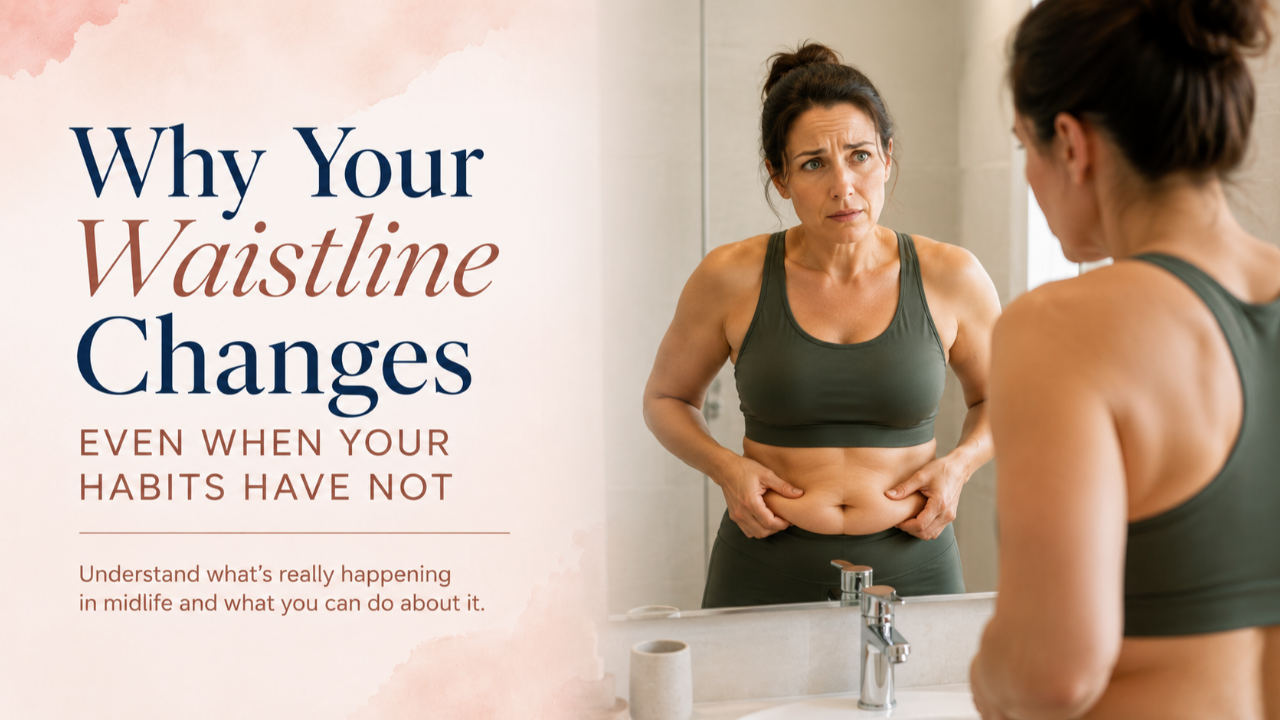
You may be eating the same breakfast, buying the same size portions and moving as much as you did several years ago. Your weight may not have changed dramatically, yet your trousers feel tighter around the middle and clothes that once skimmed your waist now sit differently.
It can be confusing, particularly when you cannot identify an obvious reason for the change. You may wonder whether your metabolism has suddenly slowed, whether you need to eat far less or whether this is simply something every woman must accept after 40.
Your body has not betrayed you, and you have not necessarily become less disciplined. Midlife can alter where your body prefers to store fat, how much muscle you carry and how your body responds to sleep, stress, food and movement. The habits that maintained your weight in your thirties may therefore need to evolve, even when they were never unhealthy to begin with.
Many women judge body change entirely by the number on the scales. However, body weight does not show where fat is stored or how much muscle you have. During the menopause transition, falling oestrogen levels are associated with a shift in fat distribution. Women who previously carried more weight around the hips and thighs may begin accumulating a greater proportion around the abdomen.
Harvard Health explains that this redistribution can happen even when overall weight gain is modest. Research comparing women before and after menopause has also found increases in waist circumference, trunk fat and visceral fat. This helps explain why your shape may change more noticeably than your weight.
Some abdominal fat lies just beneath the skin and feels soft when you pinch it. Visceral fat sits deeper inside the abdomen around the organs. A certain amount is normal, but higher levels are associated with a greater risk of insulin resistance, type 2 diabetes and cardiovascular disease.
The aim is not to fear your stomach or chase an impossibly flat abdomen. It is to understand why waist measurement can sometimes provide useful information that the scales miss.
Menopause is part of the explanation, but it is not the whole story. Oestrogen decline appears to influence where fat is stored, particularly the shift towards the middle. At the same time, ageing, muscle loss, reduced movement, poorer sleep and changes in routine often occur together.
This distinction matters because it gives you areas where you can take practical action. You cannot prevent the natural hormonal transition, but you can influence how often you move, how you train your muscles, how you structure meals and how seriously you protect your sleep.
Professional women often describe themselves as constantly on the go. Your diary is full, your mind is busy and you may end the day feeling exhausted. Yet much of that busyness can happen while your body remains almost completely still.
You may drive to work, sit through meetings, eat at your desk, answer emails and spend the evening catching up on household administration. Working from home can reduce movement further because there is no walk to the station, no journey between meeting rooms and no need to leave the building for lunch.
These small reductions in movement may not seem important, but they accumulate. Walking fewer steps, standing less often and no longer carrying or lifting as much can gradually reduce daily energy expenditure.
A weekly exercise class is still valuable, but it cannot entirely compensate for several days of prolonged sitting. Midlife weight management tends to work better when movement is distributed throughout the week rather than saved for one intense session.
Walking during telephone calls, taking the stairs, completing five minutes of movement between Zoom meetings or going outside for ten minutes after lunch can all help. These actions may not feel like formal exercise, but they increase the amount of muscular work your body performs across the day.
Muscle is another important part of the picture. Muscle mass and strength tend to decline with age, especially when muscles are not regularly challenged. Because muscle is metabolically active tissue, losing it can contribute to a gradual reduction in the amount of energy your body uses.
This does not mean your metabolism has suddenly stopped working. The change is often smaller and slower than popular diet claims suggest. However, slightly lower energy needs combined with less movement and the same food intake can gradually alter body composition.
Harvard Health identifies muscle loss as one factor that may contribute to midlife weight gain. Strength training and adequate protein are two of the most practical ways to help protect muscle.
Strength training is not simply about becoming toned. It helps preserve the tissue that supports your joints, protects your independence and influences body composition. Research in postmenopausal women suggests that aerobic exercise can be helpful for reducing fat, while resistance training supports muscle. Combining both may provide the most balanced approach.
You do not need to spend hours in the gym. Two or three progressive sessions each week can be enough to begin. Squats to a chair, rows, presses, step-ups, hip hinges and loaded carries can all form part of an effective routine. The key is progression, because your muscles need a reason to adapt and become stronger.
Insulin also plays a role, although it is often misunderstood. Insulin helps move glucose from the blood into cells, where it can be used or stored. It is essential for life and should not be described as the enemy.
Problems can arise when the body becomes less responsive to insulin. The pancreas then has to produce more of it to manage blood glucose. Abdominal fat and insulin resistance can influence one another, creating a pattern that may make metabolic health more difficult to manage.
You cannot diagnose insulin resistance by looking at your stomach, and carrying weight around your middle does not automatically mean that you have diabetes. However, persistent fatigue after meals, strong hunger, a family history of diabetes, high blood pressure or a steadily increasing waistline are reasonable reasons to discuss metabolic screening with your doctor.
The practical response is not to eliminate all carbohydrates or become frightened of insulin. It is to build meals that support steadier energy and are realistic enough to maintain.
A useful meal may include a source of protein, vegetables or fruit, fibre-rich carbohydrates and an appropriate amount of healthy fat. This could be eggs with vegetables and wholegrain toast, Greek yoghurt with berries and seeds, or chicken, beans or tofu with vegetables and brown rice.
The combination matters more than labelling individual foods as good or bad.
Sleep may also be affecting your waistline more than you realise. Sleep often becomes less predictable during perimenopause and menopause. Hot flushes, night sweats, anxiety, changing work demands and waking during the night can all leave you functioning on less rest than your body needs.
Poor sleep does not merely make you tired. It can affect appetite, food choices and the amount of energy you consume the following day. Controlled studies have found that sleep restriction can lead people to eat more without a matching increase in energy expenditure. Some research has also linked insufficient sleep with greater accumulation of abdominal fat.
One poor night will not suddenly cause belly fat. The concern is the repeated pattern of inadequate sleep followed by stronger hunger, larger portions, more convenient food choices and less motivation to exercise.
Sleep should therefore be part of your weight-management strategy rather than treated as an optional extra. Keeping the bedroom cool, reducing late-night work, limiting alcohol close to bedtime and seeking support for persistent night sweats, snoring or insomnia can all help.
Stress can influence your waistline too, even when you do not consciously feel overwhelmed. You may be highly capable, organised and used to managing pressure, yet your body may still be responding to a demanding schedule.
Stress often affects weight indirectly. It shortens sleep, reduces movement, encourages rushed eating and makes quick sources of energy more appealing. It can also mean that you spend the day running on coffee and very little food, only to become extremely hungry in the evening.
This is not a failure of willpower. It is a predictable response to an under-fuelled and overstretched day.
It can help to notice when eating becomes most difficult. Is it at four in the afternoon after several meetings? During the drive home? In the evening when the house is finally quiet?
Once you identify the pressure point, create support before it arrives. Eat a proper lunch away from your screen, keep a protein-rich snack available or take a short walk before moving from work into the evening.
You do not need more self-criticism. You need a routine that makes the helpful choice easier when your mental energy is low.
When your waistline changes, the instinctive response is often to cut food sharply. You may skip breakfast, reduce lunch to a small salad and try to ignore hunger until dinner.
This may reduce food intake temporarily, but it can also leave you tired, preoccupied with food and more likely to overeat later. Very restrictive diets are difficult to maintain and may make it harder to consume enough protein, fibre and essential nutrients.
The goal is not to eat as little as possible. It is to eat in a way that supports a modest and sustainable energy deficit when fat loss is appropriate, while protecting muscle and keeping hunger manageable.
Protein is useful because it supports muscle and tends to make meals more satisfying. Spreading it across the day may work better than leaving most of it until dinner. Fibre from vegetables, fruit, beans, lentils and whole grains can also support digestive and metabolic health.
Meals containing both protein and fibre are generally more useful than a tiny, low-calorie lunch that leaves you searching for biscuits an hour later. Before reducing portions further, it is worth looking at meal quality and timing. Sometimes the answer is not less food, but more structure.
It is also important to understand that you cannot choose exactly where fat comes off first. Hundreds of abdominal exercises may strengthen your core, but they cannot force your body to remove fat specifically from your waist.
Core training is still valuable because it supports posture, balance and movement. It simply should not be used as punishment for having a stomach.
A more effective approach combines regular movement, resistance training, aerobic exercise, satisfying meals and good recovery. Visceral fat can respond to diet and exercise, but there is no single exercise that targets it.
This is encouraging because it means a changing waistline is not necessarily permanent. It simply requires a whole-body strategy rather than one perfect exercise.
A realistic working-week approach may begin with including a meaningful source of protein at breakfast and lunch so that you are not trying to recover from an under-fuelled day in the evening. Keep lunches simple enough to repeat, such as soup with beans and yoghurt, chicken with whole grains and vegetables, or tofu with a substantial salad and rice.
Strength train two or three times each week. Twenty to thirty focused minutes can be enough when the routine includes the main movement patterns and gradually becomes more challenging.
Walk regularly, particularly after meals when possible. A short walk after lunch can break up sitting, activate the large muscles of the legs and give you a useful mental reset before returning to work.
Protect sleep with the same seriousness you give your meetings. You may not be able to control every disrupted night, but you can reduce the habits that make sleep more difficult.
Measure progress more broadly too. Notice your waist circumference, the way your clothes fit, your energy, your strength and whether you can follow the routine without feeling constantly deprived.
The habits that supported you at 30 may not produce exactly the same result at 45 or 55. That does not make those habits useless, and it does not mean that you need to overhaul your entire life.
Your body is responding to a different combination of hormones, muscle, sleep, stress and daily movement. The solution is to update your approach with the body you have now in mind.
Eat enough protein to support muscle. Challenge that muscle regularly. Move throughout the working day rather than relying only on formal workouts. Build meals that support steadier energy and address poor sleep instead of trying to overpower its effects with discipline.
Most importantly, do not turn your changing waistline into evidence that you have failed.
It is information.
Your body is asking for a different kind of support, and small, intelligent changes can still make a meaningful difference.
Stay connected with news and updates.
Join our mailing list to receive the latest news and updates from our team.
Don't worry, your information will not be shared.
We hate SPAM. We will never sell your information, for any reason.