Why Women Over 50 Are Leading a New Health Movement
Jul 28, 2026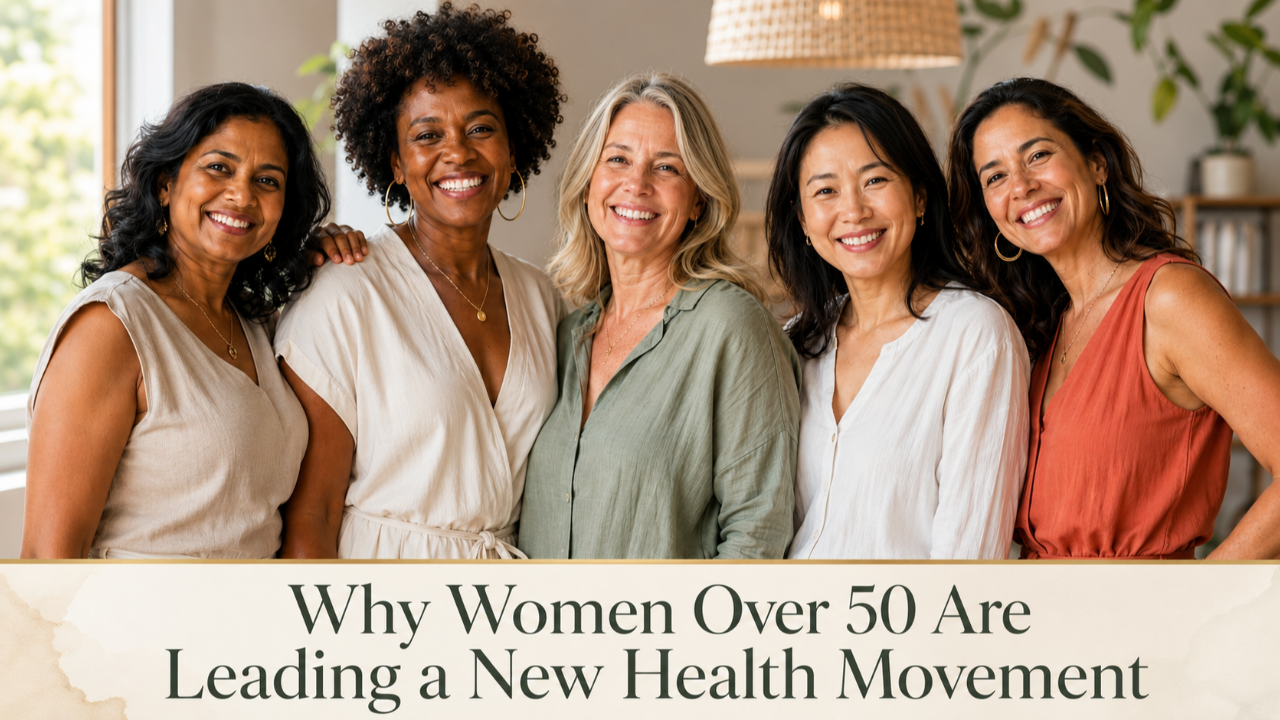
Something important is changing in women’s health, and women over 50 are at the centre of it.
They are questioning advice that once told them to eat less, weigh less and quietly accept declining energy as part of getting older. They are asking why women’s healthcare has so often focused on reproduction while giving far less attention to muscle, bone, heart, brain and metabolic health in later life.
They are also challenging the idea that ageing well means looking as though you have not aged. Rather than spending the next chapter fighting every visible change, more women are asking a different question: how can I remain strong, active, clear-minded and fully involved in my life?
This is not simply another wellness trend. It is a shift in what women expect from their health, their exercise and the professionals supporting them.
For decades, women were encouraged to approach health through weight loss. Progress was measured through smaller clothing sizes, fewer calories and a lower number on the scales. Exercise was frequently promoted as a way to burn off food rather than build physical capacity.
Those messages shaped generations of women. You may have spent years believing that a successful health plan should make you smaller, even when the process left you hungry, tired and repeatedly starting again.
Women over 50 are beginning to see the limitations of that approach. They understand that a lighter body is not automatically a stronger body, and that weight alone cannot reveal muscle strength, bone density, blood pressure, cardiovascular fitness, sleep quality or emotional wellbeing.
A woman can lose weight while also losing muscle, energy and confidence. Another woman may remain at a similar weight while becoming stronger, fitter and more metabolically healthy. The scales cannot tell the difference.
The new health movement is therefore not built around shrinking. It is built around capacity.
It asks whether you can climb stairs comfortably, carry your shopping, lift your luggage and get up from the floor. It considers whether your muscles support your joints, whether your balance feels reliable and whether your body can participate in the experiences you are planning for the next twenty or thirty years.
This reflects a wider change in the scientific understanding of healthy ageing. The World Health Organization defines healthy ageing in terms of maintaining the functional ability that allows people to be and do what they value. Being entirely free from illness is not required. What matters is whether health conditions are well managed and whether a person can continue living a meaningful and engaged life.
That definition feels particularly relevant to women over 50. It moves the focus away from pretending ageing is not happening and towards protecting the abilities that make life feel like your own.
This may mean having enough energy to continue working in a career you enjoy, exploring a new one or starting a business. It may mean travelling, gardening, dancing, swimming, caring for grandchildren or walking through a new city without worrying about whether your body will cope.
These goals may sound ordinary, but they depend on strength, mobility, balance and cardiovascular fitness. Independence is not one dramatic achievement. It is supported by thousands of physical actions that are easy to take for granted until they become difficult.
This is one reason strength training has become such an important part of the new conversation.
Walking remains valuable for the heart, mood and general activity, but it does not always provide enough resistance to preserve every major muscle group. Women are beginning to understand that resistance training is not reserved for athletes, bodybuilders or younger people. It is one of the most practical investments they can make in later-life function.
A recent systematic review and meta-analysis found that resistance training substantially improved muscular strength in both premenopausal and postmenopausal women, with no meaningful difference between the two groups. The researchers concluded that women can benefit across the lifespan, while programmes should still be adapted to the individual.
Harvard Health also emphasises that strength training supports far more than visible muscle. It can make everyday activities easier, help preserve bone density, support joints and contribute to blood glucose regulation.
This is a powerful shift for women who have spent years being encouraged to make themselves smaller. Strength training asks them to take up space, use resistance and become more physically capable.
It changes the purpose of exercise. A squat is no longer something you perform to burn calories. It trains the movement that helps you sit down and rise again. A row supports the muscles of your back and posture. A carrying exercise prepares you to manage bags and luggage. A heel raise develops the lower-leg strength that contributes to walking and balance.
When exercise has a clear relationship with real life, it often becomes more meaningful. You are not simply completing repetitions. You are protecting choices.
Women over 50 are also leading a new conversation around bones. Bone health was once treated as something to consider only after a fracture or a diagnosis of osteoporosis. Yet bone loss can accelerate around the menopause transition and may continue without producing obvious symptoms.
Harvard Health reports that bone loss begins to increase around the age of 50, particularly in women, and that maintaining muscle strength, nutrition and preventive healthcare becomes increasingly important from this point onwards.
Resistance training and appropriate weight-bearing movement place controlled demands on bone. Harvard explains that the pull of muscles against bones can encourage the body to respond by strengthening them, while suitable impact activity may offer an additional stimulus for some women. Exercise should always reflect individual fitness, joint health, fracture risk and medical history.
The new movement is not about telling every woman to lift the heaviest weight available or begin jumping immediately. It is about replacing fear with informed progression.
A woman can begin with chair squats, wall press-ups, resistance bands and light weights. As her control and confidence improve, she can gradually increase the resistance, repetitions or range of movement. Starting gently does not mean remaining at the same level forever. The body needs an appropriate challenge in order to adapt.
This is an important message because many women have been taught to be cautious with their bodies but not always taught how to strengthen them. They may have been advised to avoid lifting without being shown how to lift safely. They may have been told to protect aching joints by moving less, even though well-designed strengthening can often form part of joint support.
The goal is not recklessness. It is capability developed with good technique, sensible progression and professional guidance when required.
The new health movement is also changing how women think about food. Restriction is gradually giving way to nourishment.
Instead of continually asking what they need to remove, women are asking whether their meals provide enough protein, fibre, energy and essential nutrients. They are recognising that the body they want to strengthen needs to be fed.
Protein supports the maintenance and repair of muscle, particularly when combined with resistance training. Fibre-rich foods can support digestive and cardiometabolic health, while a varied eating pattern provides the nutrients needed for energy, recovery and general wellbeing.
This does not require turning every meal into a nutritional calculation. A practical starting point is simply to look at your main meals and identify the source of protein, vegetables or fruit, fibre-rich carbohydrate and healthy fat.
Breakfast might include eggs, yoghurt, tofu or beans. Lunch could combine fish, chicken, lentils or another protein source with vegetables and wholegrains. Dinner might include beans, tofu, fish, poultry or lean meat alongside colourful vegetables and a satisfying carbohydrate.
The aim is not perfection. It is to create meals that help you feel nourished, steady and capable of recovering from the movement you are asking your body to perform.
Women over 50 are also becoming more interested in healthspan rather than lifespan alone. Living longer matters, but so does the quality of those additional years.
Harvard describes healthspan as the period of life spent in good health and able to function well. Regular aerobic activity, strength training, balance work and preventive healthcare can all help close the gap between the number of years lived and the number lived with freedom and capability.
This does not offer complete control over ageing. Genetics, illness, disability, access to healthcare and circumstances all matter. No lifestyle can guarantee perfect health.
What this perspective offers is agency. You may not be able to control every future diagnosis, but you can build more physical and emotional reserve. You can strengthen the systems that help you recover, adapt and continue doing what matters.
This is very different from the old anti-ageing message. Anti-ageing treats every line, grey hair and physical change as an enemy. Healthy ageing accepts that change is unavoidable while refusing to confuse age with helplessness.
Women leading this movement are not trying to become 30 again. They are thinking seriously about the body and life they want at 60, 70 and beyond.
They are also becoming more proactive in healthcare appointments. They are asking when their blood pressure, cholesterol and blood glucose were last checked. They are discussing bone risk, menopause symptoms, sleep, pelvic health, mental wellbeing and family history.
They are less willing to accept that exhaustion, persistent pain, severe sleep disruption or significant emotional changes should automatically be dismissed as normal ageing.
This does not mean arriving at every appointment with a self-diagnosis. It means arriving prepared to describe what has changed, when it began and how it is affecting daily life.
Before an appointment, write down your symptoms and questions. Include medications and supplements, relevant family history and any test results you already have. Ask what else could be contributing, which checks are appropriate and what changes should prompt further review.
Being an active participant in healthcare is not the same as distrusting healthcare professionals. Good care works best when clinical expertise is combined with a woman’s knowledge of her own body and experience.
Rest and recovery are also taking their rightful place in the new movement. The old health culture often praised women for doing more, sleeping less and continuing regardless of exhaustion. Recovery was treated as something to earn after every responsibility had been completed.
Women over 50 are beginning to recognise that a body cannot continually perform without being restored. Sleep, quiet, enjoyable movement and periods without constant mental input are not signs of reduced ambition. They support the energy required to keep participating in a demanding life.
This may require boundaries. A woman can eat well and exercise consistently while still living in a state of continuous overload. Work pressure, caring responsibilities and emotional labour do not disappear because she has joined a gym.
Health therefore needs to include the courage to say no, share responsibilities and stop treating endless availability as proof of worth.
A ten-minute walk between work and home may serve as a recovery practice. So might turning off notifications, taking a proper lunch break or asking someone else to handle a task they are capable of managing.
These choices may appear less impressive than an intense workout, but they can make healthy habits far more sustainable. The strongest routine is not the one that demands the most. It is the one that can survive a busy Wednesday.
Community is another reason women over 50 are changing the conversation. Women are speaking more openly about menopause, strength, ageing, body confidence and the realities of caring for everyone while trying to care for themselves.
They are sharing information, recommending professionals, joining walking and strength groups and creating spaces in which older women are visible as active, ambitious and evolving.
This matters because health behaviours are easier to sustain when they are supported by identity and connection. A woman who sees people like herself lifting weights, learning yoga, swimming, hiking or beginning again receives an important message: this is available to me too.
The new movement is not asking every woman to become a wellness influencer or transform her life overnight. Its power lies in ordinary women making informed choices and encouraging one another to expect more from later life.
Joining it can begin quietly.
You might schedule two short strength sessions each week. Current recommendations support at least 150 minutes of moderate aerobic activity each week, or the equivalent, together with muscle-strengthening activity on at least two days. The total can be divided into manageable periods rather than completed in long sessions.
You might practise balance near a stable support, take a brisk walk between meetings or add mobility work after sitting at a desk. You might improve one meal rather than redesigning your whole diet, or book the health appointment you have postponed.
Choose one measure of progress that has nothing to do with body weight. Notice whether stairs become easier, your balance improves or you can lift something with more confidence. Record the resistance you use and the everyday tasks that feel less demanding.
These changes provide evidence that your health is moving forwards even when your appearance has not dramatically changed.
It is also worth deciding what you want your health to make possible. A goal becomes more powerful when it is attached to a life rather than a number.
Perhaps you want to walk comfortably during a holiday, feel confident swimming in open water, continue working without being flattened by fatigue or remain strong enough to live independently. Maybe you want to garden, dance, travel or play with future grandchildren.
That is the heart of this movement. Health is not the final destination. It is the capacity that allows you to keep going towards the experiences that matter.
Women over 50 are leading a new health movement because they are no longer satisfied with being told merely to manage decline. They are learning how to build strength, protect function and make informed decisions about the years ahead.
They are replacing punishment with support, restriction with nourishment and fear of ageing with preparation for it.
Most importantly, they are widening the definition of what a healthy woman over 50 looks like. She may have grey hair or brightly coloured hair. She may be slim, curvy, disabled, athletic, beginning from complete inactivity or managing a long-term condition.
Healthy ageing is not one body type, one fitness level or one flawless routine. It is the continuing work of supporting your ability to live according to what matters to you.
This movement does not ask you to deny your age. It asks you to value your future.
You do not need to become a different woman to join it. You begin by giving the woman you are now the strength, nourishment, healthcare and recovery she needs to lead the life still waiting for her.
Stay connected with news and updates.
Join our mailing list to receive the latest news and updates from our team.
Don't worry, your information will not be shared.
We hate SPAM. We will never sell your information, for any reason.