Why Motivation Disappears and What Keeps You Going Without It
Sep 04, 2026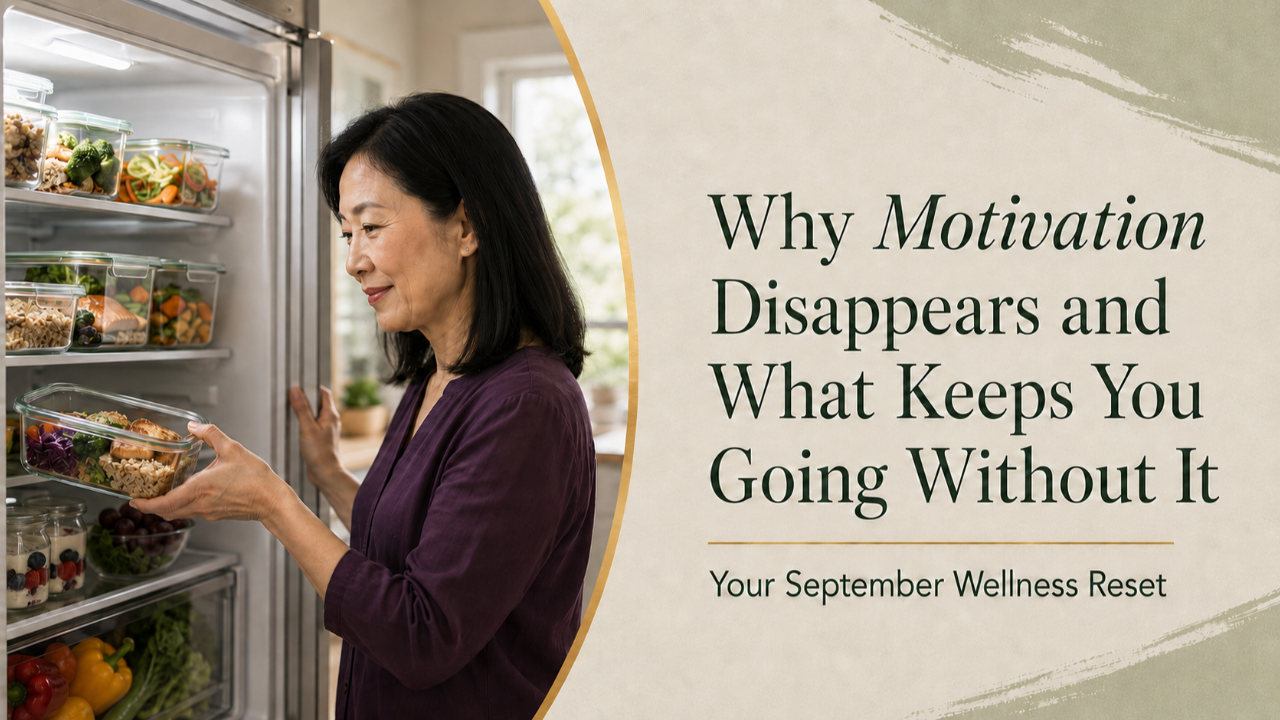
At breakfast, a walk after work sounds like a lovely idea. By the time you close your laptop, the weather has changed, dinner needs thinking about and the sofa has become remarkably persuasive. You still want to feel healthier, but the enthusiasm you had this morning seems to belong to somebody else.
For a working woman in midlife, this can become a familiar source of frustration. You know that movement matters, and you remember how good it felt to have a routine. Why, then, does wanting the benefit so often fail to get you through the door?
Part of the difficulty is that the enthusiastic feeling we often call motivation is only one part of following through. You can remain committed to your health while feeling very little excitement about today's workout. The practical demands of doing it still need to be manageable when that excitement is absent.
At the beginning of a new routine, there is plenty to look forward to. You imagine feeling stronger, and choosing the class or buying the notebook can feel like progress in itself. A few weeks later, the task is more familiar, the benefits may still feel distant, and the effort of getting changed is happening right now.
By midlife, that immediate effort may also sit alongside considerable responsibility. A work deadline can arrive on the same day as a parent's appointment, after a night in which you barely slept. Before questioning your commitment, look at what the action is asking of you at the moment you are expected to do it.
A useful routine makes the next step easier to take on an ordinary day. You can use the days when you feel enthusiastic to prepare for the days when you feel less interested. That might mean choosing a suitable workout in advance, so that exercising does not begin with twenty minutes of searching for one.
Large studies give us a helpful perspective on this. A randomised field experiment published in Nature, involving 61,293 members of an American gym chain and researchers from several universities, including Harvard, tested 54 four-week digital programmes. Around 45% of the approaches increased weekly gym visits compared with the control condition, with increases ranging from 9% to 27%. The strongest result came from offering a small reward for returning after a missed planned workout. Milkman and colleagues: Large behavioural study of gym attendance.
The results also showed the limits of a temporary boost: only 8% of the approaches produced a statistically detectable benefit during the following four weeks. This was a study of gym attendance, rather than a menopause-specific trial or a direct test of feeling unmotivated. A reasonable practical lesson is to keep useful support in place, rather than assuming a few successful weeks mean you should now manage effortlessly.
Start with the point where you usually hesitate. Perhaps you intend to exercise at home, but your equipment is tucked away and you have not decided what to do. Keep what you need safely accessible and bookmark one appropriate session, so that you can begin without creating a fresh plan.
A reminder can also be more useful when it names the next action. “Put on walking shoes after closing the laptop” gives you something clearer to respond to than “Be more active”. If finishing work is unpredictable, linking the action to that transition may be more workable than choosing a time you regularly miss.
The same approach can help with food. If you tend to open the fridge after work and hope inspiration will appear, choose a few familiar meals before the week becomes busy. Keeping the ingredients for an easy dinner available can make eating well less dependent on how creative you feel at seven o'clock.
You might cook an extra portion when making a meal you already enjoy, or keep a simple freezer option for late finishes. These are everyday ways to reduce the work involved in following your intention. You can vary your food without requiring yourself to invent a different dinner every night.
Give yourself something to enjoy in the activity itself. The prospect of better health years from now can matter deeply, while still feeling distant when you are deciding what to do this evening. A pleasant walking route or a class whose music you love offers a reason to want the experience today.
Try making one activity more appealing and notice whether that changes your willingness to begin. You could arrange a walk with someone whose company you enjoy, or choose a swim at a time when the pool feels calmer. Treat this as a personal experiment; enjoyment will not remove every obstacle, but it deserves a place in your plan.
Another useful source of encouragement is seeing what you are actually doing. The UK PACE-UP randomised trial involved 1,023 adults aged 45–75, with more women than men. Participants received usual care or a pedometer, a twelve-week walking programme and an activity diary, with one intervention group also receiving nurse consultations. At twelve months, the intervention groups averaged approximately 640–680 additional steps a day compared with usual care. Harris and colleagues: The PACE-UP walking trial.
That result came from a package of support, so it cannot tell us that a tracker alone caused the improvement. Only around 10% of eligible people joined the trial, which also limits how widely we can assume the findings apply. Nevertheless, it provides evidence that a structured, relatively simple approach can help adults in this age range sustain a modest increase in activity.
For your own routine, keep the record useful and light. You might note the walks you completed or record the exercises in your strength sessions, so you can see your starting point and discuss progression if you need guidance. A short weekly review can tell you more about your pattern than repeatedly checking whether today's numbers are impressive enough.
Choose a measure connected to the action you are practising. If your goal is to attend a weekly class, record attendance and how manageable the arrangement felt. That gives you information about the routine itself, even while longer-term changes in fitness are still developing.
Prepare a shorter option for days when time is limited. If your planned walk will not fit, a shorter familiar route may still be possible. For strength training, ask your instructor to help you identify an appropriate shorter session, so you have a sensible option ready when you need it.
The shorter version can help you retain a place for movement while you work towards a fuller routine. Keep it appropriate to how you feel and what you can safely manage that day. If it becomes your only available option for weeks, review the original plan and the support around it.
Some days require a different response altogether. Reluctance to get changed and persistent exhaustion are different experiences, and it is worth noticing which you are dealing with. The NHS recommends speaking to a GP if you have been tired for a few weeks without knowing why, or if tiredness affects your daily life. NHS guidance on tiredness and fatigue.
Support from other people can make the routine more practical, too. A colleague might join you for part of a lunch break, or someone at home might take responsibility for dinner on your class evening. Make the arrangement specific enough that you know what help is available when the day becomes busy.
After an interrupted week, look for the next workable opportunity. You can recognise the value of returning without turning your record into a test of an unbroken streak. A routine needs room for the weeks in which you are managing more than usual.
For today's September reset, think of one healthy action that repeatedly stalls. Ask yourself, “What makes starting this difficult at that particular moment?” Change one part of the arrangement and observe what happens over the next week, even if your enthusiasm remains fairly ordinary.
You may still prefer the sofa when work finishes. But your shoes can be ready, your route familiar, and the decision small enough to make without a long discussion with yourself. You do not have to feel inspired every time you do something that supports the life you want to live.
Stay connected with news and updates.
Join our mailing list to receive the latest news and updates from our team.
Don't worry, your information will not be shared.
We hate SPAM. We will never sell your information, for any reason.