The Midlife Health Window Most Women Do Not Realise Is Open
Jul 22, 2026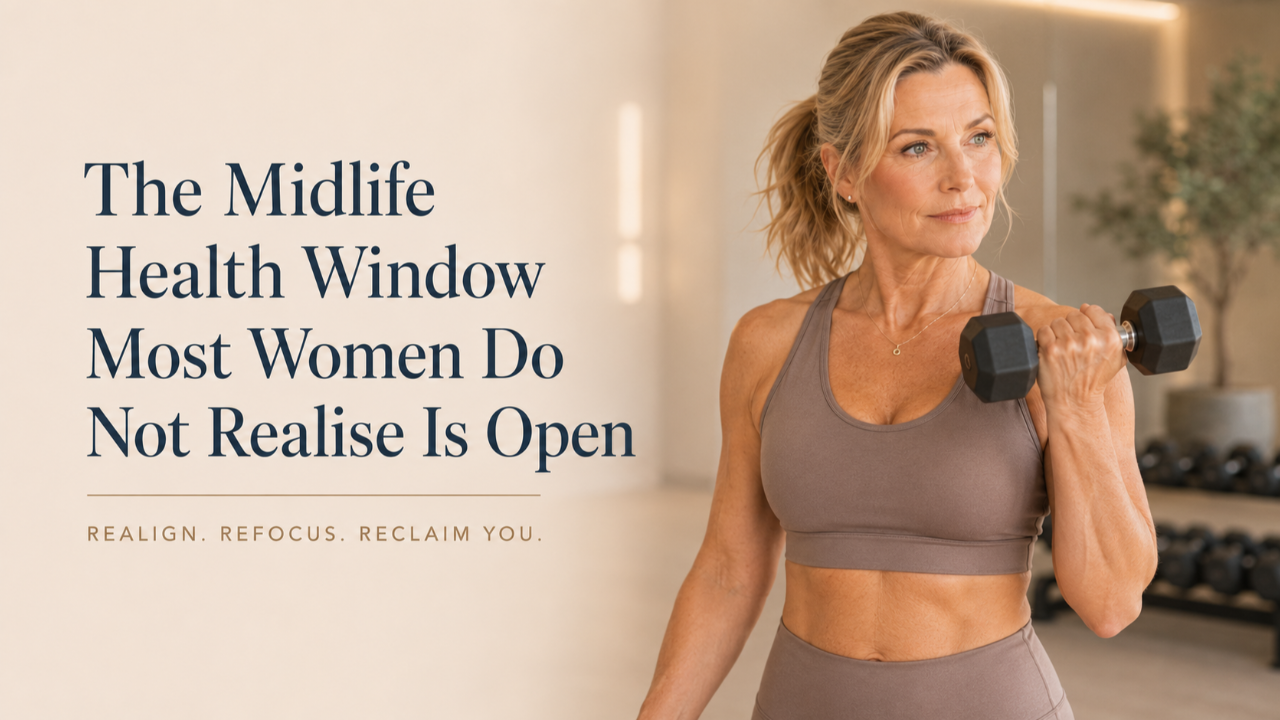
There is a point in a woman’s life when her body begins asking different questions of her. The sleep she once sacrificed without much thought becomes harder to recover from. The exercise routine that once kept her fit may no longer protect her muscle strength, and stress may seem to remain in her body for longer. Changes in energy, weight, mood and concentration can become more noticeable, even when her routines have not changed very much.
It is easy to interpret these changes as the beginning of decline. Many women assume they need more discipline, a stricter diet or a tougher exercise programme. Yet midlife is not simply a period in which health becomes more difficult to manage. It is also a valuable window in which the choices you make can meaningfully influence how strong, mobile, independent and well you feel in the decades ahead.
The menopause transition is a natural stage of life rather than an illness. However, the hormonal changes that occur during this period can coincide with shifts in sleep, body composition, bone health and cardiovascular risk. Research has linked this stage with changes in abdominal fat, cholesterol, blood pressure and blood glucose regulation, making midlife an important time to pay closer attention to prevention.
This does not mean there is one brief opportunity after which it is too late to improve your health. Positive changes remain valuable at any age. It means that your forties and fifties offer a particularly useful period in which to notice emerging patterns, strengthen the foundations of your health and act before small concerns become established problems.
For many professional women, this window opens at the busiest possible time. You may be leading a team, running a business, managing family responsibilities, supporting ageing parents and trying to maintain relationships while your own needs remain at the bottom of the list. You may look highly capable from the outside while quietly surviving on interrupted sleep, rushed meals, caffeine and the belief that you will take better care of yourself when life becomes calmer.
The difficulty is that life may not become calmer on its own. There will always be another deadline, another person who needs you or another problem demanding attention. Sustainable health begins when you stop waiting for an empty diary and start creating small areas of protection within the life you already have. Your body is not asking you to become perfect. It is asking you to become more attentive.
One of the most important areas to protect during midlife is muscle. Muscle is not only about appearance or athletic performance. It supports your joints, posture, balance, metabolism and ability to carry out ordinary tasks without discomfort or fatigue. It helps you lift shopping, climb stairs, carry luggage, get up from the floor and remain physically independent as you age.
Muscle mass and strength tend to decline with age, while hormonal changes around menopause may contribute to changes in body composition. Strength training can help maintain muscle, physical function and independence, while resistance and weight-bearing exercise can also support bone health. You do not need to begin with an intimidating gym programme. Two manageable strength sessions each week can be a realistic starting point.
Squats to a chair, wall press-ups, resistance-band rows, supported lunges and exercises using light weights can all help your body adapt. The important principle is progression. Your muscles need a gradually increasing challenge, not punishment. Walking remains extremely valuable for cardiovascular health, mood and daily movement, but walking alone may not provide enough resistance to preserve all the strength you will want later.
Think of walking and strength training as partners rather than competitors. One supports your heart and overall activity, while the other helps protect the physical capacity that allows you to keep moving confidently. Swimming and cycling are also excellent forms of exercise, but adding suitable resistance and weight-bearing movement gives your muscles and bones a stimulus they may not receive in the water or on a bicycle.
Bone health deserves attention before a problem becomes visible. Bone loss often occurs silently, and the decline in oestrogen around menopause can accelerate the process. Weight-bearing activity, resistance training, adequate nutrition and attention to individual risk factors can all support bone strength. This does not mean every woman needs to start jumping or lifting heavy weights immediately. Your exercise choices should reflect your current fitness, joint health, medical history and fracture risk.
Midlife is also an opportunity to stop treating food as a battle. Many women enter this stage believing they need to eat dramatically less because their body has changed. Restriction may produce a short burst of weight loss, but it can also leave you hungry, preoccupied with food and less able to support muscle, energy and recovery.
A more sustainable approach is to build meals that work harder for your health. Include a useful source of protein, a generous amount of vegetables or fruit, fibre-rich carbohydrates and healthy fats. Protein supports the maintenance and repair of muscle, while fibre-rich foods help with fullness, digestive health and blood glucose management.
A Mediterranean-style pattern of eating, centred largely on vegetables, fruits, wholegrains, beans, lentils, nuts, olive oil and fish, has been associated with long-term cardiometabolic benefits. It is not a restrictive weight-loss diet. It is a flexible pattern that can be adapted to your culture, preferences and budget.
A practical place to begin is with the meal you currently find most difficult. You do not need to redesign your entire diet on Monday morning. You might add yoghurt, eggs, tofu or another protein source to breakfast, prepare lunch for work twice a week or add beans and vegetables to an evening meal. Sustainable change becomes more likely when the new behaviour fits your real schedule.
Sleep must also move higher up the priority list. Disturbed sleep is common during the menopause transition, and night sweats, stress, anxiety, pain and hormonal changes may all contribute. Poor sleep can affect concentration, appetite, mood, work performance and your ability to recover from exercise.
For a woman with a demanding career, the answer is not always an elaborate evening ritual. It may begin with reducing work-related stimulation before bed, keeping a more regular waking time, limiting late caffeine and creating a cooler sleeping environment. It may also mean seeking appropriate medical support rather than assuming you simply need to tolerate persistent insomnia or night sweats.
Lifestyle habits can support menopause health, but they are not a substitute for proper healthcare. Symptoms that are disrupting your sleep, mood, relationships or ability to work deserve a conversation with a qualified healthcare professional. Hormone replacement therapy can be effective for many menopause symptoms, although suitability and individual risks should always be discussed with a clinician.
Your midlife health window is also a time to know your numbers. High blood pressure, raised cholesterol and changes in blood glucose may not cause obvious symptoms. Feeling generally well does not always tell you what is happening beneath the surface.
Consider when your blood pressure, cholesterol and blood glucose were last reviewed. Discuss your family history, smoking status, alcohol intake, menstrual changes and any persistent symptoms with your healthcare professional. Depending on your history, your clinician may also consider thyroid function, iron levels, vitamin deficiencies or bone health.
The purpose of knowing your numbers is not to create anxiety. It is to replace guesswork with useful information. A baseline allows you to see what already looks healthy, what needs attention and whether the changes you make are having a meaningful effect.
Stress is another part of this health window that cannot be ignored. A woman can eat nutritious meals and exercise regularly while still living in a state of constant emotional overload. The body does not separate work pressure, caring responsibilities, relationship strain and sleep deprivation into neat categories. It experiences the combined demand.
Recovery is not a luxury added after all the important work has been completed. It is part of the work of remaining healthy. A ten-minute walk without your phone, a proper lunch break, a quieter transition between work and home or a boundary around evening emails may seem insignificant, but repeated recovery signals can change the rhythm of your day.
This is particularly important for women who have built their identity around being dependable. You may have become highly skilled at meeting everyone else’s needs before they are even voiced. Midlife health sometimes requires you to tolerate the discomfort of not being endlessly available.
Begin by identifying one regular demand that is using more energy than it deserves. It may be a meeting you do not need to attend, an obligation that could be shared or a standard you are maintaining out of habit rather than necessity. Removing one source of unnecessary pressure can create more benefit than adding another demanding wellness routine.
Your relationships matter too. Strong health is not created through food and exercise alone. Supportive connection can influence how well you manage stress, recover from difficulty and maintain healthier behaviours. Having someone with whom you can speak honestly may be more restorative than spending another evening pretending you are coping perfectly.
None of this requires a complete reinvention. One of the greatest mistakes women make with midlife health is believing that change only counts when it is dramatic. A severe diet, a punishing fitness plan or a flawless morning routine may feel decisive, but they are rarely the most sustainable route to progress.
A better question is: what could I continue doing on a busy Wednesday when motivation is low? That might be a twenty-minute strength session, a protein-rich breakfast, a walk between meetings, an earlier bedtime or arranging the health appointment you have postponed. These actions may not look transformational in isolation. Their power comes from repetition.
The midlife health window is not open because your body is failing. It is open because your body is communicating more clearly. Changes in sleep, strength, mood, energy or waistline are not moral failures. They are information that can help you adjust your approach.
You do not need to chase the body you had at 30. You are building the health you want at 60, 70 and beyond. That means developing muscles that support you, bones that remain challenged, meals that nourish you, sleep that restores you and boundaries that preserve enough energy for your own life.
Midlife is not the moment to give up on your health. It may be the first time you are ready to build it from a place of knowledge rather than punishment. The window is open. You do not need to leap through it all at once. You simply need to begin choosing, more often, the habits that your future self will be grateful you started today.
Stay connected with news and updates.
Join our mailing list to receive the latest news and updates from our team.
Don't worry, your information will not be shared.
We hate SPAM. We will never sell your information, for any reason.