Are You Eating Enough Protein or Simply Saving It All for Dinner?
Sep 07, 2026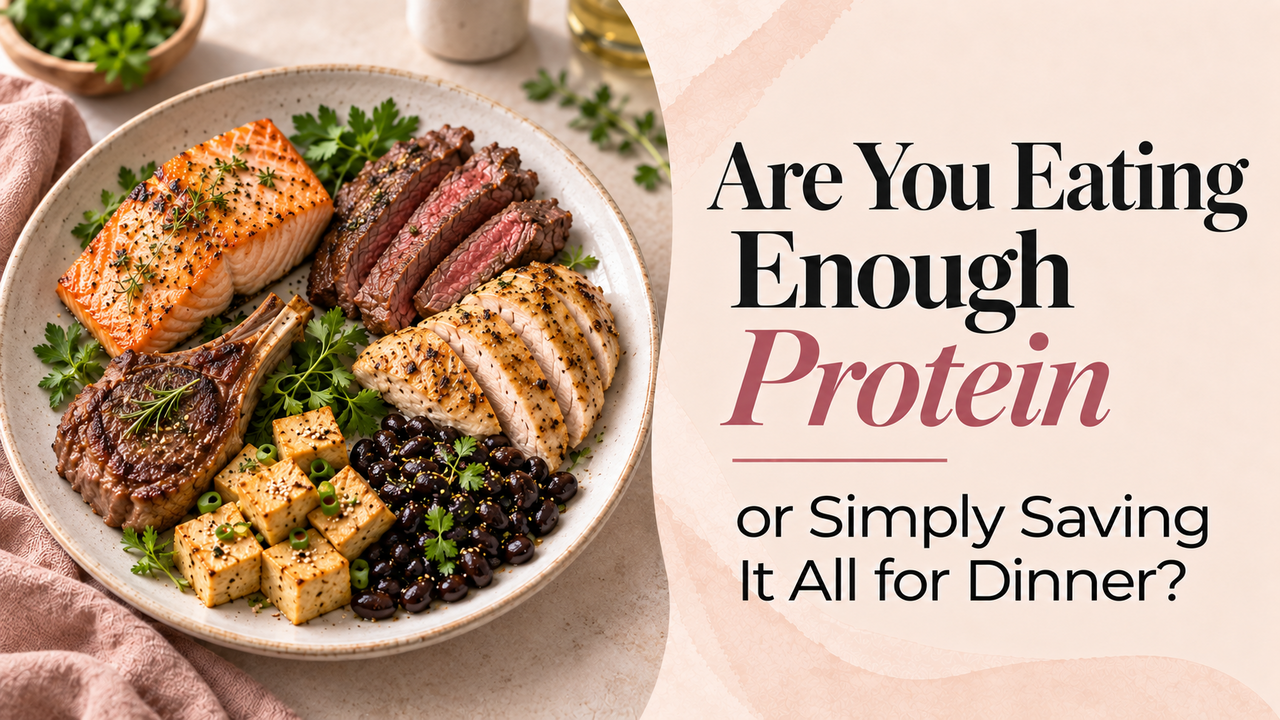
At half past three, you find yourself standing in the kitchen or looking into your desk drawer for something to keep you going. Breakfast was toast eaten while checking messages. Lunch was soup, a piece of fruit or perhaps whatever you could pick up between meetings. Dinner will include chicken, fish, tofu or beans, so you assume your protein is covered.
It may be. But it is also possible that almost all of it is waiting for you at the end of the day.
Protein has become one of the loudest subjects in nutrition. One person tells you that every meal needs a precise number of grams. Another suggests that ordinary food is no longer enough and that everyone in midlife needs powders, bars and fortified snacks. Somewhere between the two sits a much calmer and more useful question: are you eating enough across the whole day, and would one or two earlier meals benefit from a little more?
That is the question we are exploring today. Not because protein can rebalance hormones, reverse menopause or solve every change you notice in your body. It cannot. Protein matters because it supplies amino acids that the body uses to build and repair tissues, including muscle, and because maintaining muscle becomes increasingly relevant as we age.
What does “enough” actually mean?
UK government reference values list 45 grams of protein a day for women aged 19 to 64 and 46.5 grams for women aged 65 and over. These are population reference figures, not a personalised prescription and not a promise of the amount that will optimise muscle gain for every woman.
Your needs can differ with body size, activity, resistance training, age, illness, recovery and overall energy intake. A woman lifting weights regularly may be asking a different question from someone who is sedentary. A woman recovering from surgery, living with frailty or eating very little because of poor appetite needs individual advice rather than a number taken from a general article.
It is also important to understand the difference between meeting a reference intake and assuming that ever-higher amounts must be better. Protein is essential, but it is not a competition.
The UK Government Dietary Recommendations state that these figures apply to the general population and that individual requirements may vary. That caution deserves to remain attached whenever the numbers are repeated.
What do the better trials tell us?
The most convincing message is not that protein works alone. It is that sufficient protein and resistance exercise belong in the same conversation.
A 2022 systematic review and meta-analysis brought together 74 randomised controlled trials in healthy adults. Most of the trials combined additional protein with resistance exercise. Across those studies, extra protein was associated with small additional gains in lean body mass, while improvements in strength were smaller and physical-function results were uncertain. Only six studies examined extra protein without resistance exercise, and their combined effect on lean body mass was not statistically significant.
An earlier meta-analysis of 49 trials involving 1,863 participants reached a similar practical conclusion: protein supplementation produced modest additional improvements in fat-free mass and strength during prolonged resistance training. The word modest matters. Protein supported the training response; it did not replace the training.
There is also evidence that simply pushing intake higher does not guarantee a better result. In a six-month randomised trial of 92 functionally limited men aged 65 and over, a controlled diet providing 1.3 grams per kilogram a day did not improve lean mass, strength or physical function compared with 0.8 grams per kilogram. The participants were older men, not midlife women, so the study cannot answer every question for this audience. It does, however, challenge the idea that a higher number automatically produces more muscle.
Taken together, the research supports a sensible position: meet your needs, pair adequate protein with progressive strength work if that is appropriate for you, and be wary of anyone presenting one large target as essential for every woman.
Does protein have to be perfectly spread across every meal?
This is where the science becomes less certain.
Short laboratory studies show that eating protein stimulates muscle protein synthesis, and this has led to the appealing idea that protein should be divided evenly across breakfast, lunch and dinner. It is a reasonable theory. Long-term studies looking at actual changes in muscle mass and function, however, have not produced a consistent answer.
A review of the research on protein distribution found that the evidence was limited and mixed. Of five longer-term studies examining body composition, only one favoured a balanced distribution, three found no difference and one favoured a more uneven pattern. In an eight-week randomised trial in older adults, changing the distribution pattern did not alter lean mass, strength or function.
This does not mean breakfast and lunch do not matter. It means we should not tell women that a dinner-heavy pattern is automatically harmful or that every meal must reach a rigid threshold. Total daily intake appears to be the more important first question. Distribution can then become a practical way of improving that total, especially if the earlier part of your day contains very little protein.
In other words, you do not need to make breakfast, lunch and dinner mathematically identical. You may simply benefit from allowing dinner to share the job.
What does a dinner-heavy day look like?
Imagine breakfast is two slices of toast with jam. Lunch is vegetable soup with a small roll. Dinner is salmon, potatoes and vegetables. The evening meal contains a recognisable protein source, while the first two meals contribute much less.
There is nothing wrong with toast, soup, potatoes or vegetables. The question is not what to remove. It is what you could add.
Breakfast might become toast with eggs, cottage cheese or nut butter, or yoghurt with oats, fruit and seeds. The soup at lunchtime could be made with lentils or beans, served with a boiled egg, accompanied by yoghurt, or followed by a simple protein-rich snack. None of those choices needs to look like a fitness meal.
Plant protein counts too. Beans, lentils, chickpeas, peas, tofu, tempeh, soya foods, nuts and seeds can all contribute. If you eat a vegetarian or vegan diet, variety and adequate overall intake matter; combining different plant foods across the day can help provide the amino acids and other nutrients you need.
The NHS includes beans, pulses, fish, eggs, meat and other alternatives among its main protein foods. Dairy foods and fortified alternatives can contribute too. The best source is not one universal food; it is the option that fits your dietary pattern, health needs, budget, preferences and appetite.
Start with the meal that needs the least disruption
You do not need to track every gram this week. Begin by looking at a typical day and circling the meal with the least obvious protein source.
If it is breakfast, ask what you could add without creating a new morning project. Perhaps milk or fortified soya drink in your oats, Greek-style yoghurt with fruit, eggs on toast, or leftovers if you prefer a savoury breakfast.
If it is lunch, think about what can survive a working day. Tinned fish, beans, lentils, eggs, tofu, cooked chicken, cottage cheese, hummus and edamame can all be used in simple combinations. A supermarket lunch can be improved by pairing items: soup with a protein-rich side, a grain salad with beans or fish, or fruit with yoghurt rather than fruit alone.
If your appetite is low in the morning, you do not have to force down a large meal. A smaller option may suit you better, and you can include protein later in the morning. Practical nutrition works with your appetite and routine rather than demanding that you eat according to somebody else's clock.
Use labels when they help, particularly because the protein content of yoghurts, plant alternatives, breads and prepared meals varies considerably. Then put the packet down. The purpose is to learn what your usual choices provide, not to make every meal feel like an audit.
Food first does not mean supplements are forbidden
Most women can obtain protein through ordinary food. A powder or fortified product may still be convenient when appetite, time, dietary restrictions or training make food-based options difficult. Convenience is not a moral failure, and neither is preferring a meal.
What matters is that a supplement solves a genuine practical problem rather than convincing you that your normal diet is inadequate without assessing it. Check the ingredients, serving size, allergens and overall nutritional value. Products marketed as high protein can also be high in sugar, saturated fat or simply expensive for what they provide.
If you have kidney disease, significant liver disease, a condition affecting protein metabolism, a history of disordered eating, or you have been advised to limit protein, seek advice from your GP or a registered dietitian before deliberately increasing your intake. The same applies if you are losing weight or strength unintentionally.
Your practical protein check
For the next two days, notice rather than judge.
Look at breakfast, lunch and dinner and identify where your main protein foods appear. If dinner is doing nearly all the work, choose one earlier meal and add a realistic source. Keep the rest of the meal familiar.
Then notice what the change is like to live with. Was it easy to prepare? Did you enjoy it? Could you repeat it on a busy day? Did it make the meal feel more complete? Those observations are more useful than forcing yourself to follow a plan that looks impressive but does not fit your life.
Protein matters in midlife, but it does not need to dominate your plate or your thoughts. Aim first for adequacy, variety and meals you can repeat. Let resistance exercise provide the reason for your muscles to adapt, and let protein provide some of the building material.
Dinner can still be your most substantial meal. It just does not have to carry the whole day alone.
Stay connected with news and updates.
Join our mailing list to receive the latest news and updates from our team.
Don't worry, your information will not be shared.
We hate SPAM. We will never sell your information, for any reason.