After 50, Women’s Health Needs a Bigger Conversation Than Menopause
Jul 25, 2026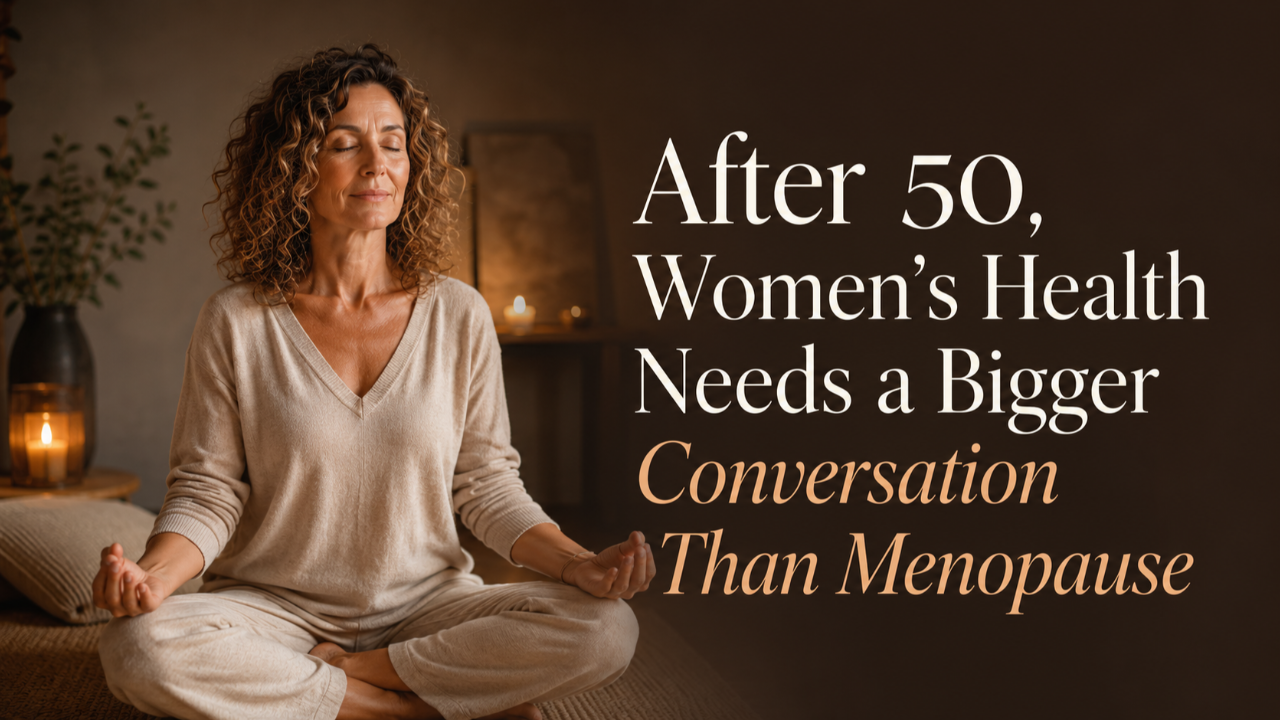
For far too long, conversations about women’s health after 50 have been surprisingly narrow. A woman mentions disrupted sleep, changes in weight, aching joints, brain fog or reduced energy, and the discussion quickly turns to menopause. Menopause matters, and women deserve informed support for it, but it is not the whole story.
Your health after 50 is shaped by far more than the presence or absence of hot flushes. It includes the strength of your muscles, the density of your bones, the condition of your heart, the quality of your sleep, your blood pressure, metabolic health, emotional wellbeing and ability to remain active and independent.
This is not a frightening list of problems waiting to happen. It is an invitation to have a more useful conversation about prevention. After menopause, women become more vulnerable to conditions including cardiovascular disease, stroke and osteoporosis, but many of the factors influencing these risks can be identified, discussed and addressed.
You may have reached your fifties feeling that you know your body reasonably well. Then sleep becomes unpredictable, your waistline changes, recovery takes longer and exercise affects you differently. You may wonder whether every new symptom is hormonal, caused by stress or simply part of getting older.
Often, these factors overlap. Hormonal changes may influence sleep, mood and body composition, while work pressure, caring responsibilities, reduced activity and interrupted recovery can amplify the effects. Harvard Health notes that sleep difficulties are common around the menopause transition and cannot always be attributed to hormones alone. Ageing sleep patterns, stress, night sweats and mood can all play a part.
This is why women deserve more than a quick instruction to lose weight, relax or accept that they are getting older. A better conversation asks what has changed, what might be contributing and which areas of health deserve closer attention.
One of the most important shifts after 50 is moving from symptom management towards long-term health protection. It is completely reasonable to want help with hot flushes, poor sleep or anxiety. At the same time, this stage offers an opportunity to assess the foundations that will support you for the next twenty or thirty years.
Heart health belongs near the beginning of that conversation. Cardiovascular disease is sometimes still imagined as primarily a male health problem, yet the menopause transition is recognised as an important period of increasing cardiometabolic risk for women. Changes can occur in cholesterol, blood pressure, blood glucose regulation and the distribution of body fat, particularly around the abdomen.
This does not mean menopause automatically causes heart disease. It means that midlife is an appropriate time to stop relying on how healthy you feel and begin knowing more about what is happening internally.
High blood pressure and high cholesterol frequently produce no obvious symptoms. In England, eligible adults aged 40 to 74 without certain pre-existing conditions should generally be invited for an NHS Health Check every five years. This can include an assessment of blood pressure, cholesterol and risk factors for cardiovascular disease, stroke, kidney disease and type 2 diabetes.
A practical first step is to find out when your blood pressure, cholesterol and blood glucose were last reviewed. Keep the results rather than simply being told that they are “fine”. Ask what the numbers mean in relation to your age, family history and overall cardiovascular risk.
This is not about becoming obsessed with test results. It is about replacing assumptions with information. When you know your baseline, you and your healthcare professional can recognise changes earlier and make more informed decisions.
Bone health deserves equal attention, although it is much easier to overlook because bone loss is usually silent. Women can lose bone more rapidly around menopause as oestrogen levels decline, and this loss can continue as they age.
You cannot assess bone strength by looking in the mirror. A woman may appear slim, fit and healthy while still having reduced bone density. Your personal risk can be influenced by family history, early menopause, low body weight, smoking, certain medications, previous fractures and some health conditions.
Supporting your bones does not require a punishing exercise programme. Bones benefit from suitable weight-bearing movement and resistance training because these activities place an appropriate demand on them. Harvard Health reports that weight-bearing and strength-based exercise can help slow bone loss, while balance work may also reduce the likelihood of falls.
Walking is valuable, but it should not be the only form of movement in your week. Depending on your current health and ability, consider including strength exercises, stair climbing, controlled step-ups, suitable impact activity and balance practice. Women with osteoporosis, significant joint problems or previous fractures should seek individual guidance before adding impact or heavy resistance.
Muscle is another major part of the conversation. Women have often been encouraged to focus on becoming lighter rather than becoming stronger. Yet muscle supports movement, balance, joints, posture, glucose regulation and physical independence.
Harvard Health has increasingly emphasised the importance of women building and preserving muscle rather than pursuing thinness alone. Physical activity and resistance exercise can help protect against age-related loss of muscle mass, strength and function.
You may first notice declining strength through ordinary tasks rather than through a visible change in your body. Carrying shopping feels harder, your legs tire on the stairs or you begin using your hands to push yourself out of a chair. These are not reasons to panic. They are useful signals that your muscles may benefit from a stronger stimulus.
Aim to include muscle-strengthening activity at least twice a week, adjusted to your starting level. This might include chair squats, wall press-ups, resistance-band rows, supported lunges, heel raises and carrying exercises.
The final repetitions should feel challenging while your movement remains controlled. As an exercise becomes easier, you can gradually increase the resistance, repetitions or range of movement. The goal is not exhaustion. It is to give your body a reason to adapt.
Strength training is also relevant to women who already practise yoga, swim or walk regularly. Those activities provide important benefits, but they may not always place enough progressive demand on every major muscle group. You do not have to abandon the movement you enjoy. You can add resistance work alongside it.
The health conversation after 50 should also include food, but not through another restrictive diet. Many women respond to midlife weight changes by cutting food dramatically, skipping meals or removing entire food groups. This may create short-term scale changes, but it can also make it more difficult to nourish muscle, maintain energy and create a sustainable routine.
A more useful question is whether your meals support the body you are asking to carry you into later life. Is there a recognisable source of protein? Are you eating enough vegetables, fruit and fibre-rich foods? Are your meals satisfying enough to reduce constant grazing and cravings?
Protein becomes particularly relevant when you are trying to preserve muscle, especially when combined with resistance exercise. Useful sources can include eggs, yoghurt, fish, poultry, tofu, beans, lentils, nuts and seeds. The answer is not necessarily to consume huge quantities or buy specialist products. It is to distribute nourishing sources more consistently across your day.
Rather than trying to transform your entire diet, improve the meal that currently supports you least. Add protein to breakfast, take a balanced lunch to work or include more beans, vegetables and whole foods in your evening meal. A realistic improvement repeated regularly is more valuable than a perfect plan that lasts for four days.
Brain health and cognitive confidence also deserve a place in the discussion. Many women experience forgetfulness, difficulty finding words or reduced concentration around the menopause transition. Harvard Health notes that hormonal changes may play a role, but sleep disruption, stress, depression and the severity of other menopause symptoms can also affect memory and concentration.
Occasionally forgetting why you entered a room is not automatically a sign of dementia. A tired, overloaded brain will not perform as well as a rested one. Before concluding that your memory is failing, consider your sleep, stress levels, workload, mood and how many demands you are trying to hold at once.
Helpful practical steps include reducing unnecessary multitasking, writing down important information, protecting periods of uninterrupted work and creating proper transitions between demanding tasks. Exercise, sleep, social connection and learning new skills can also support overall healthy ageing.
However, persistent or worsening changes in memory, personality, language or ability to manage everyday tasks should be discussed with a healthcare professional. Women should never feel that a significant change has to be dismissed as “just menopause”.
Mental health must be treated with the same seriousness. Midlife may bring career pressures, changes in relationships, caring responsibilities, bereavement, children leaving home or worries about ageing parents. These experiences can arrive alongside hormonal and physical changes, making it difficult to identify one clear cause for low mood or anxiety.
You do not need to prove that your symptoms are hormonal before asking for support. Persistent anxiety, low mood, loss of interest, irritability or feelings of being unable to cope deserve attention whether their origin is biological, psychological or a combination of both.
The same applies to sleep. Women are often advised to improve their bedtime routine when the real issue may include severe night sweats, anxiety, pain, sleep apnoea or another health concern. Good sleep habits can help, but persistent disruption deserves proper assessment rather than endless self-blame.
Start with the foundations you can influence. Keep a relatively consistent waking time, reduce late caffeine, create a cooler bedroom and allow a short period of transition between working and sleeping. Seek medical advice when disrupted sleep is affecting your health, concentration, mood or ability to function.
Preventive screening also becomes increasingly important after 50. In England, women aged 50 up to their 71st birthday are normally invited for breast screening every three years. Cervical screening is routinely offered between 25 and 64, while bowel cancer screening is now offered every two years to eligible adults aged 50 to 74.
These invitations are easy to postpone when you are busy, particularly when you feel well. Put them in your diary and complete them. Screening does not guarantee that every condition will be found, but it can help identify certain changes before symptoms appear.
Screening is not a replacement for seeking help when something feels wrong. A breast change, unexplained bleeding, persistent bloating, blood in your stool, unexplained weight loss or another concerning symptom should be discussed rather than left until your next routine invitation.
Your health conversation should also include the parts of women’s health that are still difficult to mention. Vaginal dryness, painful sex, bladder leakage, pelvic heaviness and changes in sexual desire are common topics in clinical practice, yet many women remain silent because they feel embarrassed or assume nothing can be done.
These symptoms are not trivial simply because they are private. They can affect movement, relationships, sleep, confidence and quality of life. A GP, menopause specialist, women’s health physiotherapist or other appropriately qualified professional may be able to offer assessment and treatment.
After 50, health should not be reduced to the number on the scales. Weight can be one useful part of a broader clinical picture, but it cannot show your blood pressure, bone density, muscle strength, cardiovascular fitness, sleep quality or emotional wellbeing.
A woman may lose weight through severe restriction while also losing muscle and energy. Another woman may remain at a similar weight while becoming stronger, fitter and metabolically healthier. This is why health progress needs more than one measure.
Notice how easily you rise from a chair, climb stairs, carry shopping and recover after activity. Track your blood pressure when appropriate. Pay attention to sleep, mood, strength and stamina. These measures tell you something about how your body is functioning, not simply how much space it occupies.
The most powerful change may be learning to become an active participant in your healthcare. Before an appointment, write down your symptoms, when they began, how frequently they occur and how they affect your life. Take a list of medications and supplements, and include your relevant family history.
Ask direct questions. Could anything else be contributing to these symptoms? Which checks are appropriate for me? What changes should prompt me to return? What are the benefits, limitations and risks of the available treatments?
You do not need to arrive with your own diagnosis. You simply need to describe what is happening clearly and expect your concerns to be taken seriously.
The new conversation around women’s health after 50 is not about turning ageing into a medical emergency. It is about refusing to ignore important changes or accepting preventable decline as inevitable.
It recognises that menopause matters, but so do your heart, bones, muscles, brain, sleep and emotional health. It recognises that weight is not the only measure of wellbeing and that feeling exhausted all the time is not simply the price of being a busy woman.
Most importantly, it replaces fear with informed action. You do not have to overhaul everything at once. Book the health check. Begin two short strength sessions. Improve one meal. Complete the screening kit. Ask the question you have been too embarrassed to raise.
Your fifties are not the point at which your health story becomes smaller. They can be the point at which you finally receive a fuller picture and begin making decisions that protect the decades still ahead.
Women’s health after 50 needs a bigger conversation than menopause because you are more than a collection of symptoms. You are a whole woman with a future worth strengthening, protecting and fully living.
Stay connected with news and updates.
Join our mailing list to receive the latest news and updates from our team.
Don't worry, your information will not be shared.
We hate SPAM. We will never sell your information, for any reason.