Why September Can Be a Better Time for a Fresh Start Than January
Sep 01, 2026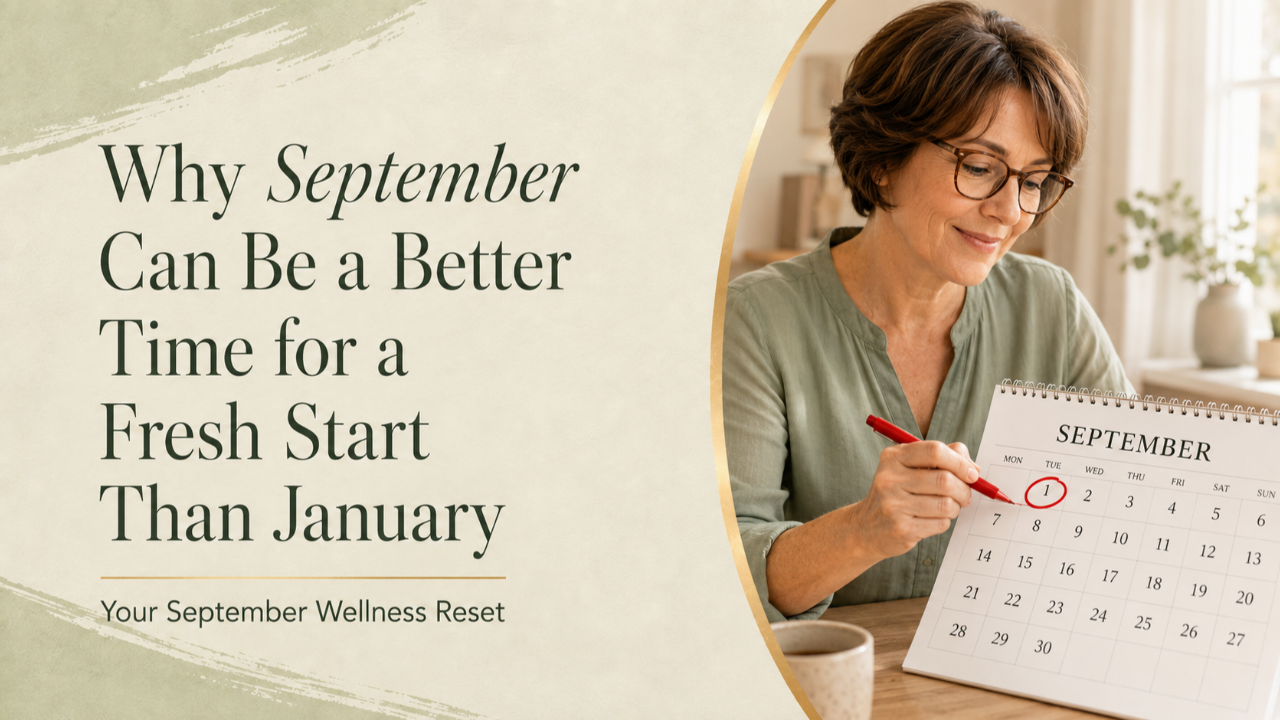
You can be decades beyond the classroom and still feel the appeal of a new notebook in September. There is something quietly hopeful about an unused page, even if the first thing written on it will probably be a shopping list. That familiar sense of a new term can stay with us long after our schooldays have ended.
Perhaps you feel it when you open your diary after the summer. Alongside the meetings and appointments, there is a small urge to make room for something of your own. You begin wondering whether this might be the month you return to swimming, or finally try the class you have been looking at for weeks.
That feeling is worth paying attention to. For a woman balancing work with the demands of midlife, September can offer a useful moment to begin. Its particular advantage may be that it feels like an opportunity to adjust your life while you are already living it.
January can arrive with rather a lot of expectations attached. A new year seems to invite an assessment of everything, and a modest wish to feel better can quickly become an ambitious programme of personal improvement. If you have ever written a January plan that appeared to require a different job and several extra hours in the day, you will know the feeling.
September can feel more manageable. You have a month in front of you, a little more knowledge of what you need, and no obligation to announce a complete transformation. A useful beginning could be as ordinary as finding a place for a weekly walk you will enjoy.
There is some science behind our attraction to beginnings. Research published in Management Science found increases in gym visits and commitments to goals after meaningful calendar markers, including the start of a new week or month. The researchers called this the “fresh start effect”. Their findings concern the impulse to begin; they do not establish September as universally better than January or guarantee that enthusiasm will last. Dai, Milkman and Riis: The Fresh Start Effect.
September’s usefulness, then, is personal. If the change of season helps you look ahead with a little more interest, you can use that opening. You do not need to wait for a date that someone else has decided is the proper time to begin.
For some working women, this month also brings a more familiar rhythm. Colleagues return from leave, regular activities resume, and the shape of the week becomes easier to see. Before every available space fills up, consider whether one of those spaces could belong to you.
That might mean returning to a class at the same time each week. It might mean arranging a regular lunchtime walk with a colleague, if your working day allows it. The practical benefit is having something specific to return to when the initial enthusiasm fades.
You also arrive in September with information that you did not have in January. Perhaps you noticed how much you enjoyed walking when you had somewhere interesting to go. Perhaps an evening outdoors reminded you that there are ways to unwind which leave you feeling pleasantly connected to the day.
Even if summer was busy and you did not go away, there may have been one small experience worth carrying forward. Think of a meal you enjoyed making, or an activity that helped you forget about your inbox for a while. What would you like to bring into September because you enjoyed how it felt?
This is particularly useful in midlife, when you may be reconsidering what looking after yourself actually means. You might care more about feeling confident on a walking holiday than fitting into a particular dress. You might simply miss having an interest that nobody needs you to organise on their behalf.
Let that knowledge influence your fresh start. You have experience of what you enjoy and what tends to become another chore. A new season gives you an opportunity to make choices with that experience in mind.
To keep things light, think of September as a four-week trial. Choose something you would like to make more room for, and decide how you will try it once this week. “I will go swimming on Thursday after work” gives you a first visit to arrange, with room to learn whether that time suits you.
Make the preparation part of the plan. If you want to swim, check the session time and put your bag somewhere you will remember it. If you want a more dependable lunch, choose something you already like eating and make sure the ingredients are available.
Leave room for enjoyment, too. You are allowed to choose the class with the music you love, or the walking route that takes you past a favourite garden. Looking after yourself can include experiences you anticipate with pleasure.
And if September is already looking complicated, begin at the scale your life can hold. An occasional swim may be the right starting point before a weekly routine becomes possible. You can also choose to revisit the plan after a particularly demanding work deadline, without declaring the whole month a missed opportunity.
At the end of September, ask whether your small experiment made life feel better in a way you value. Did you look forward to it, and was the arrangement practical enough to repeat? Your answers can help you decide what October might look like.
You do not need a flawless summer behind you to begin something useful now. You bring everything you have learnt about yourself into this next part of the year. What would you like to be glad you started by the time October arrives?
Stay connected with news and updates.
Join our mailing list to receive the latest news and updates from our team.
Don't worry, your information will not be shared.
We hate SPAM. We will never sell your information, for any reason.