Which Habits Are Supporting You and Which Are Simply Exhausting You?
Aug 31, 2026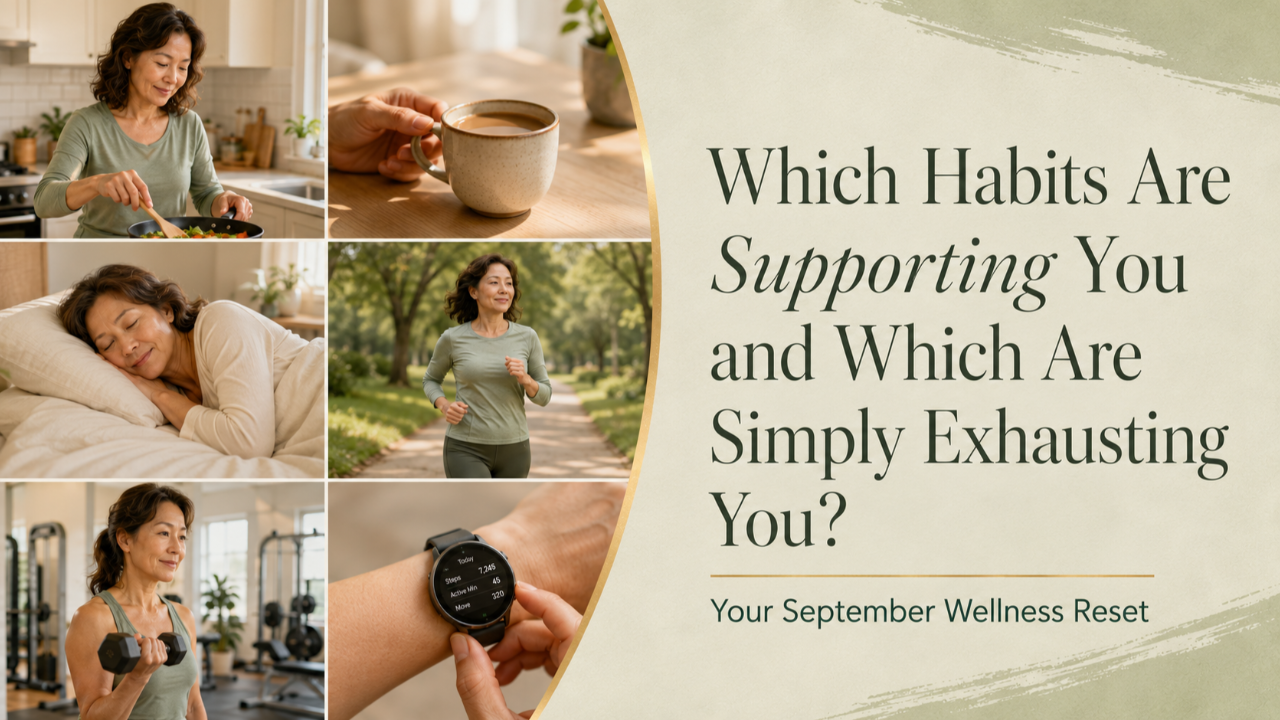
By the time you close your laptop, you may have spent the whole day being disciplined. You fitted in exercise before work and kept lunch deliberately light. Yet now you are standing in the kitchen, too tired to decide what to eat, wondering why looking after yourself seems to require so much effort.
It is a frustrating position to find yourself in, particularly when you are used to solving problems and getting things done. Your instinct may be to organise yourself more carefully or tighten the rules. Before adding another expectation, though, it is worth examining the routines already occupying your day.
What is each habit giving you, and what is it asking you to give up? An early workout might bring enjoyment and a sense of achievement. If making it happen repeatedly means cutting short an already disrupted night, the whole arrangement deserves attention.
A useful habit review looks beyond how something feels in the moment. Strength training can feel demanding while contributing to greater capability over time, and a quiet evening can be restorative even when you feel restless at first. Consider the pattern across several days, including how you recover and whether the routine is helping you live more comfortably.
Sleep is a good place to begin because it is often where a busy woman finds the time for everything else. You stay up to finish an outstanding task, then wake early to claim a little space for yourself. Each decision can seem reasonable on its own, while the opportunity to sleep gradually becomes smaller.
Research in women shows why that trade-off deserves care. In a randomised crossover trial involving 38 women, including 11 who were postmenopausal, researchers compared six weeks of adequate sleep with six weeks in which participants were asked to reduce sleep by 90 minutes each night. During the restricted phase, they averaged about 6.2 hours of sleep, and a fasting measure of insulin resistance increased, independently of changes in body fat. This means their bodies were showing signs of responding less effectively to insulin, the hormone that helps regulate blood glucose. Sleep restriction trial in women, published in Diabetes Care.
The study examined a repeated pattern over weeks. It gives us a reason to include sleep in a health plan, particularly when a supposedly helpful routine regularly takes time away from it. If your early exercise session depends on shortening the night, consider whether a different time or a shorter session would make the overall routine more supportive.
Of course, having enough time in bed and being able to sleep are different problems. If night sweats or persistent sleep difficulties are keeping you awake, that deserves support as part of your menopause care. The NHS recognises that sleep problems can affect daily life during perimenopause and menopause; this is a valid subject to raise with your GP. NHS guidance on menopause symptoms.
Your afternoon coffee is another habit worth looking at in context. It may offer a welcome pause and help you feel alert for the next meeting. The question is whether its timing or quantity is also affecting the night that follows.
In a randomised crossover study of 23 young men, a large single dose of 400 mg of caffeine affected aspects of sleep even when taken 12 hours before bedtime. The smaller 100 mg dose did not significantly affect sleep at the times tested. Those findings highlight the importance of dose and timing, although they cannot establish a universal caffeine cut-off for midlife women. Research on caffeine dose, timing and sleep.
If you suspect your later coffee is playing a part, try moving it earlier or choosing decaffeinated coffee and observe your sleep over the following week. Keep the pleasant part of the ritual, including the chance to step away from your desk. You are investigating whether the routine suits you.
Food habits deserve the same curiosity, especially if being “careful” has gradually come to mean eating as little as possible during the working day. Think about the lunch you choose automatically. Does it leave you comfortably satisfied, or are you hungry again while trying to concentrate on the next task?
A salad can be a substantial meal, but a bowl of leaves with very little else may not provide what you need. Adding lentils and cooked grains, for example, can turn it into something more complete. The NHS Eatwell Guide includes starchy carbohydrates alongside protein foods and vegetables, and explicitly says that dietary balance can be achieved across a day or week. Every individual meal does not have to be a perfect project. The NHS Eatwell Guide.
For your review, notice whether the amount and timing of food fit the demands of your day. A practical question is whether a more substantial lunch changes how you feel when you arrive home. Treat that as something to explore, while remembering that hunger and fatigue can have several influences.
Then consider the habit of staying at your desk until everything is finished. Perhaps you have begun treating movement as something that happens only when you are wearing gym clothes. On a busy day, that can leave a long stretch between sitting down in the morning and finally moving properly again.
There is research behind the value of interrupting that pattern. In a randomised crossover trial of 30 sedentary adults, six five-minute bouts of moderate walking, spread hourly across a six-hour period, improved reported energy and reduced fatigue compared with uninterrupted sitting. This was a small, short-term study, so it does not establish a guaranteed remedy for persistent tiredness. It does offer a practical reason to make room for movement during the working day. Research on walking breaks, energy and fatigue.
You could walk briefly after finishing a piece of work, or use part of a break to leave your chair and move around. Choose opportunities that fit your role, especially if you have limited control over your schedule. Notice whether those interruptions help you feel more comfortable as the day progresses.
Your exercise routine itself can also be reviewed without abandoning ambition. NHS guidance combines aerobic activity with strengthening work on at least two days a week, alongside reducing prolonged sitting. The weekly aerobic target is at least 150 minutes of moderate activity or 75 minutes of vigorous activity, or an equivalent combination. Those recommendations allow different ways of organising movement; they do not require every session to be exhausting. NHS physical activity guidance.
Look at whether your current schedule leaves you recovering well enough to return to it. A demanding session can belong in a supportive routine, while repeatedly pushing through unusual exhaustion is a reason to reassess what is happening. The aim is a pattern you can build on, with appropriate recovery and help when you need it.
Some habits ask for energy through the administration they create. Meal planning might save you time, yet a plan requiring a different recipe every evening could leave you with an exhausting shopping list. A simpler rotation of meals you enjoy may give you the practical support you were seeking in the first place.
The same question applies to how available you make yourself. If every pause becomes an opportunity to answer another message, consider whether you have any part of the day in which nothing new is being asked of you. Depending on your circumstances, protecting that space may require an agreement about work expectations or a conversation about responsibilities at home.
For this Monday’s review, choose one recurring moment when you tend to feel depleted. Describe what usually happens beforehand, using plain observations rather than judgements about yourself. “I eat lunch at my desk and often leave half of it when a call starts” gives you something concrete to work with.
Next, choose one adjustment and decide what you will observe. You might try protecting time to finish lunch and notice how hungry you feel later, or simplify your evening meal plan and see whether it reduces the effort of getting dinner ready. Keep other changes limited where possible, so the experiment remains manageable and easier to interpret.
Give equal attention to something that is already helping. The walk you enjoy with a colleague may be a habit worth protecting, even if it never appears in your fitness app. A review should help you recognise the support already present in your life.
Persistent exhaustion also deserves attention beyond a habit review. The NHS recommends seeing a GP if you have been tired for a few weeks without knowing why, or if tiredness affects your daily life. You can reflect on your routines while seeking appropriate assessment; you do not have to solve unexplained fatigue by yourself. NHS advice on tiredness and fatigue.
As September begins, give yourself permission to examine what you have been asking your routines to achieve. Keep noticing which arrangements make an ordinary day more manageable and which need adjustment. You deserve to feel the benefit of the care you give yourself.
Stay connected with news and updates.
Join our mailing list to receive the latest news and updates from our team.
Don't worry, your information will not be shared.
We hate SPAM. We will never sell your information, for any reason.