Why the Scale Doesn't Tell the Whole Story During Menopause
Jun 02, 2026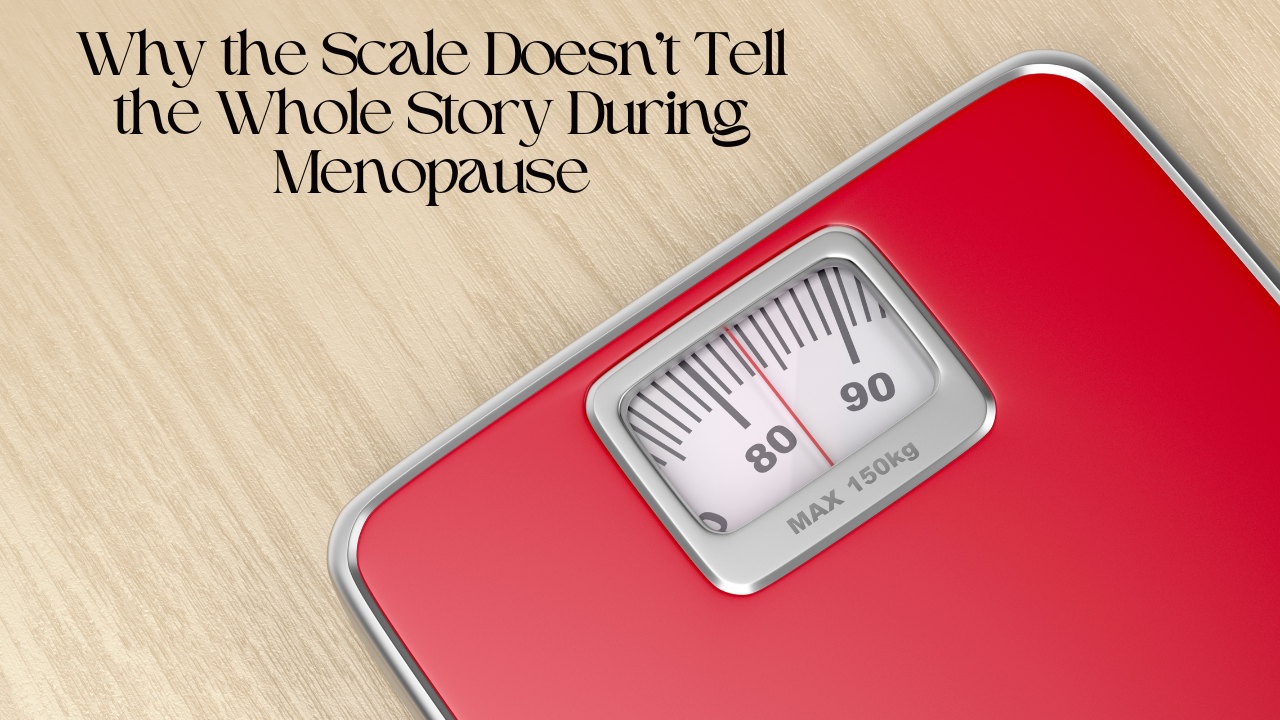
Have you ever stepped on the scales, seen the same number as last month, and still felt frustrated because your clothes fit differently?
Or perhaps you've been exercising consistently, eating better, feeling stronger, and yet the scales refuse to budge.
If so, you're not alone.
Many women enter menopause believing that weight is the most important measure of health. We've been conditioned to think that if the scales go down, we're succeeding, and if they stay the same, we're failing.
But the science tells a very different story.
In fact, some of the most important health changes happening during menopause have very little to do with body weight and everything to do with body composition.
What Is Body Composition?
Body composition simply refers to what your body is made of.
The scales tell you your total weight, but they cannot tell you how much of that weight is muscle, fat, bone, water, or connective tissue.
This means two women can weigh exactly the same amount yet have completely different levels of fitness, strength, health, and metabolic function.
According to research published in journals such as The Journal of Clinical Endocrinology & Metabolism and Menopause, women commonly experience changes in body composition during midlife, even when overall weight remains relatively stable.
Many women lose muscle while gaining fat.
The scales may barely move.
But the body changes significantly.
The Menopause Body Composition Shift
One of the most well-documented findings in menopause research is that declining estrogen levels are associated with changes in body composition.
Studies from the landmark Study of Women's Health Across the Nation (SWAN) have shown that women tend to gain abdominal fat and lose lean muscle mass during the menopause transition, regardless of whether their overall body weight changes dramatically.
This helps explain why many women say:
"I weigh the same, but none of my clothes fit properly."
They're often right.
The issue isn't necessarily weight gain.
It's a shift in where fat is stored and how much muscle is being maintained.
Why Muscle Matters More Than Most Women Realise
When many women think about exercise, they focus on burning calories.
However, researchers increasingly believe that preserving muscle may be one of the most important goals during menopause.
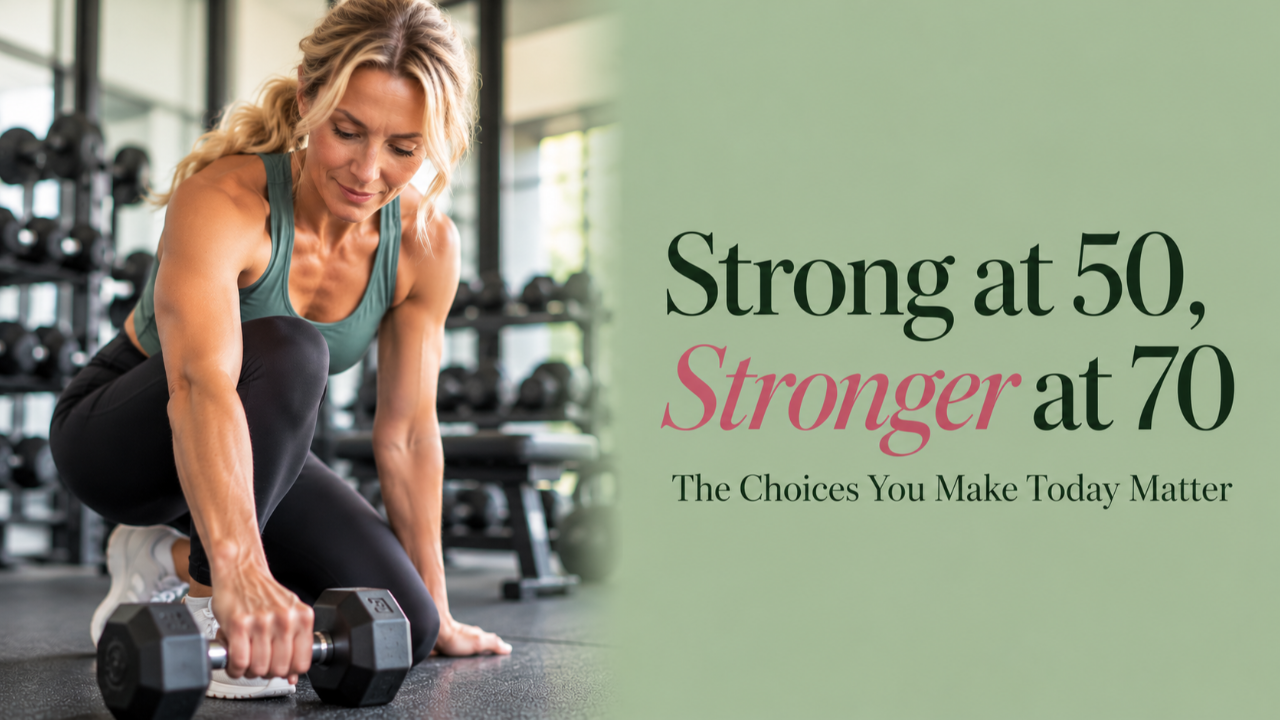
Muscle helps support strength, mobility, balance, bone health, metabolism, and independence as we age.
Harvard Health frequently highlights the importance of maintaining muscle mass because age-related muscle loss is associated with reduced physical function, increased frailty, and a higher risk of falls later in life.
In practical terms, muscle helps you carry shopping, climb stairs, lift luggage, play with grandchildren, and continue doing the activities you enjoy.
Those benefits won't show up on the scales.
But they matter enormously.
Why the Scale Can Be Misleading
Imagine two scenarios.
In the first, a woman loses 5 pounds of muscle and gains 5 pounds of fat.
The scales show no change.
Yet her metabolism may be slower, her strength reduced, and her body composition less favourable.
In the second scenario, a woman begins strength training and gains several pounds of muscle while losing a similar amount of body fat.
Again, the scales may show very little change.
But her health, strength, posture, metabolism, and physical function may have improved dramatically.
The scales cannot distinguish between these two outcomes.
That's why relying on weight alone can be misleading and discouraging.
The Evidence on Strength Training
Research published in respected journals including The British Journal of Sports Medicine, JAMA Network Open, and The Journal of Bone and Mineral Research consistently shows that resistance training can help preserve muscle mass, improve strength, support bone health, and enhance physical function in midlife and older women.
Women who engage in regular strength training often experience improvements in body composition even when weight loss is modest.
This is one reason health professionals increasingly encourage women to focus on becoming stronger rather than simply becoming lighter.
Better Ways to Measure Progress
If the scales don't tell the whole story, what should women pay attention to?
One useful measure is how your clothes fit. A looser waistband or improved comfort in your favourite outfit may reflect positive changes in body composition even when weight remains stable.
Strength is another powerful indicator. Are you lifting heavier weights than you were three months ago? Can you carry shopping more easily? Are stairs less challenging?
Energy levels matter too. Many women report feeling more energetic and capable when they focus on building strength and supporting their health, regardless of what the scales say.
You might also consider tracking waist circumference. Research suggests that abdominal fat is more closely linked to health outcomes than overall body weight alone.
Practical Tips for Improving Body Composition
The good news is that body composition can be influenced at any age.
Strength training two or three times per week remains one of the most effective strategies for maintaining muscle and supporting healthy aging.
Prioritising protein at meals can help provide the building blocks needed for muscle repair and maintenance. Foods such as eggs, fish, chicken, Greek yogurt, beans, lentils, and tofu can all contribute.
Daily movement matters too. Walking, cycling, yoga, swimming, and simply sitting less can all support overall health and wellbeing.
Most importantly, be patient. Changes in body composition often occur more slowly than changes on the scales, but they are frequently far more meaningful.
A Different Way to Define Success
Perhaps one of the most liberating aspects of midlife is learning that health cannot be reduced to a single number.
Success might mean having more energy at the end of the day.
It might mean carrying your shopping without struggling.
It might mean feeling stronger, sleeping better, improving your balance, or feeling more confident in your own skin.
These victories matter.
And many of them will never be reflected by the scales.
The Bottom Line
The scale measures weight.
It does not measure strength, muscle, fitness, resilience, confidence, mobility, or overall health.
During menopause, body composition often changes in ways that the scales cannot capture. Women may lose muscle, gain fat, build strength, or improve their health without seeing dramatic changes in body weight.
Instead of focusing solely on what you weigh, consider paying attention to how you feel, how strong you are, how well your clothes fit, and how your body functions.
Because during menopause, the most important progress often happens in places the scales can never measure.
Stay connected with news and updates.
Join our mailing list to receive the latest news and updates from our team.
Don't worry, your information will not be shared.
We hate SPAM. We will never sell your information, for any reason.