Why Your Waistline Changes During Menopause (Even If Your Weight Doesn't)
May 28, 2026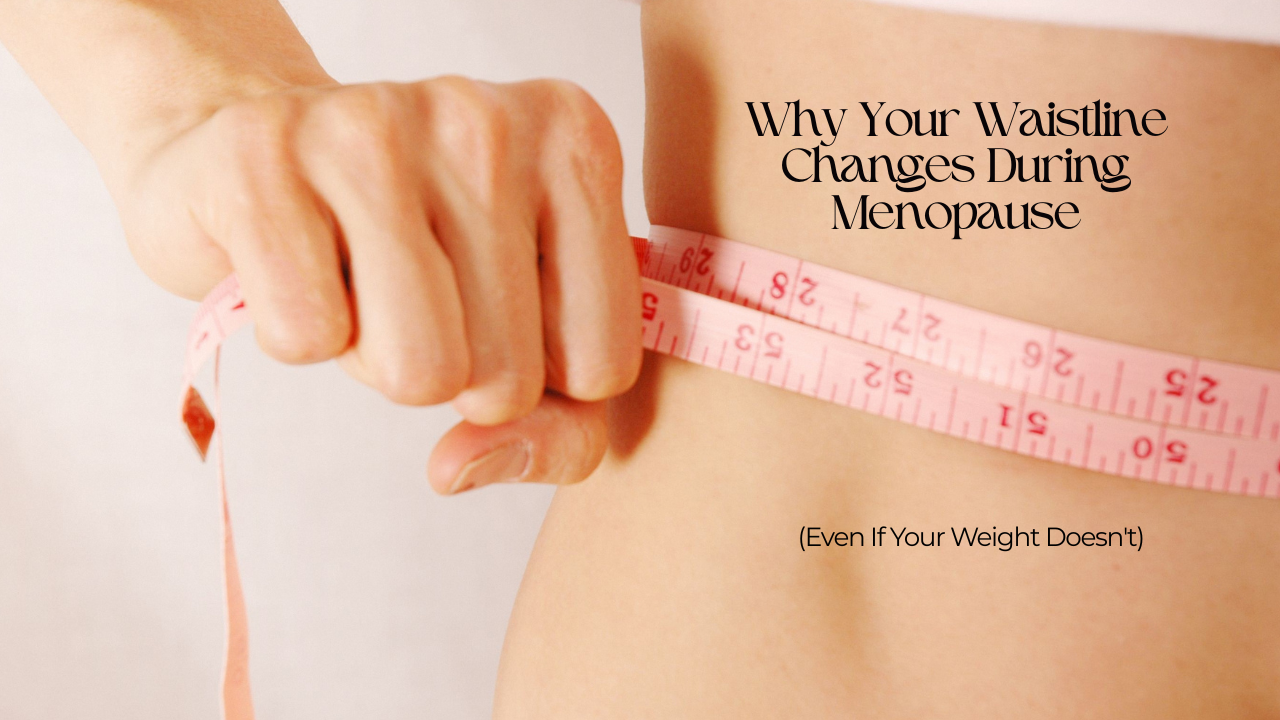
Have you ever stepped into a favourite pair of trousers and wondered why they suddenly feel tighter around the waist, even though the scales haven't moved much? It's one of the most common frustrations women experience during perimenopause and menopause. Many women find themselves eating similarly, exercising regularly, and maintaining a relatively stable weight, yet their body shape seems to be changing.
If this sounds familiar, you're not imagining it. Research shows that menopause can influence not only how much fat we carry, but where we carry it. In fact, changes in body composition often explain more than changes in body weight.
During our reproductive years, estrogen helps direct fat storage towards the hips, thighs, and buttocks. As estrogen levels begin to decline during menopause, the body gradually becomes more likely to store fat around the abdomen. This shift in fat distribution is one reason many women notice a thicker waistline, even when their weight remains largely unchanged.
The result is that your clothes may fit differently despite the number on the scales staying relatively stable. Many women describe feeling as though their body shape has changed overnight, when in reality the process has been happening gradually over several years.
Hormonal changes are only part of the story. Menopause is also associated with a gradual loss of muscle mass. Muscle naturally declines with age, and this process can accelerate during menopause if we are not actively working to maintain it. Because muscle helps support metabolism and contributes to a healthy body composition, losing muscle while gaining fat can significantly alter how the body looks and feels.
This is why weight alone is often a poor measure of health during midlife. Two women may weigh exactly the same, yet have very different amounts of muscle and body fat. The scales cannot tell the difference, but your clothes often can.
For many women, a changing waistline feels particularly frustrating because the strategies that worked in their 20s and 30s no longer seem effective. Eating less and exercising more doesn't always deliver the results they expect. This is partly because menopause is not simply about calories. It is also about hormones, muscle preservation, sleep quality, stress levels, and overall lifestyle habits.
Stress can be an important contributor too. Many women navigate menopause while managing demanding careers, family responsibilities, ageing parents, financial pressures, and countless daily commitments. Chronic stress can influence cortisol, a hormone linked to increased fat storage around the abdominal area. When poor sleep is added to the mix, it becomes easier to understand why body composition may start to shift.
The good news is that a changing waistline is not something you are powerless against. Research consistently shows that strength training is one of the most effective tools for preserving muscle during menopause. Maintaining muscle helps support metabolism, improves body composition, and contributes to better long-term health.
Nutrition also matters. Prioritising protein at meals can help support muscle maintenance while improving satiety and energy levels. Regular movement throughout the day, particularly walking, can support blood sugar balance, cardiovascular health, and overall wellbeing.
Perhaps most importantly, it can help to shift the focus away from the scales alone. Instead of asking, "How much do I weigh?" consider asking, "How strong am I?", "How much energy do I have?" and "How well is my body functioning?" These measures often provide a far more meaningful picture of health during menopause.
The Bottom Line
If your waistline seems to be changing during menopause, you're not alone. Hormonal shifts, muscle loss, stress, sleep disruption, and changes in body composition can all contribute to a thicker middle, even when your overall weight stays much the same.
Rather than focusing solely on weight loss, focus on preserving muscle, building strength, managing stress, prioritising sleep, and nourishing your body well. These habits not only support a healthier waistline but also help create a stronger, more resilient body for the years ahead.
Stay connected with news and updates.
Join our mailing list to receive the latest news and updates from our team.
Don't worry, your information will not be shared.
We hate SPAM. We will never sell your information, for any reason.