Why Your Waistline Changes After 40, Even When You Haven’t Changed Your Routine
Jun 13, 2026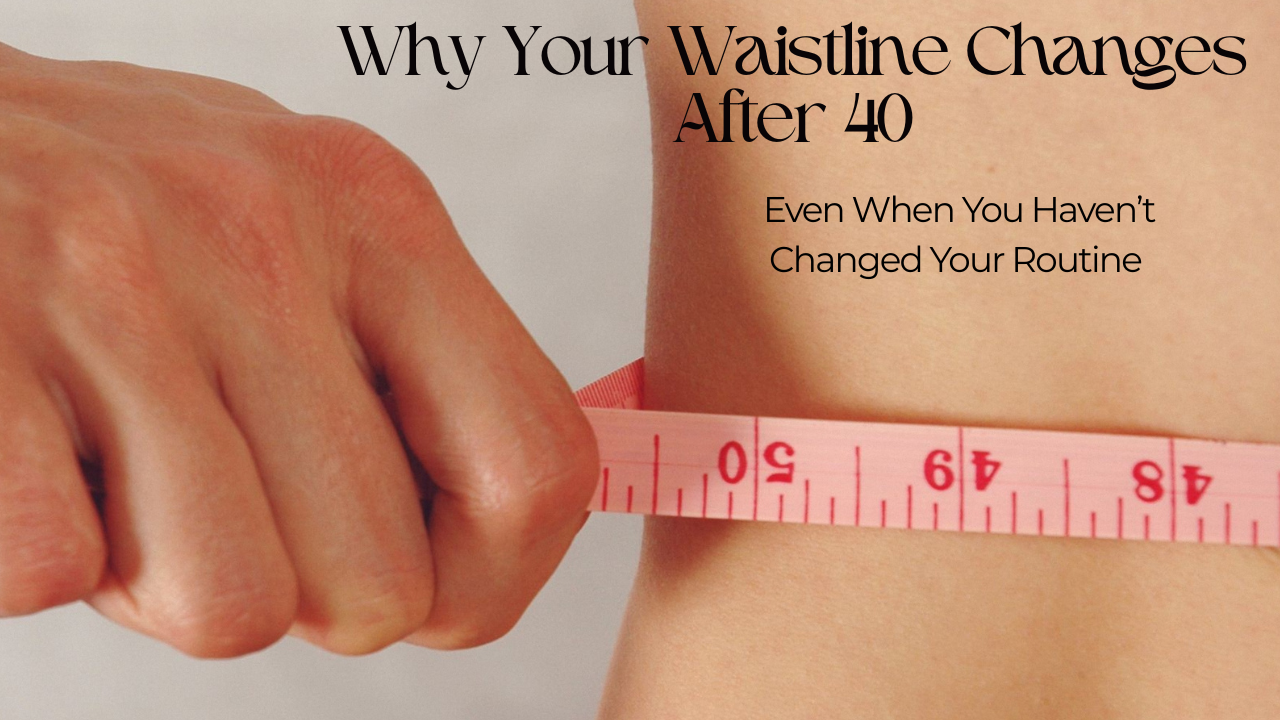
One of the most frustrating things many women notice in their 40s and 50s is that their waistline seems to change without warning. You may feel as though you are eating much the same way you always have. You may still be active, still trying to be sensible, and still doing your best to look after yourself. Yet your clothes feel tighter around the middle, your shape seems different, and the strategies that used to work no longer seem as effective.
This can feel deeply confusing, especially if you are someone who has always been fairly in tune with your body. It is easy to wonder whether you are doing something wrong, whether your metabolism has simply given up, or whether this is now just something you have to accept. For many women, it can also feel disheartening, because a changing waistline is not just about appearance. It can affect confidence, comfort, energy, and the way you feel in your own skin.
The truth is that this shift is very common in midlife, and it is not simply about lack of willpower. After 40, the female body begins to change in ways that can influence where fat is stored, how muscle is maintained, how efficiently energy is used, and how the body responds to stress. This is one reason why your waistline may change even when your routine has not changed very much at all.
Hormones are a big part of the picture. During perimenopause and menopause, oestrogen levels begin to fluctuate and eventually decline. Oestrogen does far more than regulate periods. It also influences body composition, insulin sensitivity, appetite, and where fat is more likely to be stored. When oestrogen levels change, the body often becomes more likely to store fat around the abdomen rather than around the hips and thighs. This is one reason many women notice that their body shape starts to look different, even if the number on the scale has not changed dramatically.
At the same time, muscle mass naturally starts to decline with age if it is not actively maintained. This process can begin gradually from the 30s onwards, but it becomes more noticeable in midlife. Muscle is metabolically active tissue, which means it helps the body use energy more efficiently. If muscle mass decreases, your body may burn fewer calories at rest than it once did. So even if you are eating in a similar way to how you did ten or fifteen years ago, your body may now be processing that energy differently.
This is why many women feel as though their body has changed the rules. It is not that your body is broken. It is that it is operating under a different hormonal and metabolic environment than it used to. What worked in your 20s or 30s may not work in the same way in your 40s and 50s.
Stress also plays a larger role than many women realise. Midlife is often a busy season of life. You may be managing work, family, ageing parents, financial pressure, relationship demands, and the emotional load of keeping everything together. When stress becomes chronic, cortisol levels can remain elevated more often than the body would like. Cortisol is a hormone designed to help us respond to challenge, but when stress becomes relentless, it can influence appetite, cravings, blood sugar, sleep quality, and fat storage. The abdominal area is often particularly sensitive to this.
This does not mean stress is the sole cause of belly fat, but it does help explain why the waistline can become more stubborn in times of pressure. A woman can be eating relatively well, doing her best, and still struggling with abdominal weight gain because her body feels under strain. If sleep is poor on top of that, the picture becomes even more complicated. Poor sleep affects hunger hormones, increases cravings, reduces energy for exercise, and can make the body more likely to hold onto weight.
Sleep is one of the most underestimated pieces of the midlife puzzle. Many women in perimenopause begin waking in the night, sleeping more lightly, or struggling to switch off. When sleep becomes fragmented, the body can become less resilient. Blood sugar control is often less steady, stress feels harder to manage, and the desire for quick energy in the form of sugary or refined foods can become stronger. None of this means you are lacking discipline. It means your biology is influencing your behaviour in very normal ways.
Another reason the waistline may change is that activity levels are not always quite what they used to be, even if life still feels busy. Many women are on the go all day, but not necessarily doing the kind of movement that protects muscle and supports metabolism. Being busy is not the same as building strength. Walking, yoga, swimming and staying active all matter greatly, but strength training becomes especially important after 40 because it helps preserve lean muscle, supports bone health, improves insulin sensitivity, and can help improve body composition over time.
This is where many women get stuck. They respond to a changing waistline by eating less and doing more cardio, assuming the answer is simply to be stricter. But eating too little can sometimes backfire, especially if protein intake is low and the body is already under stress. It can leave you tired, hungry, and more prone to cravings, while making it harder to maintain muscle. The goal in midlife is usually not to punish the body into shrinking. It is to support the body in a way that helps it feel safe, nourished, and strong.
That often starts with nutrition that is more balanced rather than more restrictive. Protein becomes particularly important, because it supports muscle maintenance, satiety, and recovery. Fibre also matters because it supports blood sugar balance, digestion, and fullness. Healthy fats are essential too, especially for hormone health and overall wellbeing. A diet built around adequate protein, colourful plants, fibre-rich carbohydrates and healthy fats tends to support the body far more effectively than constant dieting or skipping meals.
It can also help to rethink what progress looks like. Many women focus entirely on weight, but weight alone does not tell the full story. You can improve your body composition, feel stronger, and reduce abdominal fat over time without seeing dramatic weekly changes on the scales. How your clothes fit, how your energy feels, how strong you feel, and how well you recover are often more useful markers of progress in midlife.
There is also an emotional side to this conversation that matters. A changing waistline can feel personal. It can make women feel as though they are losing control, losing confidence, or losing the body they once recognised. That response is understandable. But it is important to remember that your body is not betraying you. It is adapting to a new phase of life. Midlife asks us to shift from fighting our bodies to understanding them better.
That understanding often leads to a more effective approach. Instead of asking, “How can I get back to the body I had at 30?” a more helpful question might be, “What does my body need from me now?” For many women, the answer includes more strength training, more protein, steadier meals, better sleep habits, less all-or-nothing thinking, and a more compassionate relationship with stress.
None of this means you have to simply put up with a growing waistline and hope for the best. Change is possible. The body remains wonderfully responsive at any age, but it tends to respond better to consistency than extremes. Small, repeatable habits often work far better than short bursts of effort followed by exhaustion. Midlife health is not built through punishment. It is built through support.
So if your waistline has changed after 40, even though your routine feels much the same, you are not imagining it and you are not failing. Hormones, muscle loss, stress, sleep, and metabolism all play a role. The answer is not to be harder on yourself. The answer is to work with the body you have now, not the one you had twenty years ago.
Your body is asking for a different approach, not a harsher one. When you begin to give it that support, many things start to improve. Your energy feels steadier, your strength returns, your confidence grows, and your body begins to respond in a way that feels more manageable and more hopeful.
Midlife may change your waistline, but it does not take away your ability to feel strong, healthy, and well in your own body. In many ways, this can be the chapter where you begin caring for yourself more wisely than ever before.
Stay connected with news and updates.
Join our mailing list to receive the latest news and updates from our team.
Don't worry, your information will not be shared.
We hate SPAM. We will never sell your information, for any reason.