Why Your Joints Ache in Menopause and What Your Body Is Trying to Tell You
Jun 14, 2026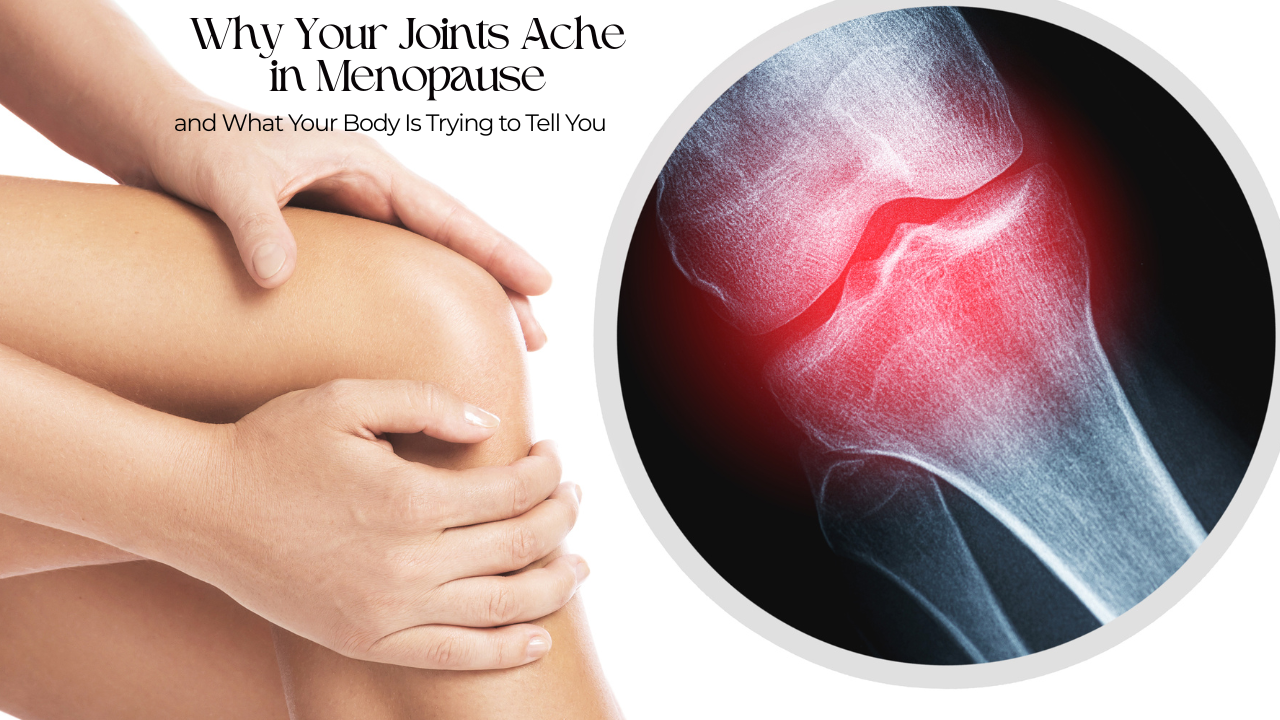
There is a particular kind of shock that comes when your body starts to feel older before you feel ready for it.
You get out of bed and your feet feel stiff. Your knees complain on the stairs. Your hips feel tight after sitting. Your shoulders ache for no obvious reason. Your hands feel less comfortable opening jars, carrying shopping, or gripping weights. You may still be active, still eating well, still doing the things you have always done, yet your body suddenly feels louder.
For many women in their 40s and 50s, joint pain can be one of the most surprising symptoms of perimenopause and menopause. Hot flushes are spoken about. Period changes are expected. Sleep disruption is becoming more widely discussed. But aching joints, stiff muscles and a body that feels less fluid can catch women completely off guard.
It can feel as though your body has aged overnight.
But your body is not simply falling apart. It may be trying to tell you that the internal environment has changed.
The symptom women often do not connect to hormones
Many women blame joint pain on ageing, exercise, sitting too much, old injuries, weight gain, or “just being busy”. Sometimes those things do play a role. But during perimenopause and menopause, there is another important piece of the puzzle: hormones.
Oestrogen is often thought of as a reproductive hormone, but it has effects throughout the body. It influences bones, muscles, tendons, ligaments, inflammation, collagen, joints and even the way pain is perceived. As oestrogen fluctuates and then declines, some women become more aware of stiffness, aching, reduced flexibility and slower recovery.
This is why you might notice your knees more. Your back more. Your hips more. Your shoulders more. It is also why you may feel fine one week and suddenly stiff the next.
It is not always a neat, predictable symptom. Menopause-related joint pain can feel like it moves around the body. One day it is your hands. Another day it is your hips. Then your neck feels tight, your feet ache, or your shoulders feel strangely restricted.
That unpredictability is part of what makes it so confusing.
Why mornings can feel worse
Many women notice that joint stiffness is worse first thing in the morning. You get out of bed and feel as though your body needs time to “warm up” before it works properly. After moving around, stretching, walking or having a warm shower, things may ease.
This can happen because joints, muscles and connective tissues often feel more restricted after a period of stillness. If sleep has been broken, inflammation is higher, stress is elevated, or muscles are under-conditioned, morning stiffness can feel more pronounced.
It can also be emotionally unsettling. You may wake up already feeling behind, because your body does not feel ready for the day. For a professional woman with responsibilities, meetings, deadlines and people depending on her, that can be incredibly frustrating.
You are not just dealing with discomfort. You are dealing with the feeling that your body is slowing you down.
What your body may be trying to tell you
Joint pain is not always a message to stop. Sometimes it is a message to change how you support your body.
Your body may be telling you that it needs more strength, not less movement. It may be telling you that recovery now matters more than it used to. It may be telling you that poor sleep, stress, low protein, low vitamin D, dehydration or constant sitting are affecting you more than they once did.
Midlife is often the point where the body becomes less forgiving of neglect. That does not mean you have done anything wrong. It simply means the strategies that kept you going before may no longer be enough.
In your 30s, you may have been able to survive on coffee, stress, skipped meals and occasional exercise. In your 40s and 50s, your body often asks for something steadier. More nourishment. More mobility. More strength. More recovery. More listening.
Joint pain can be one of the ways the body asks for that attention.
The muscle connection nobody talks about enough
When women talk about menopause and body changes, the conversation often focuses on weight. But muscle is one of the most important pieces of the midlife health puzzle.
As we age, muscle mass naturally starts to decline unless we actively protect it. During menopause, this can become more noticeable. Less muscle can mean less support around the joints, reduced stability, lower strength, slower metabolism and a greater risk of aches, injuries and fatigue.
This is why joint pain is not always just about the joint itself. Sometimes the surrounding muscles are not strong enough to support the movement you are asking your body to perform.
Your knees may ache because your hips and glutes need strengthening. Your back may complain because your core and posture muscles are tired. Your shoulders may feel tight because your upper back is weak or your chest is restricted from hours at a desk.
The painful area is not always the true source of the problem. It is often the place where the body finally speaks loudly enough to be heard.
Why sitting can make things worse
Many professional women spend long periods sitting at desks, in cars, on trains, or in meetings. Even if you exercise regularly, long periods of stillness can leave joints feeling stiff and muscles underused.
The body loves movement, but it especially loves regular movement. Not just one big workout followed by ten hours of sitting, but small moments of circulation throughout the day.
This might mean standing up every hour, rolling your shoulders, walking while taking a phone call, stretching your calves, opening your hips, or doing a few gentle squats by your desk. These small movements may seem too simple to matter, but they remind the body that it is designed to move.
In midlife, movement becomes less about burning calories and more about maintaining freedom.
Freedom to walk comfortably. Freedom to climb stairs. Freedom to travel. Freedom to garden. Freedom to exercise. Freedom to get up from the floor. Freedom to live in a body that feels capable.
The role of inflammation
Another reason joints can feel more sensitive during menopause is inflammation. Oestrogen has anti-inflammatory effects in the body, so when levels change, some women may feel more inflammatory symptoms, including aching, stiffness and discomfort.
This does not mean every ache is caused by menopause. Arthritis, autoimmune conditions, thyroid issues, injuries, vitamin deficiencies and other medical causes can also contribute to joint pain. But it does mean that menopause can be part of the picture, especially if joint pain arrives alongside other symptoms such as poor sleep, hot flushes, fatigue, brain fog, mood changes or changes in body shape.
This is why it is helpful to stop seeing symptoms in isolation. Your stiff joints, broken sleep, low mood, fatigue and weight changes may not be random separate problems. They may be connected signals from the same changing body.
Food matters more than restriction
When joints ache and the waistline changes, many women immediately think they need to eat less. But in midlife, under-fuelling can make things worse.
Your joints, muscles and bones need nutrients. They need protein for repair and muscle maintenance. They need colourful plant foods for antioxidants. They need healthy fats to support overall health. They need minerals such as calcium and magnesium, and many women also need to pay attention to vitamin D, especially in the UK.
A supportive midlife plate is not about punishment. It is about giving your body the raw materials it needs to repair, move and feel well.
Think protein at each meal. Think colourful vegetables. Think fibre-rich foods. Think oily fish, olive oil, nuts, seeds, beans and lentils if they suit you. Think hydration. Think steadier blood sugar, rather than long gaps followed by cravings.
The goal is not to shrink yourself into health. The goal is to nourish yourself into strength.
Why gentle is not the same as weak
When your joints ache, it can be tempting to avoid movement altogether. Rest has its place, especially during flare-ups or injury, but complete avoidance can often lead to more stiffness and weakness over time.
The answer is usually not aggressive exercise, but intelligent movement.
Walking, swimming, yoga, Pilates, mobility work and strength training can all be valuable. The key is to begin where your body is, not where your ego thinks you should be. A painful, exhausted body does not need punishment. It needs progression.
Strength training is especially important because it helps protect muscle, support joints and maintain bone health. This does not mean lifting heavy weights on day one. It might begin with bodyweight exercises, resistance bands, simple squats, wall push-ups, glute bridges, step-ups or light dumbbells.
Small, consistent strength work can be life-changing in midlife. Not because it gives you a perfect body, but because it gives you a body you can trust.
The emotional side of aching joints
Joint pain is physical, but it can also affect confidence.
When your body hurts, you may start saying no to things. No to walks. No to social plans. No to trying a class. No to travelling. No to clothes you once enjoyed wearing. No to parts of life that used to make you feel like yourself.
This is why joint pain deserves to be taken seriously. It is not just a minor inconvenience. It can quietly shrink your world if it is ignored.
But the opposite is also true. When you begin supporting your joints and muscles properly, your world can start to open again. You feel more capable. You move with more confidence. You stop fearing stairs, hills, long walks or getting down onto the floor.
You begin to feel that your body is not the enemy. It is a partner that needs rebuilding, not criticising.
When to get checked
Although joint pain can be common during menopause, it should not automatically be dismissed as hormonal.
If you have severe pain, swelling, redness, heat around a joint, unexplained weight loss, fever, pain that wakes you repeatedly, sudden weakness, numbness, or symptoms that are worsening quickly, it is important to seek medical advice.
It is also worth speaking to a healthcare professional if your joint pain is persistent, affecting your quality of life, or stopping you from doing normal daily activities. You may need checks for arthritis, inflammatory conditions, thyroid function, vitamin D, B12, iron levels or other possible causes.
Menopause may be part of the story, but it should not be used as a reason to ignore pain.
What helps in everyday life
Start by noticing patterns. Are your joints worse after poor sleep? After alcohol? After long sitting? After stressful weeks? Before a period? After certain foods? After doing too much too soon?
Your body often leaves clues.
Then build support gently. Add more movement snacks into your day. Prioritise strength training two to three times a week if appropriate for you. Keep your joints warm. Stretch gently, but do not force your body into painful positions. Eat enough protein. Stay hydrated. Improve your sleep routine. Manage stress where you can. Consider speaking to a menopause-informed clinician if symptoms are affecting your life.
The most powerful shift is to stop waiting until your body shouts. Begin responding when it whispers.
The bigger message
If your joints ache in menopause, your body may not be telling you that you are old. It may be telling you that it needs a new level of care.
It may be asking for strength. It may be asking for nourishment. It may be asking for recovery. It may be asking for better sleep, better boundaries, more movement, or proper medical support.
This stage of life is not about giving up on your body. It is about learning how to work with it differently.
Your aching joints are not a failure. They are information.
And when you learn to listen to that information, you can begin to move through midlife with more understanding, more confidence and more freedom.
You are not falling apart.
Your body is asking to be supported in a new way.
And that support can change everything.
Stay connected with news and updates.
Join our mailing list to receive the latest news and updates from our team.
Don't worry, your information will not be shared.
We hate SPAM. We will never sell your information, for any reason.