Why Your Body Starts Storing Fat Differently in Perimenopause
May 12, 2026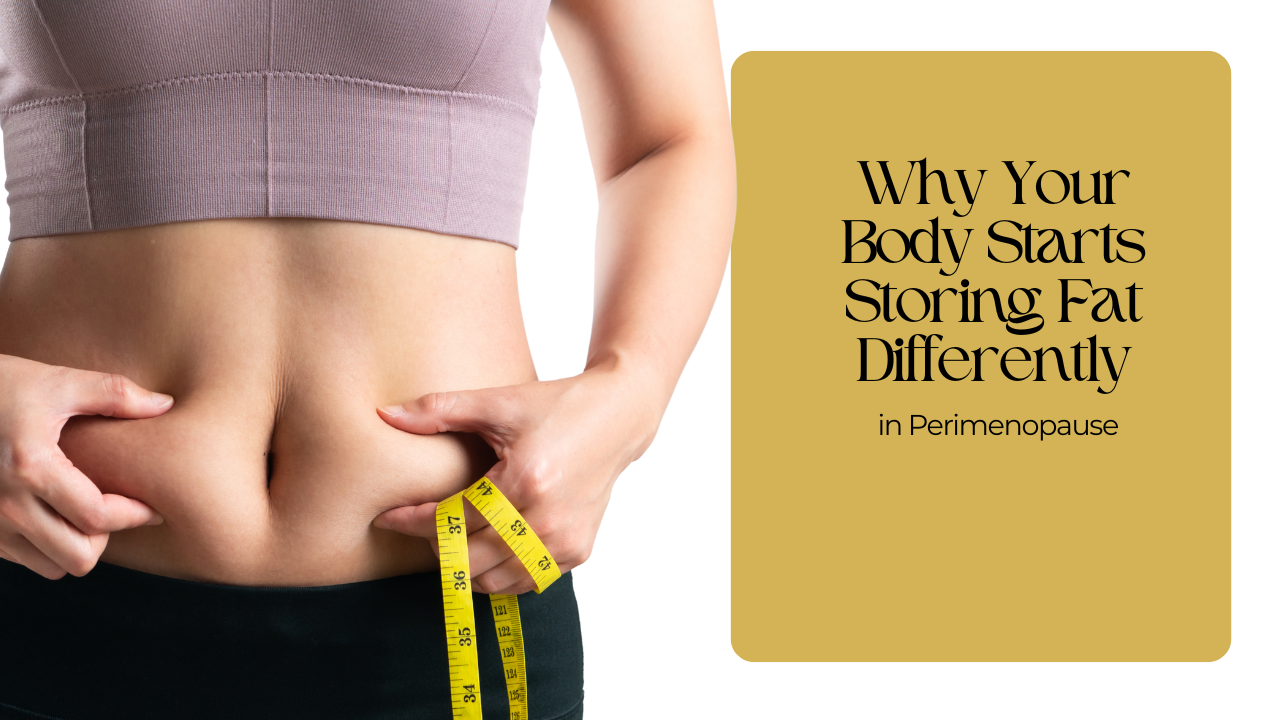
Few things feel more frustrating than looking at your habits and realising very little has changed, yet your body seems to be responding differently.
You may still be eating much the same foods. You may still be exercising regularly. You may even be making a conscious effort to take care of yourself. Yet somehow, your clothes fit differently. Your waistline feels less defined. Weight appears to settle around your middle in a way that never used to happen before.
For many women, this can feel deeply unfair.
It's also one of the reasons so many women begin to question themselves during perimenopause. They wonder if they've become less disciplined, less motivated, or somehow responsible for the changes they're seeing.
The reality is far more complex.
What many women don't realise is that perimenopause changes not only how much fat the body stores, but also where it chooses to store it.
Understanding why this happens can be incredibly reassuring because it shifts the conversation away from blame and toward biology.
The Body Is Following a Different Hormonal Blueprint
Throughout much of a woman's adult life, estrogen helps influence where fat is stored. Higher estrogen levels tend to encourage fat storage around the hips, thighs, and buttocks.
During perimenopause, estrogen levels begin to fluctuate and gradually decline. Research from Harvard Medical School suggests that these hormonal changes contribute to a redistribution of body fat, with more fat being stored around the abdomen.
This is one reason why many women find themselves saying, "I've never carried weight here before."
It's not simply that more fat is being stored. It's that the body is changing its preferred storage location.
Why Belly Fat Becomes More Common
The fat that accumulates during perimenopause is often different from the fat women carried in earlier decades.
Some of it may be visceral fat, which is stored deeper within the abdominal cavity around internal organs.
Unlike the fat just beneath the skin, visceral fat is metabolically active. It interacts with hormones, inflammation, and metabolic processes throughout the body.
This is one reason healthcare professionals pay particular attention to abdominal weight gain during midlife.
It isn't simply about appearance. It reflects changes happening inside the body as well.
Your Metabolism Is Changing Too
One of the biggest misconceptions about midlife weight gain is that metabolism suddenly stops working.
The reality is more nuanced.
As women age, muscle mass naturally begins to decline unless steps are taken to preserve it. Muscle is metabolically active tissue, meaning it plays an important role in how efficiently the body uses energy.
Research has shown that muscle loss can contribute to a slower metabolic rate over time. This means the body may require fewer calories than it did in earlier years while simultaneously becoming less efficient at managing energy.
The result can feel like your body is responding differently to the same habits.
Because in many ways, it is.
The Role of Insulin Becomes More Important
Hormonal changes during perimenopause can also affect insulin sensitivity.
Insulin is the hormone responsible for helping move glucose from the bloodstream into cells where it can be used for energy. When insulin sensitivity declines, the body becomes less efficient at this process.
As a result, blood sugar levels may fluctuate more dramatically and the body may become more likely to store excess energy as fat.
This can contribute to:
- Increased cravings
- Afternoon energy crashes
- Greater difficulty maintaining weight
- More fat storage around the abdomen
Many women assume these changes are simply part of getting older, when in reality they are often linked to shifting hormonal patterns.
Stress Has a Bigger Impact Than It Used To
Many professional women enter perimenopause while managing significant demands.
Careers are often at their peak.
Family responsibilities continue.
Life feels busy and full.
At the same time, hormonal fluctuations can affect how the body responds to stress.
Cortisol, often called the stress hormone, plays an important role in regulating energy and helping the body respond to challenges. However, chronically elevated cortisol levels have been linked to increased abdominal fat storage.
This means that stress can have a greater influence on body composition during perimenopause than many women realise.
It's not simply about what you're eating.
It's also about what your body is experiencing.
Why Eating Less Isn't Always the Answer
One of the most common responses to midlife weight gain is to restrict calories.
Many women attempt to eat less, skip meals, or become increasingly strict with their food choices.
Unfortunately, this can sometimes make matters worse.
When the body perceives a lack of fuel, stress hormones can rise further. Muscle mass may become harder to maintain, and energy levels often suffer.
Instead of creating a healthier metabolism, chronic under-fuelling can place additional strain on systems that are already adapting to hormonal change.
This is one reason why strategies that worked at 30 may not work at 50.
Supporting Your Body Through the Transition
The good news is that while hormonal changes influence fat storage, they do not remove your ability to support your health.
In fact, some of the most effective strategies during perimenopause focus on working with the body rather than fighting against it.
Strength training helps preserve muscle mass and supports metabolic health.
Protein becomes increasingly important for maintaining muscle and supporting satiety.
Managing stress helps reduce the impact of cortisol on energy and body composition.
Prioritising sleep supports the hormones involved in appetite regulation and recovery.
These approaches may not sound dramatic, but they align with what the body actually needs during this stage of life.
A Different Perspective on Midlife Weight Gain
Perhaps the most important thing to understand is that weight gain during perimenopause is not a sign that you have failed.
Nor is it evidence that you suddenly lack willpower.
Your body is navigating a significant hormonal transition. The rules are changing, and your physiology is adapting accordingly.
When women understand this, they often feel a sense of relief.
The focus shifts from self-criticism to self-understanding.
And that shift is often where meaningful progress begins.
The Takeaway
If your body is storing fat differently during perimenopause, you're not imagining it.
The changes are real, they are backed by science, and they are influenced by shifting hormones, metabolism, muscle mass, insulin sensitivity, and stress.
Understanding these changes doesn't mean giving up on your goals.
It means approaching them with better information.
Because when you understand why your body is changing, you can make decisions that support it more effectively and move through this stage of life with greater confidence and compassion.
Stay connected with news and updates.
Join our mailing list to receive the latest news and updates from our team.
Don't worry, your information will not be shared.
We hate SPAM. We will never sell your information, for any reason.