Why You Feel Like a Different Person in Your 40s and 50s
May 11, 2026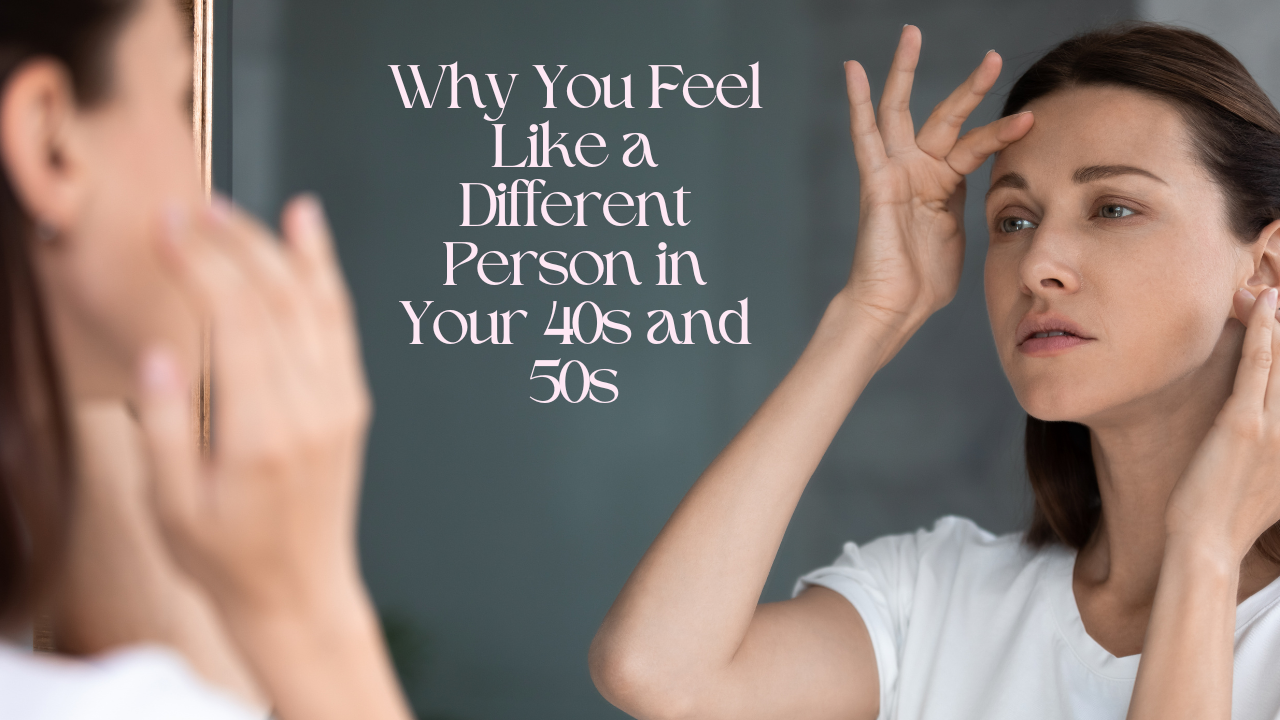
Many women reach their mid-40s or early 50s and begin to notice a quiet but persistent feeling that something has changed. Life may look much the same on the surface. You're still working, managing responsibilities, and showing up for the people who depend on you. Yet underneath it all, you don't quite feel like yourself.
Perhaps you're more easily overwhelmed than you used to be. Your confidence feels less steady. You walk into a room and forget why you went there, or struggle to find a word that once came effortlessly. Some women describe it as feeling disconnected from the version of themselves they've known for decades.
What makes this experience particularly confusing is that it often arrives gradually. There is no clear starting point. Instead, there is a growing awareness that your body, your mind, and even your emotional responses seem different somehow.
The good news is that you are not imagining it, and you are certainly not alone. For many women, these changes are closely linked to the hormonal shifts that occur during perimenopause and menopause, a transition that affects far more than reproductive health.
It's Not Just About Hormones, But Hormones Matter
When most people think about menopause, they think about periods ending. What often gets overlooked is the role hormones play throughout the entire body.
Research from Harvard Medical School shows that estrogen influences brain function, mood regulation, sleep quality, metabolism, cardiovascular health, and even how the body responds to stress. As estrogen levels begin to fluctuate during perimenopause and eventually decline, the effects can be felt in ways that seem completely unrelated to reproductive health.
This is one reason so many women find themselves wondering what has happened to them. They recognise the physical changes but are often surprised by the emotional and cognitive shifts that accompany them.
Why Everyday Stress Suddenly Feels Different
One of the most common things women tell me is that they don't feel as resilient as they once did.
Situations they would have handled easily a few years ago now feel more draining. Small setbacks seem to take longer to recover from. The demands of work, family, and everyday life feel heavier, even when those demands haven't necessarily increased.
This isn't because you've suddenly become less capable. Hormonal changes can affect the way the brain and nervous system process stress. Estrogen helps regulate neurotransmitters such as serotonin and supports the body's ability to recover from stressful situations. As levels fluctuate, many women find that their emotional bandwidth feels smaller than it once did.
This can be particularly challenging for professional women who have spent years being the person everyone else relies upon. When your usual coping strategies no longer seem as effective, it's easy to assume the problem is you.
Often, it isn't.
The Confidence Shift Nobody Talks About
Many women expect physical changes during midlife. Far fewer expect a shift in confidence.
You may find yourself second-guessing decisions that once came naturally. You may hesitate before speaking up in meetings or question your ability to handle challenges you've successfully navigated countless times before.
This can feel deeply unsettling, especially if you've built a career on competence, leadership, and experience.
Part of this experience may be linked to the cognitive changes associated with hormonal fluctuations. When you're dealing with disrupted sleep, increased stress sensitivity, and occasional brain fog, it's understandable that confidence can take a hit.
The important thing to remember is that confidence and capability are not the same thing. Your ability has not disappeared simply because your experience of yourself has changed.
When Brain Fog Makes You Question Yourself
For many women, brain fog is one of the most frustrating symptoms of midlife.
You know what you want to say, but the word doesn't come. You lose your train of thought during conversations. You find yourself rereading emails or forgetting details that would once have been second nature.
For women who are used to feeling sharp and mentally agile, these moments can feel alarming.
The reassuring news is that brain fog is a recognised symptom of perimenopause and menopause. Researchers believe hormonal fluctuations can affect memory, attention, and processing speed. While this doesn't make the experience any less frustrating, it does help explain why so many intelligent, capable women suddenly feel as though their brain is letting them down.
Why Your Energy Doesn't Feel Like It Used To
Another common complaint is that energy feels fundamentally different.
This isn't simply feeling tired after a busy week. It's a deeper sense that your reserves are lower than they once were. You may find it harder to recover from late nights, demanding projects, or periods of stress. Activities that once energised you may now leave you feeling depleted.
There are several reasons for this. Sleep quality often changes during perimenopause. Hormonal fluctuations affect how energy is produced and regulated. Muscle mass naturally begins to decline, which influences metabolism and stamina.
When all of these factors come together, it's no surprise that many women feel as though they are operating with a smaller energy budget than they had before.
The Woman You Were Hasn't Gone Anywhere
Perhaps the most important thing to understand is that you are not losing yourself.
It's easy to look back at the woman you were ten or fifteen years ago and feel as though you've somehow become a lesser version of her. But that isn't what's happening.
You are navigating one of the most significant biological transitions of your life. Your body is changing. Your needs are changing. The strategies that supported you in earlier decades may need to evolve.
This isn't a sign of decline. It's a sign of transition.
The women who thrive in midlife are rarely the ones trying to hold on to exactly who they were at 35. They're the women who become curious about what their body needs now and willing to adapt accordingly.
The Takeaway
If you've been feeling like a different person in your 40s or 50s, there is a reason for that feeling.
The hormonal changes associated with perimenopause and menopause can influence everything from mood and confidence to energy, sleep, and cognitive function. These shifts are real, they are common, and they are backed by science.
Most importantly, they do not mean you are becoming less capable or less valuable.
This stage of life is not about losing who you are. It's about understanding yourself in a new way and learning how to support your body through a period of significant change.
And when you do, you may discover that the woman emerging on the other side is not weaker, but wiser, more self-aware, and more intentional than ever before.
Stay connected with news and updates.
Join our mailing list to receive the latest news and updates from our team.
Don't worry, your information will not be shared.
We hate SPAM. We will never sell your information, for any reason.