Why Yoga Becomes Even More Powerful After 40
Jun 21, 2026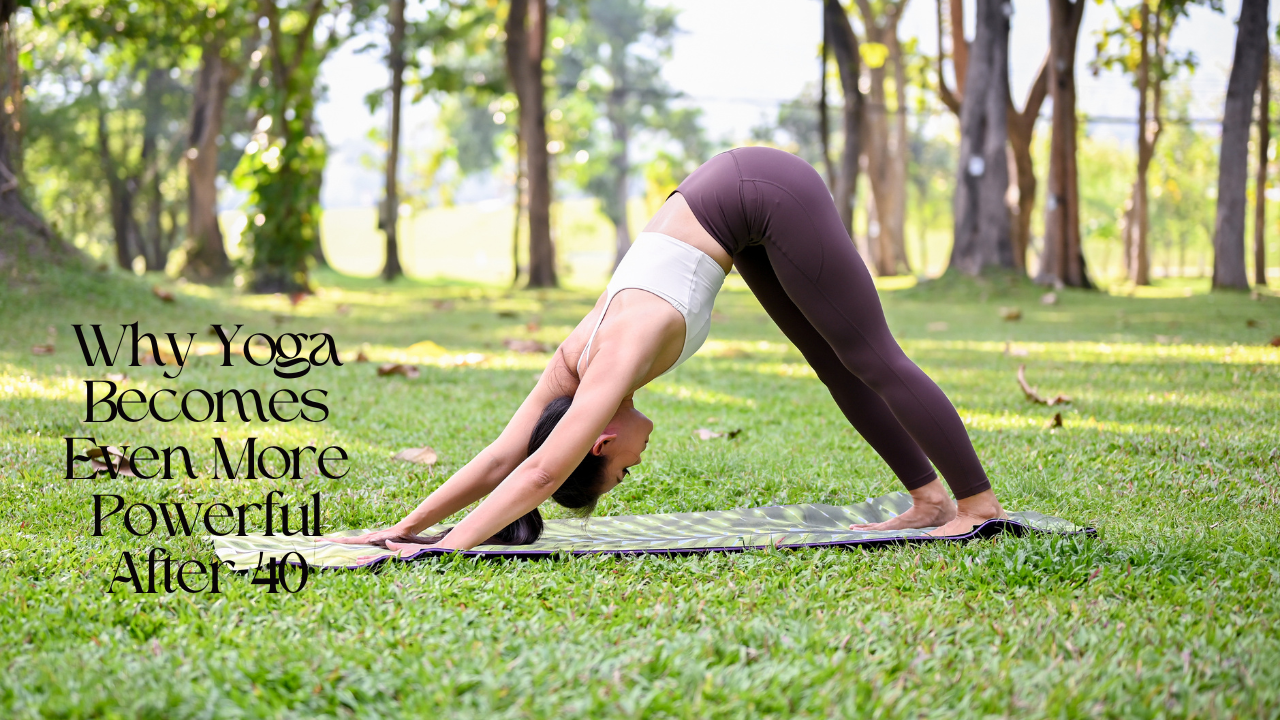
There comes a point in midlife when many women realise that the way they exercise needs to change.
The workouts that once felt energising now feel exhausting. Recovery takes longer. Joints may feel stiffer in the morning. Balance isn't quite what it used to be. Stress levels seem higher, sleep can become more fragile, and the body often feels less forgiving than it did in our twenties and thirties.
For many women, this is the stage of life when yoga starts to make sense in a completely different way.
What may once have seemed like "just stretching" suddenly becomes one of the most valuable tools for supporting physical and emotional wellbeing.
The science increasingly supports what many women discover for themselves. Yoga is not simply about flexibility. Research highlighted by Harvard Health suggests that regular yoga practice can support strength, balance, mobility, stress management, sleep quality, joint health, and overall quality of life.
In other words, yoga may become more valuable after 40, not less.
Midlife Changes More Than We Realise
Many women enter perimenopause and menopause expecting hormonal changes. What often comes as a surprise is how many different areas of life those hormonal shifts can affect.
You may notice tighter muscles, reduced flexibility, more frequent aches and pains, disrupted sleep, increased stress, lower energy levels, or a growing sense that your body no longer moves quite as freely as it once did.
These experiences are incredibly common.
Research suggests that declining estrogen levels can influence muscle mass, joint comfort, connective tissue health, and recovery. At the same time, modern life often involves long hours sitting at a desk, commuting, caring for others, and spending less time moving naturally throughout the day.
The result is a body that often feels stiff, tense, and tired.
This is where yoga can offer something unique.
Yoga Is About More Than Flexibility
One of the biggest misconceptions about yoga is that it's only for flexible people.
In reality, flexibility is not the goal.
The goal is better movement.
Yoga helps take joints through their full range of motion, encourages healthy movement patterns, and improves body awareness. Over time, this can help women move with greater ease and confidence in everyday life.
You don't need to touch your toes.
You don't need to twist yourself into complicated shapes.
You simply need to meet your body where it is today.
The Balance Benefit Most Women Overlook
One of the most important predictors of healthy aging isn't how much weight you can lift or how fast you can run.
It's balance.
Balance naturally declines as we age, yet it plays a crucial role in preventing falls, maintaining independence, and supporting confidence in movement.
Harvard researchers have highlighted balance training as an important component of healthy aging, particularly for women after menopause.
Many yoga poses gently challenge balance while also improving coordination, stability, and body awareness. Standing on one leg, moving between positions, and learning to control your body in space all contribute to better balance over time.
The benefit isn't simply what happens on the yoga mat.
It's what happens when you're walking on uneven ground, climbing stairs, travelling, or navigating everyday life.
Yoga Supports Strength Too
Many women are surprised to discover that yoga can build strength.
While it may not replace dedicated resistance training, many yoga poses require muscles to support body weight, maintain stability, and control movement.
Poses such as Chair Pose, Warrior variations, Plank, Bridge, and Side Plank challenge the muscles of the legs, core, hips, shoulders, and back.
This type of functional strength supports posture, mobility, and everyday activities while complementing other forms of exercise.
For women focused on healthy aging, strength and mobility are a powerful combination.
The Stress-Reducing Effect
Perhaps one of yoga's greatest strengths is its impact on the nervous system.
Many professional women spend much of their day in a state of constant activity. Emails, meetings, deadlines, family responsibilities, and endless to-do lists can leave the body operating in a prolonged state of stress.
Over time, this can affect sleep, energy, mood, appetite, and overall wellbeing.
Research has shown that yoga may help reduce stress and support emotional wellbeing through its combination of movement, breathing, and mindfulness practices.
Even a short yoga session can create an opportunity to slow down, breathe deeply, and shift out of "doing mode" for a while.
For many women, this becomes just as valuable as the physical benefits.
Supporting Joint Comfort and Mobility
Joint stiffness is one of the most common complaints women report during menopause.
While yoga is not a cure for joint pain, gentle movement can help maintain mobility, improve circulation, and reduce feelings of stiffness.
Many women find that regular yoga helps them move more comfortably throughout the day, particularly when combined with strength training and regular walking.
The key is consistency rather than intensity.
A few minutes most days often provides more benefit than a long session once every few weeks.
Practical Ways to Start
One of the best things about yoga is that it can be adapted to almost any fitness level.
You don't need expensive equipment.
You don't need to attend complicated classes.
You don't need to be flexible.
Start with just ten minutes a day. Focus on gentle movement, breathing, and consistency. Consider poses that support mobility in the hips, spine, shoulders, and ankles, as these areas often become stiffer with age.
If you're new to yoga, look for beginner-friendly classes or videos designed specifically for midlife women.
Remember, yoga is a practice, not a performance.
Think of Yoga as Maintenance for Your Body
Many women wait until something hurts before paying attention to mobility.
But yoga works best as a form of maintenance rather than repair.
Just as you wouldn't wait for your car engine to fail before servicing it, your body benefits from regular care before problems develop.
Yoga helps maintain the movement, balance, strength, and body awareness that support healthy aging.
The Bottom Line
Yoga becomes more powerful after 40 because the benefits align perfectly with what many women need most during midlife.
It supports mobility, balance, flexibility, strength, stress management, joint comfort, and overall wellbeing. Research continues to show that these factors play a crucial role in healthy aging and quality of life.
Most importantly, yoga meets you where you are.
You don't need to be younger, fitter, or more flexible to begin.
You simply need to start.
Because the goal isn't to perform the perfect pose.
It's to build a body that continues to support the life you want to live.
Stay connected with news and updates.
Join our mailing list to receive the latest news and updates from our team.
Don't worry, your information will not be shared.
We hate SPAM. We will never sell your information, for any reason.