Why Strength Training Matters More After 40
Jun 23, 2026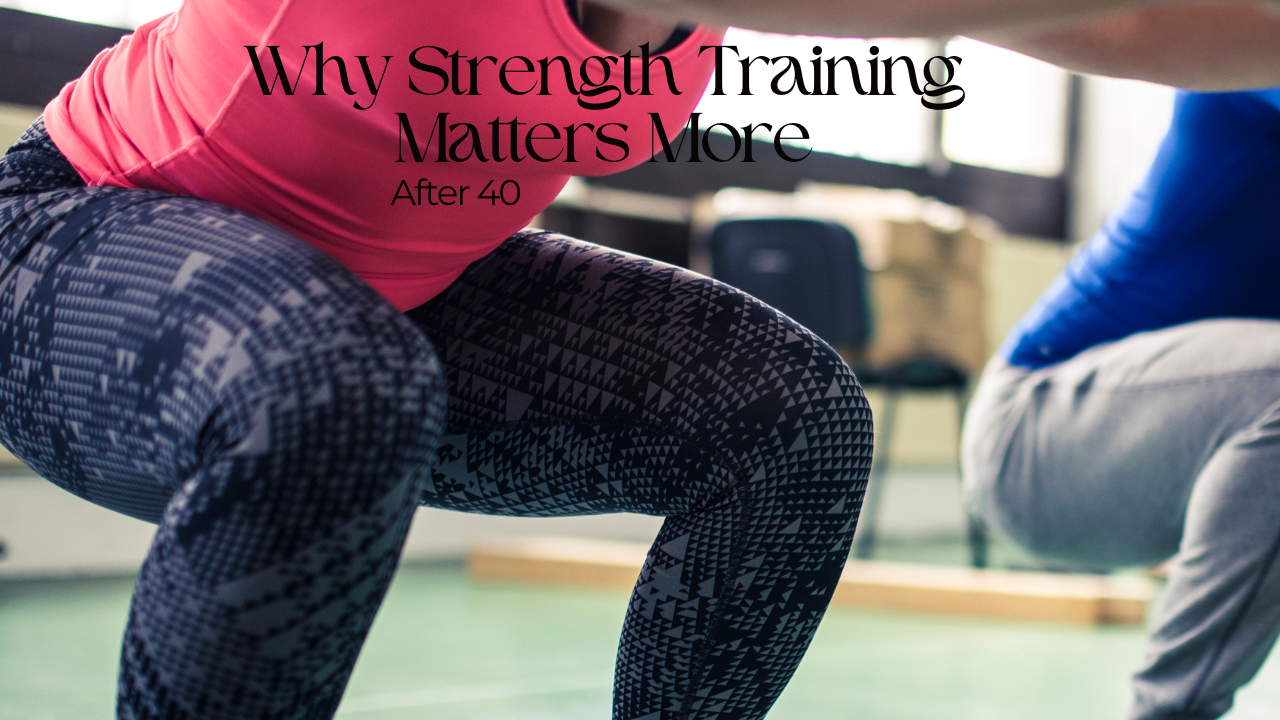
For years, many women were taught that staying fit meant eating less, weighing less and doing more cardio. We counted steps, joined exercise classes and judged progress by the number on the scales.
Then midlife arrives, and the approach that once seemed to work may no longer feel as effective.
Your body may feel softer despite regular exercise. Your waistline may change, recovery can take longer, and carrying shopping or climbing stairs may require more effort. You might still be active, but not necessarily getting stronger.
This is why strength training becomes increasingly important after 40. It is not simply exercise for changing your shape. It is one of the most practical ways to protect your muscles, bones, metabolic health and ability to remain independent.
Your body has not suddenly stopped working
Forty is not a biological switch that causes your muscles to disappear overnight. The changes are usually gradual and influenced by several factors, including ageing, hormonal change, activity levels, sleep, stress and nutrition.
During perimenopause and menopause, fluctuating and declining oestrogen can affect the tissues that support muscle and bone health. Women also tend to lose bone more rapidly for several years after menopause because oestrogen previously had a protective effect on the skeleton.
At the same time, busy lives can quietly become less physically demanding. We may spend more time sitting at a desk, driving, working from home or caring for others. We continue walking, but lift fewer heavy objects. We stretch, but rarely challenge our muscles with enough resistance to make them adapt.
The result is not always dramatic weight gain. Sometimes it is a slow reduction in strength, muscle quality and physical confidence.
Walking is valuable—but it does a different job
Walking supports cardiovascular health, mood, mobility and general wellbeing. It is absolutely worth doing.
However, walking and strength training are not interchangeable.
Walking asks your body to repeat a familiar movement against a relatively predictable load. Strength training deliberately asks your muscles to produce more force. That challenge is what encourages the body to maintain or build strength.
Swimming, yoga and Pilates also provide important benefits. Depending on how they are practised, they may improve mobility, balance, muscular endurance and body awareness. Yet women who want to preserve muscle and bone health may still benefit from adding progressive resistance.
This does not mean abandoning the movement you enjoy. It means filling in the part that may be missing.
Muscle is not only about appearance
When women hear the words “build muscle”, they often imagine bodybuilding, heavy barbells or a body shape they do not want.
In reality, muscle is the tissue that allows you to carry your suitcase, rise from the floor, protect your joints and remain steady when you lose your balance. It helps you continue travelling, gardening, working and living independently.
Strength training can improve functional capacity—the ability to perform normal daily activities—among postmenopausal women. Research also indicates that resistance training can improve strength and body composition in middle-aged women, although the exact response can differ between individuals and between premenopausal and postmenopausal women.
The goal is not to create the largest possible muscles. It is to maintain enough capable muscle for the life you want to lead.
Strength training supports metabolic health—but it is not magic
You may have heard that adding muscle dramatically “boosts your metabolism” and turns your body into a fat-burning machine. The truth is less dramatic, but still important.
Muscle is metabolically active tissue and plays an important role in how the body handles glucose. Exercise programmes can improve insulin sensitivity in postmenopausal women, supporting more effective blood-sugar regulation.
Preserving muscle may also help protect against some of the unfavourable body-composition changes associated with ageing. However, strength training should not be presented as a guaranteed solution for weight loss.
One systematic review found possible improvements in fat mass and functional ability among postmenopausal women, but the researchers rated the certainty of much of the menopause-specific evidence as low. They also found no clear improvement in body mass index or abdominal circumference.
This is an important message for women: your strength programme is still working even when the scales do not change.
You may be maintaining muscle while reducing fat. You may be lifting more, standing taller and moving with less discomfort. These are meaningful improvements that a scale cannot measure.
Your bones need to feel some load
Bones respond to physical demand. When muscles contract against resistance, the tendons pull on the bones, providing a stimulus that can support bone strength.
The NHS recommends muscle-strengthening activity for all major muscle groups on at least two days each week. It also highlights resistance and weight-bearing exercise as particularly important for bone health and osteoporosis prevention.
This matters after menopause because bone loss can accelerate as oestrogen levels fall.
Walking is weight-bearing, but it may not be a sufficient bone-building stimulus by itself, especially if the pace and terrain never change. A balanced bone-health programme may include progressive resistance, appropriate weight-bearing activity and, where suitable, impact-based exercise.
Women who have osteoporosis, previous fractures, significant joint problems or medical concerns should seek individual advice before beginning a new programme. Certain movements may need to be modified rather than avoided completely.
How to begin without turning your life upside down
You do not need six workouts a week, an expensive gym membership or an intimidating exercise plan. Two well-structured sessions can be an effective starting point.
Choose movements that train the major areas of the body. A simple session could include sitting down and standing up from a chair, a supported hip-hinge movement, a wall press-up, a resistance-band row and carrying a weight securely at your side.
Begin with a resistance that allows you to move with control. Aim for approximately 8 to 12 repetitions. By the final few repetitions, the exercise should feel challenging, but your technique should remain steady.
Complete one or two sets when you are beginning. Over time, you can progress towards two or three sets, increase the weight or choose a slightly harder variation.
Current resistance-training guidance emphasises that all the major muscle groups should be trained consistently and that bands, bodyweight exercises and home-based routines can all be effective. A complicated programme is not required for general health.
Use the “two more” test
One of the most common mistakes women make is choosing weights that remain comfortable forever.
At the end of a set, ask yourself: “Could I have completed more than two or three additional repetitions with good form?”
When the answer is easily yes, the weight may be too light to continue creating a useful challenge. You could add a small amount of resistance, slow the movement down or perform an additional repetition.
Progress does not mean making a huge jump. Moving from a 3kg weight to a 4kg weight is progress. Performing a squat with better control is progress. Completing a press-up against a lower surface is progress.
Small increases, repeated consistently, are what make the body stronger.
Stop measuring success only by soreness
A good workout does not need to leave you unable to walk downstairs.
Soreness is not proof that an exercise session was effective, and more pain does not mean more progress. Mild muscle tenderness can occur when you begin something new, but severe or persistent pain should not be treated as an achievement.
Instead, notice whether your movements are becoming steadier. Look at whether you can use a slightly heavier weight or complete another repetition without losing control.
Pay attention to everyday life. Can you lift your bag into the car more easily? Are stairs becoming less tiring? Do you feel more confident getting up from the floor?
These are the results strength training is meant to create.
Recovery is part of the programme
Your muscles become stronger when they have time and resources to recover from training.
Avoid training the same muscles hard on consecutive days when you are beginning. Leave time between sessions and continue with gentle movement such as walking or mobility work.
Eating regular, protein-containing meals can support muscle repair. Protein does not need to come from shakes or specialist products. Eggs, yoghurt, fish, chicken, tofu, beans, lentils and other everyday foods can all contribute.
Sleep also matters. Menopause symptoms can make good sleep difficult, so your training may need to adapt from week to week. On a tired day, completing a shorter session with good technique may be more valuable than forcing yourself through an exhausting workout.
Consistency does not require every session to be perfect. It means continuing to return.
Think of strength as a form of physical savings
Most women do not begin saving for retirement because they expect to need the money tomorrow. They save because they understand that small investments made regularly can protect their future choices.
Strength works in a similar way.
Every controlled squat supports your ability to rise from a chair. Every pulling exercise helps you carry and lift. Every loaded movement tells your muscles and bones that they are still needed.
The benefits may feel small at first, but they accumulate.
Strength training after 40 is not about fighting ageing or trying to recreate the body you had at 25. It is about building a body that continues to support you at 50, 60, 70 and beyond.
You are not training simply to become better at exercise.
You are training so that life remains easier to do.
Stay connected with news and updates.
Join our mailing list to receive the latest news and updates from our team.
Don't worry, your information will not be shared.
We hate SPAM. We will never sell your information, for any reason.