Why Less Pressure Creates Better Results After 40
Jul 02, 2026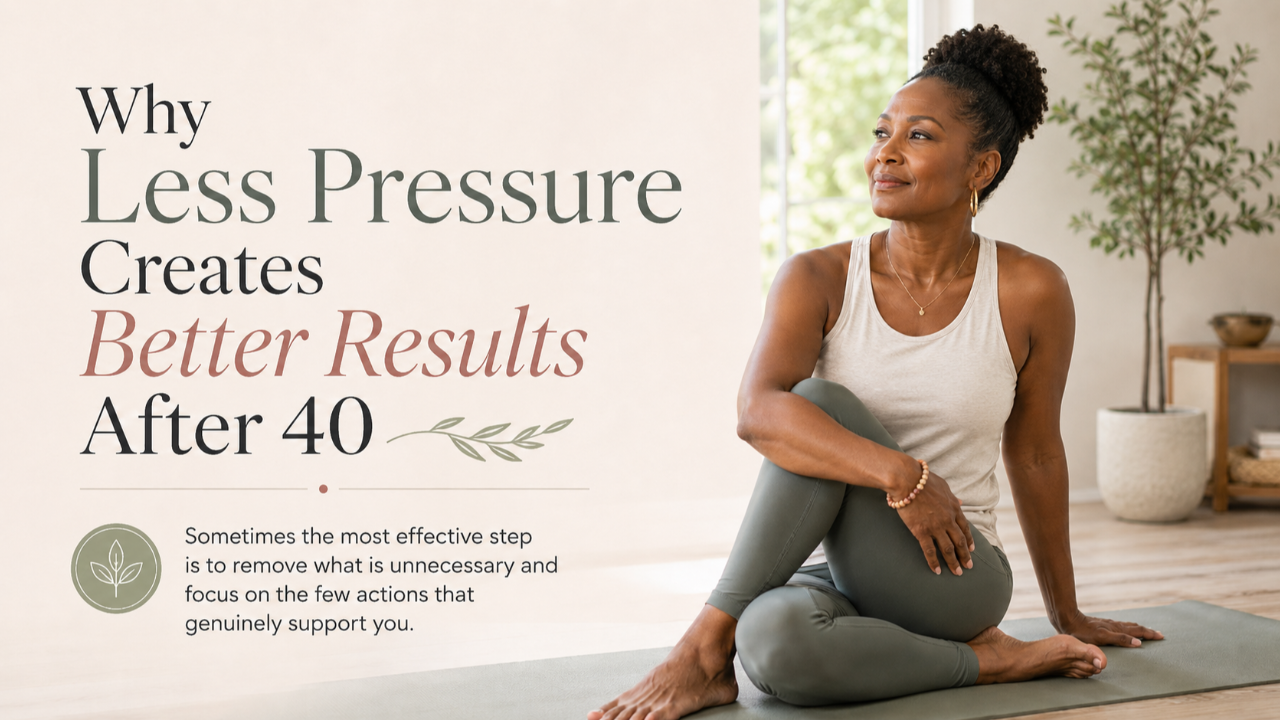
There is a particular kind of optimism that comes with deciding to change everything at once.
From tomorrow, you will exercise every day, cook every meal from scratch, stop eating sugar, drink two litres of water, meditate, take your supplements and go to bed by ten.
For a few days, the plan can feel exciting. You are organised, committed and finally “doing something” about your health.
Then work becomes busy. You sleep badly. Somebody needs your help. The fridge is empty, the planned workout does not happen and the routine begins to unravel.
By the end of the week, you feel as though you have failed again.
The problem may not be that you tried too little.
It may be that you tried to change too much.
Midlife already asks a great deal of you
Many women reach their forties and fifties carrying an enormous mental and practical workload.
You may be managing a career, supporting children, helping ageing parents, maintaining relationships and keeping a household functioning. At the same time, perimenopause or menopause may be affecting your sleep, concentration, mood, energy and physical confidence.
Your capacity can vary from one day to the next.
Yet when women decide to improve their wellbeing, they often create plans that require even more energy, organisation and decision-making.
Every meal must be perfect. Every workout must be completed. Every evening needs a carefully managed routine.
Health becomes another full-time job.
When the plan becomes impossible to sustain, the natural conclusion is often, “I need to try harder.”
But trying harder is not always the answer.
Sometimes the most effective step is to remove what is unnecessary and focus on the few actions that genuinely support you.
More effort does not always create better results
Doing more can feel productive because it creates activity.
You research recipes, buy new equipment, download several apps and write a detailed weekly plan. You may feel highly committed before any of the new behaviours have become part of your life.
But activity is not the same as progress.
If your plan contains ten new habits and you maintain none of them, the plan was not ambitious. It was overloaded.
A smaller plan may appear less impressive, but it gives each behaviour enough time and attention to become familiar.
Two consistent strength sessions can achieve more than a complicated programme you abandon after ten days.
A dependable breakfast can support you more effectively than a perfect meal plan you cannot maintain during a working week.
A realistic bedtime routine followed most evenings may be more valuable than an elaborate one that requires an hour you rarely have.
Doing less works when it allows you to keep doing what matters.
The hidden cost of changing everything
Every new habit requires decisions.
What will you eat? When will you exercise? Which workout should you choose? When will you shop, prepare food, stretch, journal or switch off your phone?
Even small decisions use mental energy.
By the end of a busy day, you may have already made hundreds of choices for your work, family and home. Asking yourself to make another series of ideal health decisions at 7pm can feel overwhelming.
This is one reason extreme plans often become harder as the day continues.
It is not necessarily that you stop caring about your health in the evening. You may simply have less capacity left for planning, resisting, organising and negotiating with yourself.
A simpler routine reduces this burden.
You know which two days you train. You have three dependable breakfasts. You keep a few quick evening meals available. Your water bottle is filled when you make your morning drink.
The fewer unnecessary decisions the routine requires, the more energy you can give to following it.
Choose your foundations before your extras
The wellness world offers an endless collection of possible improvements.
You could track every nutrient, follow a complicated supplement schedule, buy specialist foods, complete advanced workouts and optimise every hour of sleep.
Some of these approaches may be useful in particular circumstances. But they are refinements, not always foundations.
Before adding more, ask whether the basics are reasonably supported.
Are you eating regular meals?
Are you including protein and plant foods most days?
Are you moving regularly and strengthening your muscles?
Are you drinking throughout the day?
Are you creating any opportunity for rest and sleep?
You do not need to perfect all five at once.
Choose the one or two foundations that are currently creating the greatest difficulty.
If you regularly reach 4pm tired and ravenous, improving lunch may matter more than adding another supplement.
If you feel weaker and less confident carrying things, two short strength sessions may be more valuable than increasing your daily step count.
If poor sleep is affecting everything else, your first change may be creating a reliable end to the working day.
The most useful habit is not always the most fashionable one.
It is the one that makes the rest of your life easier.
One strong habit can create a ripple effect
Healthy behaviours rarely exist in isolation.
A short walk at lunchtime may improve your mood, give you a break from your screen and make it easier to concentrate during the afternoon.
Eating a balanced breakfast may reduce the desperate hunger that previously led to constant snacking.
Completing two strength sessions can increase your confidence, encourage you to eat enough protein and make everyday movement feel more manageable.
An earlier end to work may create time to prepare lunch, relax and sleep more comfortably.
This is why one well-chosen habit can have more impact than five disconnected ones.
Instead of asking, “How can I improve everything?”, ask:
Which change would make several other things easier?
That is often the best place to begin.
Stop measuring commitment by exhaustion
Many women have learned to believe that effort only counts when it feels difficult.
A workout should leave you drenched in sweat. A food plan should involve restriction. A wellness routine should require discipline and sacrifice.
If the change feels manageable, it can appear too small to be effective.
But exhaustion is not the same as progress.
A routine that repeatedly drains you may eventually compete with the health it was meant to support.
Strength training needs to be challenging, but every session does not need to leave
Stay connected with news and updates.
Join our mailing list to receive the latest news and updates from our team.
Don't worry, your information will not be shared.
We hate SPAM. We will never sell your information, for any reason.