Why Eating Less Isn't Always the Answer After 40
May 29, 2026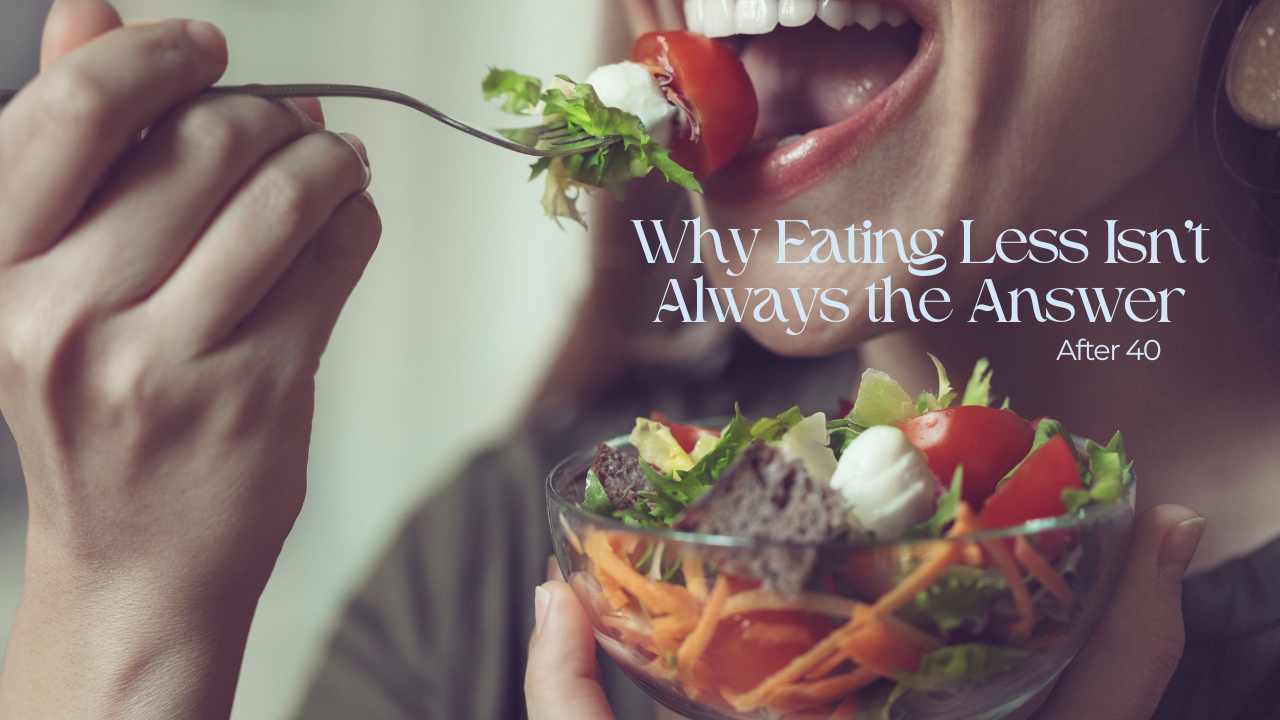
If you've found yourself eating less than ever and still struggling with your weight, you're not alone.
It's one of the most common frustrations women experience during perimenopause and menopause. Many women tell me they are eating smaller portions, skipping snacks, avoiding treats, and trying harder than ever to "be good", yet their body seems determined to ignore all their efforts.
The natural response is often to cut back even further. Skip breakfast. Have a light lunch. Eat less at dinner. Exercise more. Repeat.
But what if the problem isn't that you're eating too much?
What if your body is actually asking for something different?
As women move through their 40s and 50s, the conversation around nutrition needs to change. While calories still matter, menopause is about far more than calories in versus calories out. Hormones, muscle mass, sleep quality, stress levels, and the foods we choose all play a role in how our bodies respond.
This is where many traditional dieting approaches start to fall apart.
For years, women have been taught that eating less is always the answer. Yet many busy professional women are already under-fuelling without realising it. A coffee for breakfast, a rushed salad at lunch, and a quick evening meal may seem sensible, but it can leave the body short of the nutrients it needs to function well.
The result is often low energy, increased cravings, poor concentration, and a constant feeling of fighting against your own body.
Think about how often you've pushed through a busy day running on very little food. Meetings, deadlines, family responsibilities, and endless tasks leave little time to think about yourself. By late afternoon you're exhausted, reaching for something sweet, and wondering why your willpower has disappeared.
The truth is that it may not be a willpower problem at all.
It may be a fuel problem.
Your body needs energy to think clearly, move well, recover from exercise, manage stress, and maintain healthy hormone function. When you're consistently under-eating, the body often responds by conserving energy, increasing hunger signals, and making it harder to feel your best.
One of the biggest reasons this matters during menopause is muscle.
As estrogen levels decline, women naturally begin to lose muscle mass. This process can affect strength, mobility, metabolism, and body composition. Muscle is incredibly valuable because it helps us stay active, supports healthy aging, and burns energy even while we're resting.
Unfortunately, many women unintentionally make muscle loss worse by eating too little protein.
A slice of toast for breakfast and a small salad for lunch may seem like healthy choices, but they often provide very little of the protein your muscles need. Over time, this can contribute to a loss of lean muscle tissue, leaving you feeling weaker and making weight management even more challenging.
This is why nutrition experts are increasingly encouraging women to focus less on eating less and more on eating well.
Rather than asking, "How can I cut calories?" a more helpful question may be, "How can I nourish my body better?"
Protein is one of the best places to start. Including protein-rich foods such as eggs, Greek yogurt, cottage cheese, fish, chicken, beans, lentils, or tofu at each meal can help support muscle health, improve satiety, and provide more stable energy throughout the day.
Many women notice a significant difference simply by improving breakfast. Swapping a piece of toast for eggs on wholegrain toast or a Greek yogurt bowl can help reduce mid-morning hunger and improve focus during a busy workday.
It's also important not to fear healthy carbohydrates. Vegetables, fruit, oats, beans, and whole grains provide fibre and nutrients that support energy, gut health, and overall wellbeing. Combined with protein and healthy fats, they help create meals that keep you satisfied for longer.
Another important piece of the puzzle is stress.
Many women are navigating demanding careers while also caring for children, partners, ageing parents, and everyone in between. Chronic stress places additional pressure on the body and can affect appetite, sleep, energy levels, and weight management.
When stress is high, eating too little can sometimes make matters worse rather than better.
This is why a more balanced approach often works best. Instead of trying to eat as little as possible, focus on giving your body what it needs to thrive. Prioritise protein. Include colourful vegetables. Eat regular meals. Stay active. Build muscle. Protect your sleep.
These habits may not sound as dramatic as another restrictive diet, but they are far more effective in supporting long-term health.
The women who thrive through menopause are rarely the women who eat the least.
More often, they are the women who nourish themselves consistently, maintain their muscle, support their energy, and work with their bodies rather than against them.
The Bottom Line
If you're over 40 and finding that eating less isn't delivering the results you expected, it may be time to rethink the strategy.
Menopause is not simply a calorie equation. Your body needs adequate nutrition to support hormones, preserve muscle, maintain energy, and protect long-term health.
Instead of focusing solely on eating less, focus on eating better.
Because after 40, the goal isn't just to weigh less.
It's to feel stronger, healthier, more energised, and more confident in the body that carries you through every stage of life.
Stay connected with news and updates.
Join our mailing list to receive the latest news and updates from our team.
Don't worry, your information will not be shared.
We hate SPAM. We will never sell your information, for any reason.