What If Your Future Independence Depends on What You Do Today?
Jun 04, 2026
When most women think about their future, they don't dream about bone density scans, calcium supplements, or medical appointments. They dream about freedom. Freedom to travel where they want, when they want. Freedom to walk through airports carrying their own luggage, explore new cities, hike beautiful trails, play with grandchildren, enjoy long walks with friends, and continue saying "yes" to the experiences that make life meaningful. For most women, that vision of an active, independent future matters far more than any number on the scales.
What many women don't realise is that the foundations for that future are being built long before retirement arrives. The choices you make in your 40s and 50s can have a profound impact on how you move, feel, and live in your 60s, 70s, and beyond. One of the most important, yet often overlooked, parts of that picture is bone health.
Unlike low energy or aching joints, weakening bones don't usually announce themselves. Bone loss happens quietly behind the scenes, often for years without any obvious symptoms. This is why osteoporosis is frequently referred to as a silent disease. Many women only discover they have significant bone loss after experiencing a fracture from what seemed like a simple stumble or minor fall. By that point, the conversation has often shifted from prevention to management.
The years surrounding menopause are particularly important because of the role estrogen plays in maintaining healthy bones. While most women associate estrogen with reproductive health, it is also essential for protecting bone density. As estrogen levels begin to decline during perimenopause and menopause, the body starts to lose bone more rapidly. Research suggests that women can lose a significant amount of bone density during this stage of life, making menopause one of the most important windows for taking action.
The encouraging news is that bones are living tissue. They are constantly being broken down and rebuilt, responding to the demands we place upon them. Just as muscles become stronger when challenged, bones respond positively to weight-bearing activity and resistance exercise. Walking, climbing stairs, dancing, hiking, carrying shopping, and strength training all send signals to the body that strong bones are needed.
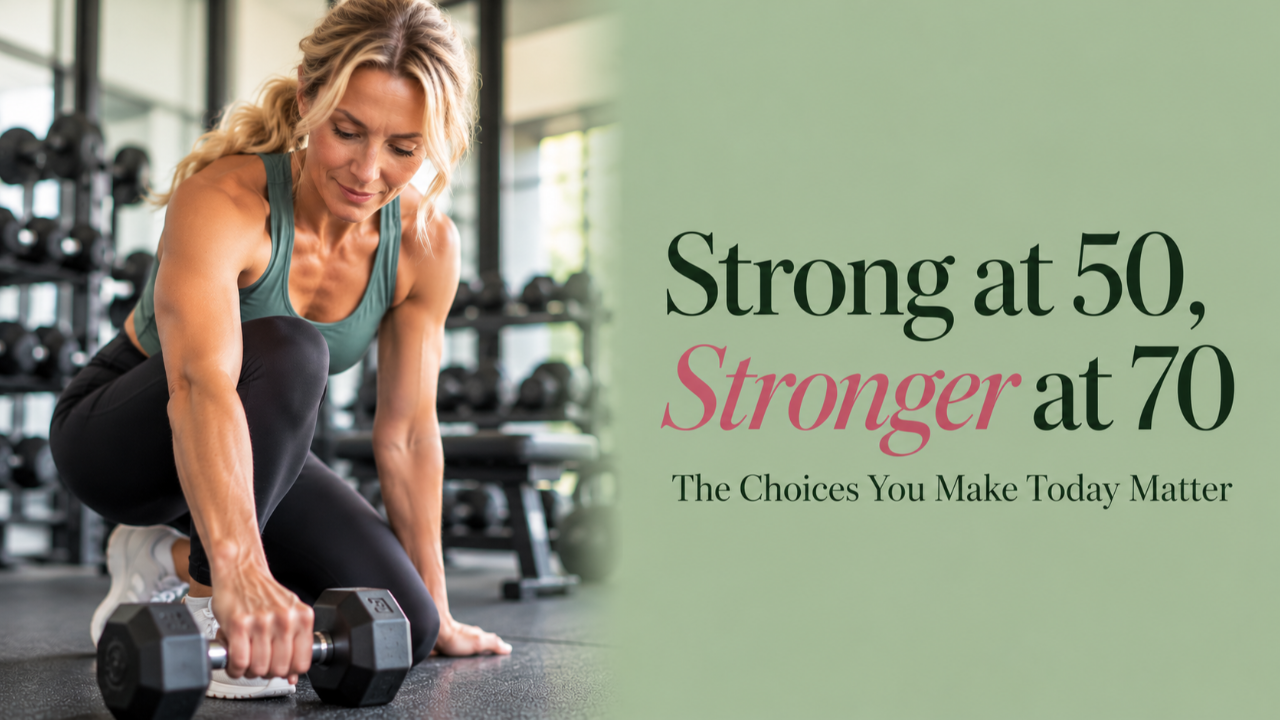
This is one reason strength training has become such a powerful recommendation for women during and after menopause. Many women initially start strength training to improve their shape or lose weight, but the benefits go far deeper. Every squat, lunge, step-up, and resistance exercise is helping to support the skeletal framework that allows you to move confidently through life. Strength training helps maintain muscle mass, supports balance and stability, and encourages the bones to remain stronger as we age.
Muscles and bones work as a team. Strong muscles help protect bones by improving balance, reducing the risk of falls, and creating the healthy stress that stimulates bone growth. At the same time, strong bones provide the structure that allows muscles to do their job effectively. This is why preserving muscle during menopause is about so much more than appearance. It's about maintaining the ability to carry shopping, lift suitcases, climb stairs, get up from the floor, and continue doing the everyday activities that support independence.
Nutrition plays an equally important role. While calcium often receives the most attention, healthy bones require a variety of nutrients working together. Protein helps maintain both muscle and bone structure, vitamin D supports calcium absorption, and nutrients such as magnesium and vitamin K contribute to long-term bone health. The good news is that many of these nutrients can be obtained through a balanced diet that includes quality protein, leafy green vegetables, dairy foods or fortified alternatives, beans, nuts, seeds, and oily fish.
Perhaps the most powerful mindset shift is to stop viewing exercise and healthy eating as something you do to change how your body looks. What if every walk was an investment in future adventures? What if every strength workout was helping you maintain your independence? What if every nourishing meal was supporting the body you'll rely on for decades to come? When viewed through this lens, health becomes less about restriction and more about possibility.
The women who age well are not necessarily the women who weigh the least. More often, they are the women who continue to move, lift, walk, explore, and stay engaged with life. They prioritise their health not because they are afraid of getting older, but because they want to continue enjoying everything life has to offer.
The Bottom Line
Taking care of your bones isn't really about avoiding osteoporosis. It's about protecting your freedom. It's about maintaining the ability to travel, stay active, enjoy family, and continue living life on your own terms. The small choices you make today may seem insignificant, but together they help create the strong, capable, independent future that so many women hope for.
Stay connected with news and updates.
Join our mailing list to receive the latest news and updates from our team.
Don't worry, your information will not be shared.
We hate SPAM. We will never sell your information, for any reason.