The 3am Wake-Up: Why Midlife Sleep Suddenly Feels So Fragile
Jun 12, 2026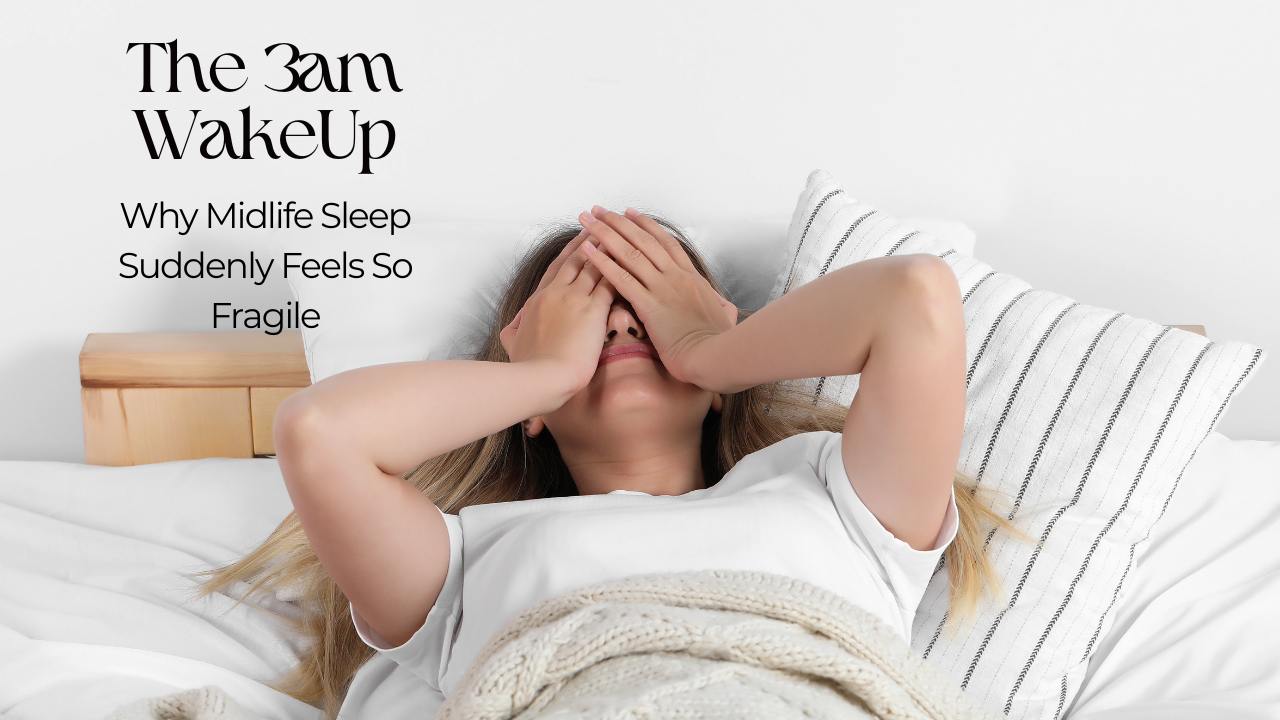
There is a very particular kind of frustration that comes from waking up at 3am.
You are tired. Your body wants rest. You may have fallen asleep easily enough, yet suddenly you are wide awake, staring into the darkness, wondering why your mind has decided this is the perfect time to review your life, your workload, your to-do list, your worries, and every conversation you forgot to reply to.
For many women in their 40s and 50s, this becomes one of the most confusing parts of midlife. Sleep used to feel fairly reliable. You went to bed, you slept, you woke up. Perhaps not perfectly every night, but there was a rhythm to it.
Then, almost without warning, sleep starts to feel lighter, more fragile and easier to disturb. You may wake up hot, anxious, restless, uncomfortable, thirsty, wired, or simply alert for no obvious reason. And once you are awake, getting back to sleep can feel almost impossible.
The 3am wake-up is not just “bad sleep”. For many women, it can be one of the first signs that the body is moving through hormonal change.
Why sleep changes in midlife
During perimenopause and menopause, levels of oestrogen and progesterone begin to fluctuate and eventually decline. These hormones do much more than influence periods and fertility. They also interact with the brain, body temperature, mood, stress response and sleep regulation.
Oestrogen is linked with temperature control, mood stability and sleep quality, while progesterone has a naturally calming effect in the body. When these hormones become unpredictable, sleep can become unpredictable too. Research reviews have found that hormonal changes, night sweats, stress changes, mood symptoms and ageing can all contribute to sleep disturbance during the menopause transition.
This is why so many women say, “I’m exhausted, but I can’t stay asleep.” It is not always about poor habits or lack of discipline. Often, the body’s internal systems are simply more sensitive than they used to be.
Why 3am feels so common
Waking during the night is normal. Most people briefly wake several times, but when sleep is deep and settled, we often do not remember it. In midlife, these brief awakenings can become longer and more noticeable.
Around the early hours of the morning, the body is naturally moving through lighter stages of sleep. Stress hormones also begin to rise gradually as the body prepares for waking. If your nervous system is already under pressure from work stress, emotional load, blood sugar dips, alcohol, late caffeine, night sweats or hormonal fluctuations, that lighter sleep window can become the moment you fully wake.
This is why 3am can feel like an alarm clock you never set.
Harvard Health has also highlighted that hormonal shifts after midlife can disrupt sleep cycles, with night sweats and vasomotor symptoms often playing a role in early-morning waking.
The link between night sweats and broken sleep
Not every woman who wakes at 3am wakes up drenched in sweat, but hot flushes and night sweats are a major reason sleep becomes disrupted during menopause.
A night sweat does not always feel dramatic. Sometimes it is subtle. You may wake feeling too warm, throw the duvet off, feel chilled a few minutes later, then spend the next half hour trying to get comfortable again. Even mild temperature changes can pull the body out of deeper sleep.
The Menopause Society describes hot flushes and night sweats as among the most commonly reported symptoms of the menopause transition, and they can be disruptive enough to affect quality of life and sleep.
For professional women already managing busy days, poor sleep can create a difficult cycle. You wake tired, rely on more caffeine, feel less resilient, crave more sugar, exercise feels harder, then your body feels more wired again by bedtime.
When your mind switches on
One of the most common things women say is, “I wake up and my brain just starts.”
This can feel like anxiety, but it is not always the same as having an anxiety disorder. Sometimes it is the nervous system becoming more reactive. Hormonal changes can affect the way the brain responds to stress, and when sleep is lighter, thoughts can feel louder.
At 3am, everything can feel bigger than it does in daylight. A small work issue can feel urgent. A family concern can feel overwhelming. A simple task you forgot to do can suddenly feel like evidence that you are not coping.
This is one of the hardest parts of midlife sleep disruption. It does not just affect your energy. It affects your emotional resilience.
You may wake in the morning feeling as though you have already lived through half a day before the day has even begun.
Blood sugar, alcohol and the midlife sleep dip
There are also practical lifestyle factors that can make the 3am wake-up more likely.
A very light evening meal, a high-sugar snack, or alcohol in the evening can affect sleep quality. Alcohol may make you feel sleepy at first, but it often fragments sleep later in the night. Blood sugar fluctuations may also contribute to waking, especially if your body is already under stress or you have eaten in a way that creates an energy spike and dip.
This does not mean you need to become rigid or fearful around food. It simply means your midlife body may now be giving you clearer feedback. What you could get away with in your 30s may affect you more noticeably in your 40s and 50s.
A balanced evening meal with protein, fibre and healthy fats may help the body feel steadier overnight. For some women, reducing alcohol, late caffeine and very sugary evening snacks can make a meaningful difference.
Why sleep matters so much after 40
Sleep is not just rest. It is repair.
During sleep, the body supports memory, mood regulation, immune function, appetite hormones, blood sugar balance, muscle repair and nervous system recovery. When sleep becomes broken night after night, it can affect almost everything: cravings, motivation, patience, concentration, weight management and confidence.
This is why so many women feel unlike themselves when their sleep changes. It is not weakness. It is biology.
Menopause-related sleep disturbance has also been linked in research with wider health concerns, including mood, metabolic health and cognitive wellbeing, which is why persistent sleep problems deserve proper attention rather than being dismissed as “just part of ageing”.
What can help
The first step is to stop blaming yourself. Many women respond to poor sleep by becoming anxious about sleep itself. They start calculating how many hours they have left, worrying about tomorrow, and putting pressure on themselves to “fix it” immediately. That pressure can make the nervous system even more alert.
A calmer approach is often more helpful. Keep your bedroom cool, wear breathable nightwear, and use layers on the bed so you can adjust your temperature easily. Try to keep your evening routine steady, even if your day has been busy. Your body likes rhythm, especially when hormones feel unpredictable.
Caffeine is worth reviewing too. Some women become more sensitive to it in midlife. Even coffee at lunchtime can affect sleep for certain people. Alcohol can also be a hidden trigger, particularly for night waking and temperature changes.
Movement helps, but it does not need to be punishing. Strength training, walking, yoga, swimming and Pilates can all support sleep by helping the body regulate stress and use energy well. The key is consistency, not exhaustion.
A wind-down routine can also help your brain transition out of work mode. This might be a warm shower, gentle stretching, dimmed lights, journaling, breathing exercises, or simply putting your phone away earlier. The aim is not perfection. The aim is to teach your body that the day is closing.
What to do when you wake at 3am
When you wake in the night, try not to panic. Remind yourself that waking does not mean the whole night is ruined. Keep the lights low, avoid checking your phone, and resist the temptation to start problem-solving.
If your mind is racing, keep a notebook beside the bed and write down the thought briefly. This tells the brain, “I have captured this. I do not need to keep rehearsing it.” Then return to something simple and repetitive, such as slow breathing or relaxing the body from the feet upwards.
If you are awake for a long time and becoming frustrated, it can help to get out of bed briefly and do something quiet in low light until you feel sleepy again. The goal is to stop your bed becoming associated with worry and wakefulness.
When to seek support
Occasional night waking is common, but if sleep disruption is regular, severe, or affecting your work, mood, relationships or daily functioning, it is worth speaking to a healthcare professional.
This is especially important if you have heavy night sweats, symptoms of anxiety or depression, loud snoring, pauses in breathing, restless legs, thyroid concerns, or significant daytime exhaustion. Sleep problems can have several causes, and it is always better to understand what is going on rather than simply pushing through.
For some women, treating vasomotor symptoms such as hot flushes and night sweats can significantly improve sleep. The Menopause Society notes that hormone therapy is one of the treatment options for bothersome hot flushes, night sweats and sleep disturbance, although suitability depends on personal health history and should be discussed with a qualified clinician.
The bigger message
The 3am wake-up can feel lonely, but it is incredibly common.
It can make you question your resilience, your health, your mood and even your ability to cope. But often, it is not a sign that you are falling apart. It is a sign that your body is asking for a different kind of support.
Midlife is not just about managing symptoms. It is about learning how your body now communicates with you.
Your sleep may feel fragile right now, but that does not mean it cannot improve. With the right understanding, steadier routines, better stress support, nourishing food, movement, and medical guidance where needed, your nights can become calmer again.
And when your sleep improves, so does everything else: your energy, your mood, your patience, your cravings, your clarity and your confidence.
You are not imagining it.
Your body is changing.
And it deserves to be supported, not criticised.
Stay connected with news and updates.
Join our mailing list to receive the latest news and updates from our team.
Don't worry, your information will not be shared.
We hate SPAM. We will never sell your information, for any reason.