The Strength Beneath the Surface: Why Your Future Body Starts Now
Jun 15, 2026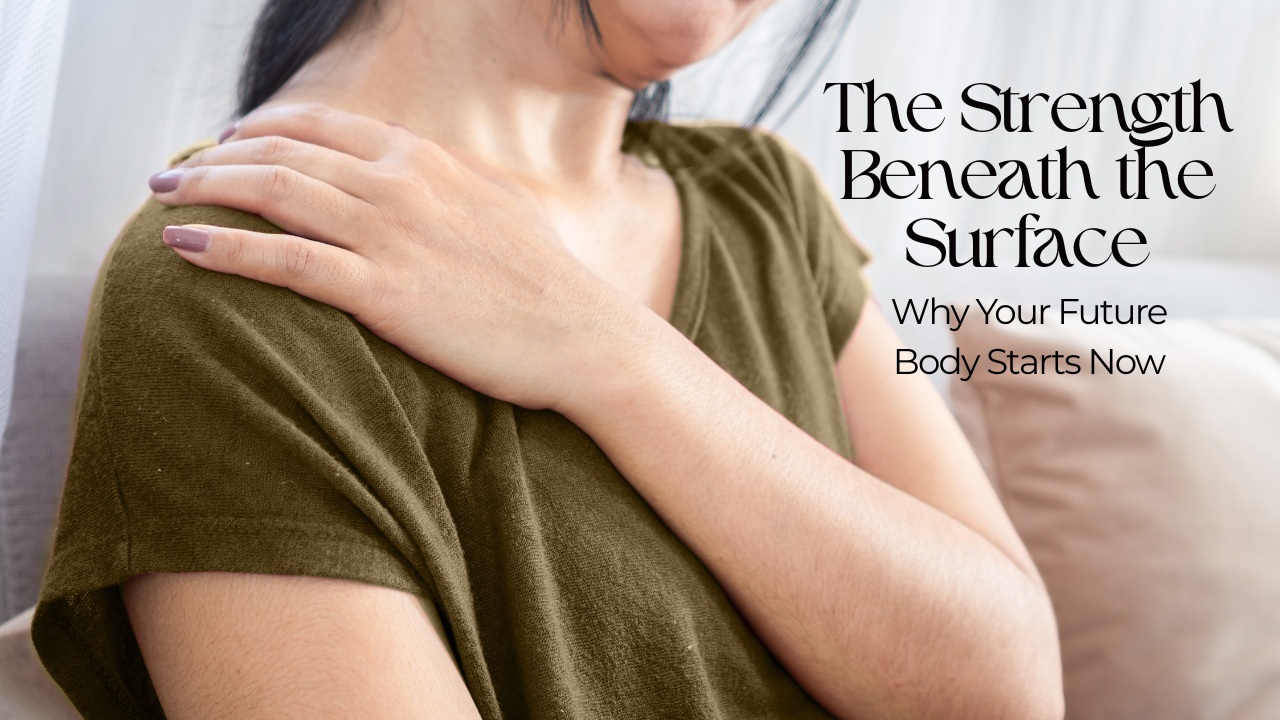
When most women think about their health, they focus on what they can see. The number on the scales. The fit of their clothes. The reflection staring back at them in the mirror. It's understandable. We live in a world that constantly encourages women to judge their health by their appearance.
Yet some of the most important changes happening during midlife are completely invisible.
Beneath the surface, your muscles, bones, balance, and strength are quietly shaping the future version of you. They are determining how easily you'll move, how independent you'll remain, how resilient you'll feel, and how much freedom you'll have in the years ahead. The surprising truth is that the body you'll have in your 60s, 70s, and beyond is being built right now through the choices you make every day.
Ask most women what they want from the next stage of life and very few will mention a specific dress size. What they really want is energy, freedom, confidence, and good health. They want to travel without worrying whether their body can keep up. They want to enjoy long walks, carry their own luggage, play with grandchildren, pursue hobbies, and continue doing the things they love.
In short, they want independence.
What many women don't realise is that independence isn't something we suddenly lose one day. It's something we either protect or gradually give away through years of habits, both good and bad. The ability to move well, stay active, and remain self-sufficient later in life is influenced by what we do long before we ever need the results.
This becomes particularly important during perimenopause and menopause. While much of the conversation focuses on hot flushes, weight gain, and hormonal changes, there are other important shifts happening quietly in the background. Research highlighted by Harvard Health shows that women naturally begin to lose muscle mass and bone density as they age, and the decline in estrogen during menopause can accelerate both processes.
These changes don't happen overnight. You won't wake up one morning and suddenly notice weaker bones or reduced muscle mass. Instead, the signs tend to appear gradually. Carrying shopping feels a little harder. Climbing stairs leaves you more breathless. Balance isn't quite what it once was. Recovery from exercise takes longer. Tasks that once felt effortless begin to require a little more thought and effort.
Many women assume these changes are simply part of getting older. In reality, much of what we often associate with aging is actually linked to a loss of strength, muscle, and physical resilience.
This is one reason why experts are increasingly encouraging women to focus less on weight and more on strength.
For decades, women have been taught that success means becoming smaller. Yet research consistently shows that muscle plays a critical role in healthy aging. Muscle supports metabolism, balance, mobility, posture, strength, and overall physical function. It helps us remain capable and independent as we age.
Harvard researchers have repeatedly highlighted the importance of preserving muscle because it is closely linked to quality of life later in life. Strong muscles make everyday tasks easier and help protect against frailty, falls, and loss of independence.
This means that becoming stronger may be far more valuable than becoming lighter.
The conversation doesn't stop with muscles. Your bones are listening too.
Many women think of bones as fixed structures that simply weaken with age. In reality, bones are living tissue that are constantly being broken down and rebuilt. Throughout life, your body works to maintain this balance. During menopause, however, declining estrogen levels can cause bone breakdown to occur more rapidly than bone rebuilding.
This is why bone density becomes such an important topic during midlife.
The encouraging news is that bones respond positively to challenge. Activities such as walking, climbing stairs, dancing, hiking, and strength training send signals that help encourage bones to remain stronger. Every time you challenge your muscles, you're also helping support the health of your skeleton.
This is why strength training is often described as one of the best investments women can make in their future health.
The good news is that building a stronger future doesn't require perfection. It doesn't require spending hours in a gym or following complicated fitness plans. Small, consistent actions are often the most powerful.
Regular strength training, even just two or three times a week, can help preserve muscle and support bone health. Daily movement, whether it's walking, gardening, yoga, swimming, or simply sitting less, helps keep the body functioning well. Good nutrition provides the building blocks your muscles and bones need to stay healthy. Protein, calcium, vitamin D, magnesium, and a variety of nutrient-rich foods all play important roles.
Sleep matters too. While it is often overlooked, sleep is when the body repairs, restores, and recovers. Consistently poor sleep can affect energy, recovery, appetite, and overall health, making it harder to maintain the habits that support healthy aging.
Perhaps the most powerful shift is to stop viewing health through a short-term lens.
Many women focus on goals that are only a few weeks or months away. They want to lose weight before a holiday, fit into a particular outfit, or prepare for an upcoming event. While these goals are understandable, midlife invites us to think more broadly.
What kind of life do you want ten years from now?
How do you want to feel at 70?
What activities do you hope you'll still be doing at 80?
When you begin asking these questions, your motivation changes. Exercise becomes less about punishment and more about possibility. Nutrition becomes less about restriction and more about nourishment. Looking after your health becomes an act of investing in your future rather than trying to fix your present.
Imagine meeting the woman you'll be twenty years from now. What would she thank you for?
Would she thank you for chasing a smaller number on the scales, or would she thank you for prioritising strength, movement, nourishment, and self-care? Would she thank you for building the muscle that helps her stay active and protecting the bones that support her independence?
The reality is that the choices you make today become the reality she lives tomorrow.
The Bottom Line
The most important changes happening in your body after 40 are often the ones you cannot see. Beneath the surface, your muscles, bones, balance, and strength are quietly shaping your future health, mobility, confidence, and independence.
The good news is that it's never too late to invest in them.
Every walk, every strength session, every nourishing meal, and every positive choice helps build the body you'll rely on in the decades ahead.
Because healthy aging isn't about looking younger.
It's about staying strong enough to keep living life on your own terms.
Stay connected with news and updates.
Join our mailing list to receive the latest news and updates from our team.
Don't worry, your information will not be shared.
We hate SPAM. We will never sell your information, for any reason.