The Signs of Perimenopause Most Women Mistake for Stress
May 10, 2026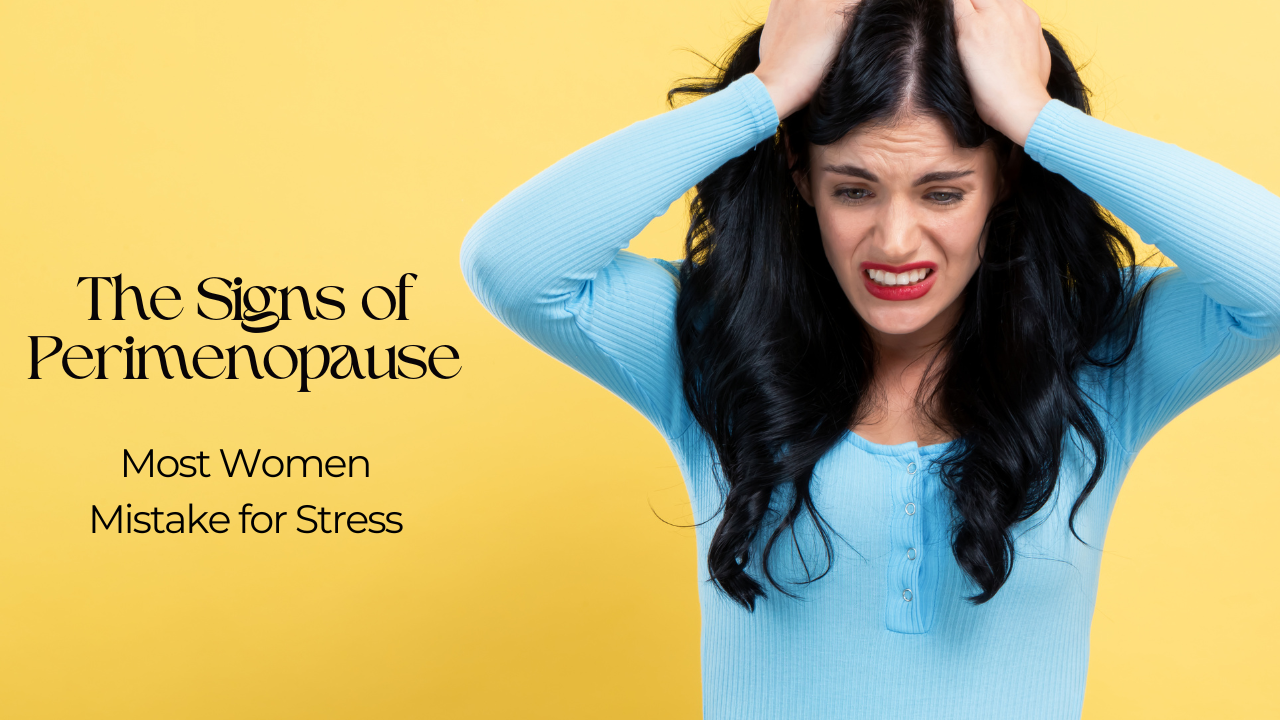
"Maybe I'm just stressed."
It's often the first explanation women give themselves.
After all, life is busy. Careers are demanding. Family responsibilities don't disappear. There are deadlines, commitments, and a never-ending list of things that need your attention.
So when sleep becomes disrupted, your patience feels shorter, or your energy starts to disappear, stress seems like the obvious answer.
Sometimes it is.
But sometimes there is another reason.
For many women in their 40s and early 50s, what feels like stress may actually be one of the earliest signs of perimenopause.
The challenge is that the symptoms often look remarkably similar.
The Problem With Perimenopause
Most women expect perimenopause to announce itself with changes to their periods.
They expect hot flushes.
They expect menopause symptoms.
What many women don't expect are the subtle changes that can begin years earlier.
Research from The North American Menopause Society shows that hormonal fluctuations can begin long before menopause itself, affecting everything from mood and sleep to energy and cognitive function.
As a result, many women spend years treating symptoms without realising hormones may be playing a role.
You Feel More Anxious Than Usual
Many women are surprised by this one.
You may have spent most of your adult life feeling calm, capable, and emotionally steady.
Then seemingly out of nowhere, you feel more anxious.
Small problems feel bigger.
Your mind races more easily.
You find yourself worrying about things that never used to bother you.
It's easy to assume this is simply the result of a busy life.
But estrogen plays an important role in supporting neurotransmitters that influence mood and emotional wellbeing.
As hormone levels fluctuate, anxiety can become more noticeable, even in women who have never struggled with it before.
Your Sleep Suddenly Changes
One of the most common early symptoms of perimenopause has nothing to do with your menstrual cycle.
It's sleep.
You fall asleep easily but wake up during the night.
You wake at 3 a.m. with a busy mind.
You sleep for eight hours but still feel exhausted the next day.
Research from Harvard Medical School suggests that hormonal fluctuations can affect sleep quality, body temperature regulation, and the body's natural sleep cycles.
The result is often a feeling of constant tiredness that many women attribute to stress alone.
You're More Irritable Than You Used to Be
You know the feeling.
Your patience feels shorter.
Minor inconveniences suddenly feel far more irritating than they should.
You find yourself reacting differently than you used to.
Then comes the guilt.
You wonder why you're feeling so frustrated.
The truth is that hormonal fluctuations can influence emotional regulation and stress resilience.
Many women describe feeling less able to "bounce back" from everyday pressures.
It doesn't mean you're becoming less capable.
It means your body is working through a significant transition.
Brain Fog Starts Appearing
You walk into a room and forget why.
You struggle to find a word that should be obvious.
You read the same email twice before it sinks in.
For professional women, this symptom can be particularly unsettling.
The good news is that you're not losing your competence.
Estrogen influences brain function and cognitive performance.
When levels fluctuate, concentration, memory, and mental clarity can feel less reliable than before.
Your Energy Feels Different
This isn't the kind of tiredness that comes after a busy week.
It's more persistent.
More difficult to explain.
You may wake up tired.
You may experience afternoon crashes.
You may feel as though you're constantly trying to catch up on energy.
Many women assume they simply need more sleep.
While sleep is important, hormonal fluctuations can directly affect how your body produces and uses energy throughout the day.
Your Body Starts Changing
Perhaps you've noticed that your body is responding differently despite maintaining the same habits.
Weight may begin to settle around your middle.
Recovery from exercise takes longer.
You feel less toned than before.
Research suggests that declining estrogen levels can influence where fat is stored and how efficiently the body uses energy.
This is one reason why many women feel as though their metabolism has suddenly changed.
Because in many ways, it has.
Why Stress and Perimenopause Feel So Similar
The reason these symptoms are often confused is because stress and hormonal changes affect many of the same systems.
Both can influence:
- Sleep
- Mood
- Energy
- Appetite
- Concentration
In fact, chronic stress can sometimes amplify the symptoms of perimenopause.
This is why understanding what's happening inside your body becomes so important.
You cannot support a problem you don't recognise.
What Women Need to Know
Recognising the signs of perimenopause isn't about blaming every symptom on hormones.
It's about understanding that there may be more to the story.
Your body is changing.
The strategies that worked in your 30s may no longer provide the same results.
You may need more recovery, better sleep support and an approach to nutrition and exercise differently.
Most importantly, you may need to stop being so hard on yourself.
The Takeaway
If you've been feeling more tired, more anxious, less focused, or simply not quite like yourself, don't automatically assume it's just stress.
For many women, these are some of the earliest signs of perimenopause.
The encouraging news is that understanding what is happening gives you options.
It allows you to work with your body rather than against it.
And often, that understanding is the first step toward feeling more like yourself again.
Stay connected with news and updates.
Join our mailing list to receive the latest news and updates from our team.
Don't worry, your information will not be shared.
We hate SPAM. We will never sell your information, for any reason.