The Real Reason You Feel Exhausted Even After a Full Night’s Sleep
sleep and menopause sleep and perimenopause sleep tips May 09, 2026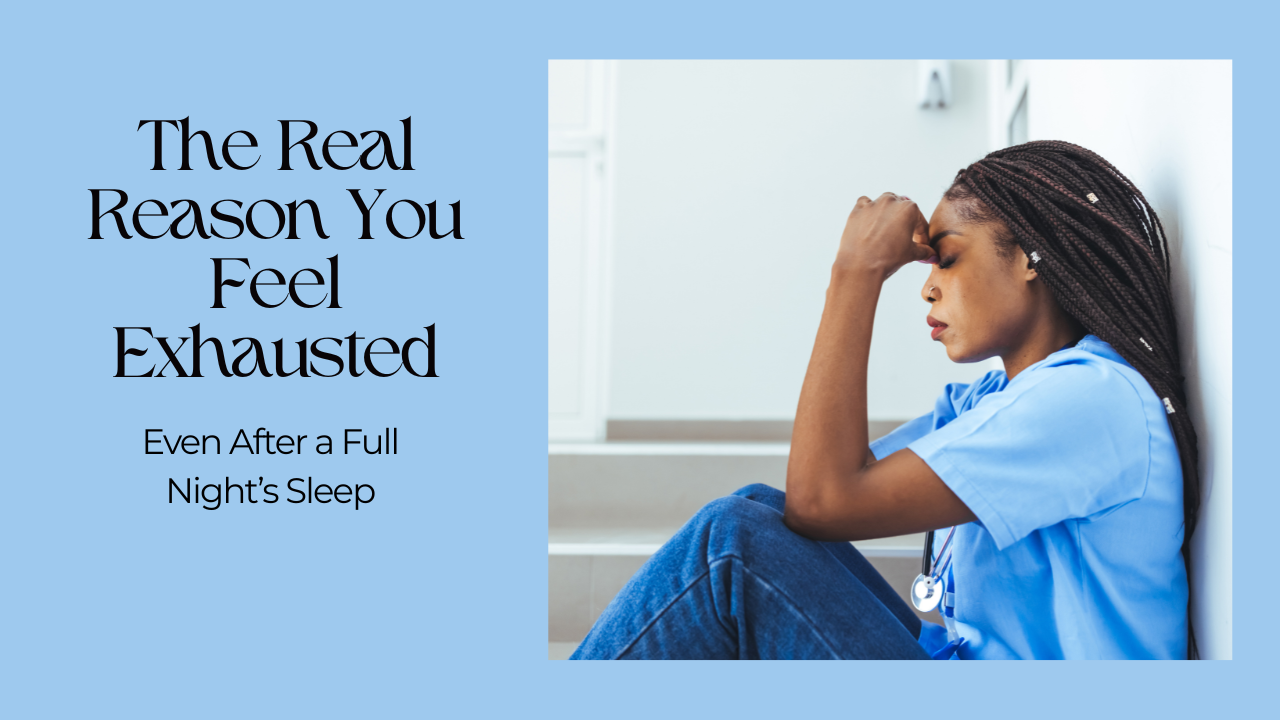
You went to bed at a reasonable time.
You slept for seven, maybe even eight hours.
You should feel refreshed.
Instead, you wake up feeling as though you're already running on empty before the day has even begun.
The coffee helps for a while.
You get through your morning.
Then, sometime during the afternoon, your energy begins to fade again.
By evening, you're wondering how you can feel so tired when you technically got enough sleep.
If this sounds familiar, you're not alone.
Many women in midlife find themselves feeling exhausted despite spending enough time in bed. It can feel frustrating, confusing, and sometimes even worrying.
The surprising truth is that fatigue is not always a sleep problem.
Often, it's a sign that something deeper is happening beneath the surface.
Sleep Quantity and Sleep Quality Are Not the Same Thing
One of the biggest misconceptions about fatigue is that more hours automatically equals more energy.
In reality, the quality of your sleep matters just as much as the quantity.
As women move through perimenopause and menopause, hormonal changes can affect the way the body moves through its sleep cycles.
You may be spending eight hours in bed, yet getting far less restorative sleep than you did ten years ago.
Research from Harvard Medical School shows that declining estrogen levels can affect sleep quality, body temperature regulation, and the ability to achieve deep sleep.
This means your body may not be getting the recovery it needs, even if you're spending enough time in bed.
The result?
You wake up tired and wonder why.
Your Hormones May Be Affecting More Than You Realise
Hormones play a much bigger role in energy than many women realise.
Estrogen supports brain function, mood, metabolism, and overall wellbeing.
As estrogen begins to fluctuate during perimenopause and menopause, many women notice changes that seem unrelated at first.
You may experience brain fog.
You may feel less motivated than usual.
Tasks that once felt easy may suddenly require more effort.
Some women describe it as feeling like they're moving through the day with the handbrake on.
These changes are real.
And they are often connected to the hormonal shifts taking place behind the scenes.
The Hidden Cost of Being Busy
Many professional women spend years operating at a high level.
There are meetings to attend.
Projects to manage.
People relying on you.
Family responsibilities waiting when the workday ends.
For a long time, you may have been able to handle all of this without it seeming to affect you too much.
But eventually, the body starts keeping score.
When stress becomes a constant companion, your body produces more cortisol, commonly known as the stress hormone.
Initially, cortisol helps you stay alert.
Over time, however, elevated stress can leave you feeling depleted.
Many women find themselves in a frustrating cycle.
They're exhausted, yet they struggle to relax.
They're tired, yet their mind won't switch off.
They feel drained, but sleep doesn't seem to fix it.
Blood Sugar Could Be Contributing to Your Fatigue
Another often-overlooked cause of fatigue is unstable blood sugar.
When meals are skipped, rushed, or built around quick convenience foods, energy levels can become unpredictable.
You may notice a strong energy dip during the afternoon.
You might find yourself reaching for another coffee or something sweet just to get through the rest of the day.
What feels like a lack of energy is often a lack of stable fuel.
Your body performs best when it receives regular nourishment throughout the day.
Without it, energy becomes harder to maintain.
Muscle Loss Changes How You Feel
One of the most surprising contributors to fatigue is muscle loss.
From around the age of 40, women naturally begin to lose muscle mass.
This process accelerates during and after menopause.
Muscle is not just important for strength.
It plays a major role in how your body produces and uses energy.
When muscle declines, everyday activities require more effort.
Climbing stairs.
Carrying shopping bags.
Walking longer distances.
Tasks that once felt effortless can begin to feel more demanding.
This can create a sense of tiredness that many women don't immediately connect to muscle health.
Recovery Matters More Than Ever
Many women focus on productivity.
Few focus on recovery.
Recovery isn't simply about stopping.
It's about allowing your body to repair, restore, and prepare for the demands of the next day.
Without adequate recovery, fatigue can build over time.
Even healthy habits can become draining if your body never gets the opportunity to recharge properly.
This is why sleep, stress management, strength training, and nutrition all work together.
They support the systems responsible for creating energy.
A Different Approach to Energy
What worked in your thirties may not work now.
That isn't a sign that something is wrong.
It's a sign that your body needs a different kind of support.
For many women, that support includes better sleep quality, regular meals, strength training, stress management, and prioritising recovery.
The goal is no longer to squeeze more out of yourself.
The goal is to create the conditions that allow your body to thrive.
The Takeaway
Feeling exhausted after a full night's sleep is not something you should automatically dismiss as normal.
Your body may be trying to tell you something important.
For many women, persistent fatigue is linked to hormonal changes, stress, blood sugar fluctuations, muscle loss, or poor recovery.
The good news is that these factors can be supported.
When you understand what is really driving your fatigue, you can begin making changes that restore your energy in a way that feels steady, sustainable, and achievable.
And perhaps for the first time in a long time, you can start waking up feeling refreshed instead of depleted.
Stay connected with news and updates.
Join our mailing list to receive the latest news and updates from our team.
Don't worry, your information will not be shared.
We hate SPAM. We will never sell your information, for any reason.

A soulful, nurturing retreat experience for women, what might change if you gave yourself four days?
At the REVIVAL retreat, you can step away from the demands of everyday life and make space for yourself. We will walk through the Peak District, enjoy gentle yoga and guided meditation, and share gratitude sessions and fireside chats.
Personality profiling and habit transformation sessions will give you time to reflect on where you are now and what you would like to take home with you. Come as you are, alongside a small group of women who have made this time for themselves too.
21–24 June 2027 | Just 10 places
Registration opens soon.
Support Your Body
40 plus body reset anti inflammatory food balance balance hormones balancing hormones beginners strength training bloating blood sugar blood sugar balance body confidence bone density health brain fog brain help breakfast recipes breathwork building resilience core exercises creating space in midlife detox detox your body diabetic management digestion easter recipes emotional balance emotional eating energy evening routines exercise for women exercise recovery in midlife fatigue tips fibre for midlife fitness transformation fixing energy in midlife flexibility fuel guided walking uk gut health health accountability health goals health strategy healthy healthy ageing healthy foods healthy recipes heart health hormonal hormonal balance hormone balance hormone balancing breakfast hormone health hormones hot flashes hydration insulin and midlife january detox joint health joint pain lifestyle foods losing muscle through ageing losing weight low impact cardio making time meal prep meditation meditation tips menopase wellness menopause menopause and digestion menopause exercise menopause fatigue menopause moods menopause nutrition menopause supplements menopause support menopause support for career women menopause symptoms menopause wellness menopause workout mental health for menopause and perimenopause mental health wellness metabolism midlife midlife boundaries midlife energy midlife health & well being midlife reflection midlife reset midlife weight gain midlife wellness milestones mindfulness mindset mobility morning routine morning routine for midlife movement movement and mobility muscle strength nature nutrition nutrition for busy women nutrition for menopause nutrition mistakes made nutriton nutritonal snacks outdoor perimenopause perimenopause nutrition perimenopause support perimenopause symptoms perimenopause wellness perimenopause yoga post menopause support protein reducing cancer risk reducing stress tips reflection for busy women resistance band training retreats 2026 self care self care for professional women self care tips set boundaries sleep sleep and menopause sleep and perimenopause sleep tips spring detox strength training strength training for women 50 plus stretching stretching routines the 30 day detox challenge for midlife women the desk job body tracking fitness vitamins walking weight gain weight loss weight training for women wellness wellness habits womens wellness freedom yin yoga yoga yoga and menopause yoga routine yoga routines yoga stretch