The Menopause Breakfast That Supports Energy All Day
May 17, 2026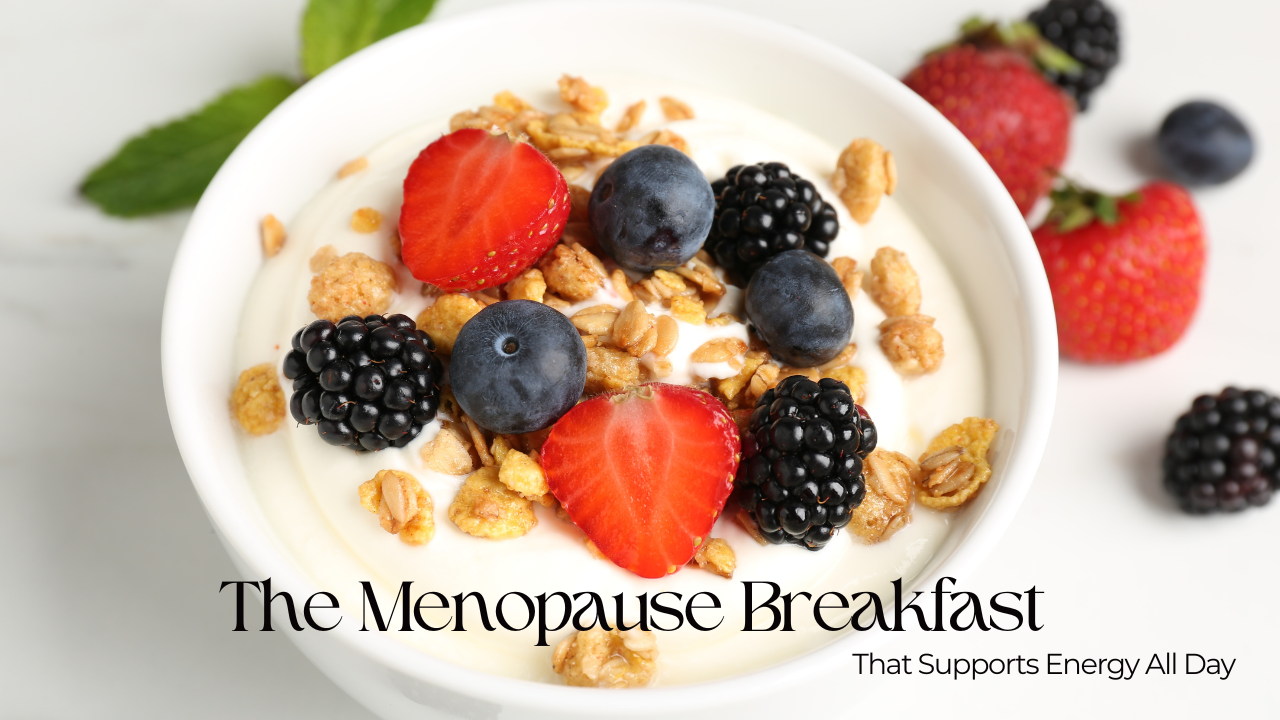
Have you noticed that breakfast doesn't seem to "last" the way it used to?
Perhaps you eat a bowl of cereal at 7am only to find yourself hungry by 10. Or maybe you start the day with toast and a coffee, then spend the morning fighting cravings and struggling to concentrate.
If so, you're not alone.
One of the biggest changes many women notice during perimenopause and menopause is that their energy becomes less predictable. You can wake up feeling exhausted, hit a slump mid-morning, and find yourself reaching for caffeine just to get through the day.
It is easy to assume this is simply part of getting older. But there is often much more going on beneath the surface.
As estrogen levels decline, the body becomes less efficient at managing blood sugar. At the same time, muscle mass naturally decreases, metabolism changes, and sleep is often disrupted. Together, these changes can leave women feeling as though their energy has disappeared overnight.
What many don't realise is that breakfast can either help stabilise those changes or make them worse.
For years, we were told that cereal, toast, fruit juice, and low-fat products were healthy ways to start the day. While these foods aren't necessarily bad, many contain large amounts of carbohydrates and very little protein.
This creates a rollercoaster effect.
Blood sugar rises quickly after eating, giving you a short burst of energy. A few hours later it drops again, leaving you tired, hungry, and looking for something sweet.
That mid-morning biscuit isn't a lack of willpower. Often it's biology.
Your body is simply responding to the fuel it has been given.
This is why many nutrition experts now encourage women in midlife to think differently about breakfast.
Rather than asking, "What can I eat quickly?" a better question might be, "What will keep me energised until lunch?"
The answer usually starts with protein.
Protein helps slow the release of sugar into the bloodstream and supports the maintenance of muscle mass, something that becomes increasingly important during menopause. It also helps you feel fuller for longer, reducing the constant battle with hunger and cravings.
Imagine the difference between starting your day with a sugary cereal and starting your day with Greek yogurt, berries, and a handful of nuts.
Both are quick. Both are easy.
But one is far more likely to keep your energy steady throughout the morning.
The same can be said for eggs. A simple breakfast of scrambled eggs with spinach or tomatoes provides protein, nutrients, and staying power that many traditional breakfast foods simply can't match.
Fibre is another nutrient that deserves more attention.
Foods such as berries, oats, chia seeds, flaxseeds, and vegetables help slow digestion and support gut health. They work alongside protein to create a steadier release of energy and can help reduce those sudden hunger pangs that seem to appear out of nowhere.
Healthy fats also play a role.
Adding avocado, nuts, seeds, or nut butter to breakfast can make a meal more satisfying and help you feel nourished rather than deprived.
And then there is hydration.
Many women begin the day already dehydrated after a night's sleep. Even mild dehydration can contribute to fatigue, headaches, poor concentration, and low energy.
Before pouring that second cup of coffee, try drinking a large glass of water. It sounds simple, but it is one of the easiest ways to support energy levels.
The good news is that you don't need a perfect breakfast.
You don't need to count calories, weigh food, or spend an hour cooking before work.
Often the biggest improvements come from the smallest changes.
Adding more protein.
Including more fibre.
Drinking more water.
Choosing foods that work with your changing body rather than against it.
Menopause is a time when many women feel as though their bodies are suddenly playing by a different set of rules. The breakfast that worked at 30 may not work at 50.
That's not failure.
That's adaptation.
And sometimes, creating more energy for the day ahead starts with something as simple as what you choose to put on your plate each morning.
Stay connected with news and updates.
Join our mailing list to receive the latest news and updates from our team.
Don't worry, your information will not be shared.
We hate SPAM. We will never sell your information, for any reason.