The Healthy Habits That Make Midlife Feel Easier
Jun 30, 2026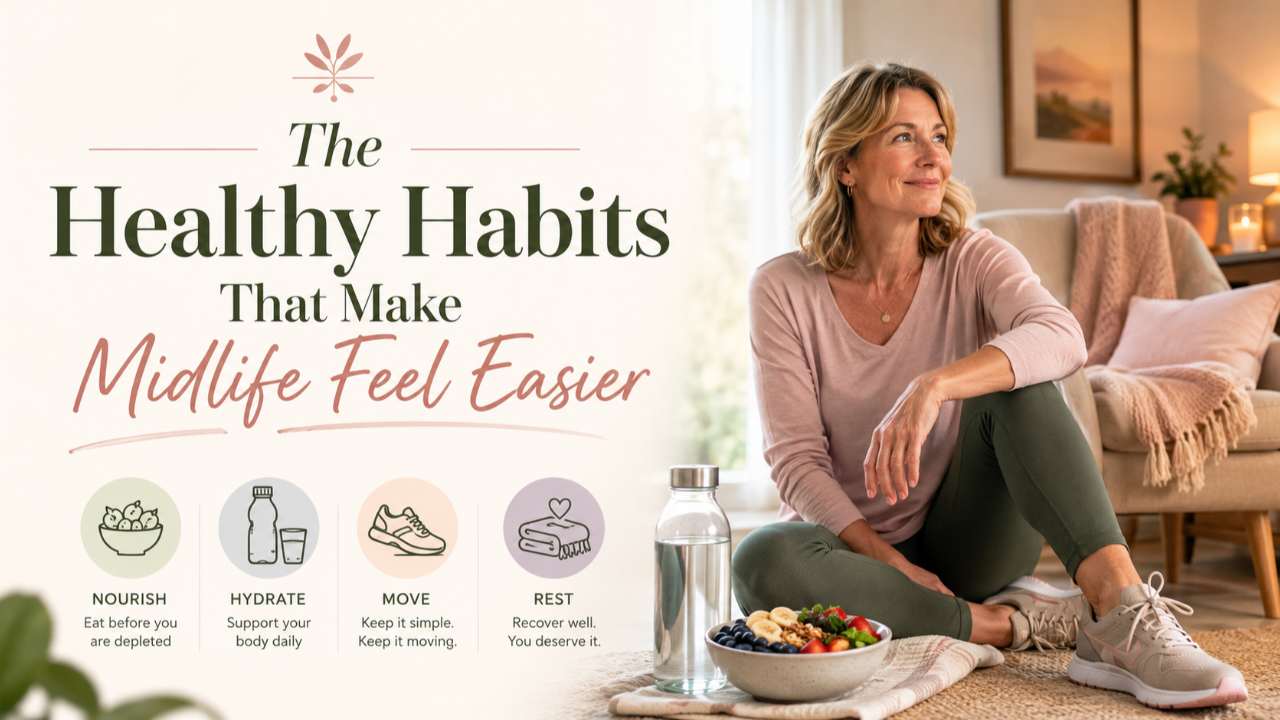
Some days, midlife feels less like a transition and more like trying to run your life with several browser tabs permanently open.
You are managing work, family, appointments and responsibilities while also coping with a body that may no longer respond as predictably as it once did. Sleep can be interrupted, energy can disappear halfway through the afternoon, and stiffness may greet you before your feet have even touched the floor.
When this happens, it is tempting to look for one impressive solution.
Perhaps you need a stricter eating plan, a more advanced supplement, a harder workout or a complete lifestyle overhaul. Yet the habits that make the greatest difference are often much less dramatic.
They are the simple actions that help you feel fed, hydrated, rested and physically capable before the day begins asking more from you.
Midlife does not require perfection. It requires support.
Perimenopause and menopause can affect sleep, mood, concentration, energy and physical comfort. Symptoms can also fluctuate, so a routine that feels easy one week may require more flexibility the next.
This makes extreme plans particularly difficult to sustain.
A routine built around perfect meal preparation, uninterrupted sleep and long daily workouts may look impressive on paper, but it leaves very little room for the realities of midlife.
The purpose of a healthy habit is not to give you another standard to fail.
It should remove some of the strain from your day.
A useful habit helps you avoid becoming desperately hungry at 4pm, reminds you to drink before a headache appears, keeps your joints moving after hours at a desk or gives your brain a reliable signal that the working day is ending.
These habits will not remove every menopause symptom, and they should not replace appropriate medical care. They can, however, create stronger foundations from which your body can cope.
Begin by feeding yourself before you become depleted
Many women do not intentionally skip meals. The morning simply becomes busy.
You answer emails with a coffee beside you, attend consecutive meetings and suddenly realise it is nearly lunchtime. Later, you grab something quickly, continue working and arrive in the evening feeling tired, irritable and unusually hungry.
At that point, your food choices are not being made from a calm or organised place. They are being made by a woman who needs energy immediately.
Regular meals are not about following a rigid timetable. They are about reducing the long gaps that leave you running on caffeine, willpower and whatever food is easiest to reach.
A balanced pattern can include vegetables and fruit, higher-fibre carbohydrates, protein foods, dairy or suitable alternatives, and modest amounts of unsaturated fats. The NHS Eatwell Guide emphasises balance across the day or week rather than demanding that every individual meal be perfect.
A practical meal might therefore be:
- Eggs on wholegrain toast with tomatoes
- Greek yoghurt or a fortified alternative with fruit, oats and seeds
- Lentil soup with wholegrain bread and cheese
- Chicken, tofu or beans with rice and vegetables
- A baked potato with tuna, cottage cheese or chilli
None of these meals is revolutionary. That is precisely the point.
You need meals that can survive an ordinary working day.
Use the “protein, plant, energy” check
When you are choosing a meal, ask whether it contains three useful elements.
Protein might come from eggs, fish, poultry, yoghurt, tofu, beans, lentils or another food you enjoy.
A plant could be fruit, vegetables, salad, beans, nuts or seeds.
Your energy source may be potatoes, rice, bread, oats, pasta or another carbohydrate that helps make the meal satisfying.
This is not a perfect formula, and it does not need to be followed at every sitting. It is simply a quick way to notice whether a meal is likely to sustain you.
For example, toast alone may not keep you satisfied for long. Toast with eggs and fruit is more complete. A plain salad may leave you searching for food later, while a salad with salmon, chickpeas and potatoes is more substantial.
Midlife nutrition should not become a competition to eat as little as possible.
Your body still needs enough energy and nutrients to support muscle, bone, concentration and recovery.
Prepare for the part of the day when good intentions usually disappear
Most routines do not unravel at breakfast. They unravel when the day becomes demanding.
For many women, this happens in the late afternoon. Lunch may have been rushed, energy has fallen and dinner is still several hours away.
Instead of relying on self-control, prepare for that moment.
Keep one or two dependable options available, such as yoghurt and berries, an apple with peanut butter, hummus with vegetables, boiled eggs, nuts with fruit, or oatcakes with cheese.
A planned snack is not a sign that you have failed to manage your appetite. It may prevent you from reaching dinner ravenous and eating far beyond comfortable fullness.
Look at your daily pattern with curiosity. When do you regularly feel drained, irritable or unable to concentrate?
That is often where a supportive habit belongs.
Hydration should happen before you feel parched
It is remarkably easy to reach mid-afternoon having consumed several coffees and very little else.
A dry mouth may be obvious, but lower fluid intake can also accompany tiredness, headaches, dizziness or difficulty concentrating. These symptoms can have many causes, so persistent problems should not automatically be blamed on dehydration, but drinking regularly is still an important basic habit.
As a general guide, the NHS recommends around six to eight cups or glasses of fluid a day, with more potentially needed during hot weather, illness or prolonged physical activity. A useful everyday guide is aiming for urine that is a clear, pale yellow.
You do not have to force down large quantities of plain water.
Water, lower-fat milk, unsweetened drinks, tea and coffee can all contribute, although caffeine or alcohol may aggravate hot flushes or sleep difficulties for some women.
Rather than carrying a water bottle all day and forgetting to use it, connect drinking with events that already happen.
Have a glass after waking, another with breakfast and one before your first meeting. Refill your bottle at lunch and drink with your evening meal.
The habit becomes easier when hydration is attached to the structure of your day.
Notice what your drinks are doing to your symptoms
Coffee may feel essential after a poor night’s sleep, but a late-afternoon caffeine habit can sometimes make the next night more difficult. Alcohol may initially make you sleepy but can interfere with sleep quality and may trigger hot flushes or night sweats in some women.
This does not mean every woman must give up coffee or alcohol.
Try a personal experiment instead.
For one week, note when you have caffeine or alcohol and how you sleep that night. Record whether hot flushes, palpitations, headaches or anxiety appear more noticeable.
You may discover that one morning coffee is fine but the 4pm one affects you. Perhaps wine is comfortable with food but less so close to bedtime.
Healthy habits work best when they are informed by your own experience rather than a universal list of prohibitions.
Movement can be distributed across the day
Many women imagine movement only counts when they change clothes, complete a workout and feel exhausted afterwards.
But your body also responds to the smaller moments when you interrupt sitting, use your muscles and increase circulation.
You could walk while making a phone call, take the stairs, complete ten chair squats before lunch or stretch your hips after a long meeting.
This everyday movement does not replace purposeful exercise, but it makes your day less sedentary and can help reduce the stiffness that develops from remaining in one position for hours.
The NHS encourages regular physical activity, including aerobic movement and muscle-strengthening work. Regular exercise may also support mood, sleep, bone health and general wellbeing during menopause, although it should not be presented as a guaranteed cure for symptoms.
The most effective activity is often not the one that burns the most calories.
It is the one that you can keep returning to.
Give movement four different jobs
Rather than expecting one form of exercise to do everything, allow different activities to serve different purposes.
Walking, cycling or swimming can support cardiovascular fitness and mood.
Strength training helps preserve muscle and supports the bones and joints.
Mobility or yoga can help you explore movement and ease the sensation of stiffness.
Balance exercises support confidence and stability.
A realistic week might include two short strength sessions, several walks and a yoga or mobility practice. It does not need to resemble an athlete’s schedule.
You are creating a body that can carry you through life, not accumulating exercise as punishment for eating.
Use movement as an energy test, not an energy demand
Fatigue can make exercise difficult to judge.
Sometimes ten minutes of movement helps you feel more alert. On another day, your body may genuinely need rest.
Begin with five minutes and reassess.
Walk gently, perform a few sit-to-stands or move through a short mobility sequence. Ask yourself whether your energy feels the same, slightly better or worse.
When movement helps, continue. When you feel increasingly depleted, stop and recover.
This approach allows you to respond to your body without automatically assuming that tiredness means you should do nothing—or that discipline requires you to push through everything.
Persistent or severe fatigue deserves medical attention. Menopause can contribute to tiredness, but so can thyroid conditions, anaemia, sleep apnoea, low mood and other health problems.
Healthy habits should never be used to explain away symptoms that need investigating.
Protect sleep without demanding perfect sleep
Sleep is often the habit women are told to improve as though they have simply forgotten how to do it.
Yet during perimenopause, night sweats, anxiety, pain and hormonal change can make sleep disruption very real. Research also suggests that sleep difficulties during midlife can interact with mood, appetite and metabolic health.
You cannot always control whether you wake during the night.
You can create conditions that make sleep more likely.
Begin with a reasonably consistent waking time. Expose yourself to daylight in the morning where possible, and create a gradual transition away from work and bright screens in the evening.
Keep the bedroom cool if night sweats are a problem. Use light bedding and clothing that can be adjusted easily. The NHS also suggests reducing possible triggers such as caffeine, alcohol, hot drinks and spicy foods when they aggravate symptoms.
A bedtime routine does not need to involve candles, elaborate skincare and an hour of meditation.
It might mean closing your laptop, preparing tomorrow’s clothes, dimming the lights and reading for ten minutes.
The purpose is to give your nervous system a reliable signal that the active part of the day is ending.
Do not turn a bad night into a bad week
After poor sleep, many women abandon the habits that could offer some support.
Breakfast is skipped because they woke late. Movement is cancelled because they feel tired. Coffee replaces water, and the day becomes an attempt to survive until bedtime.
A gentler approach is to create a poor-sleep plan.
On these days, choose familiar and satisfying meals rather than trying to restrict food. Drink regularly, get some daylight and complete a shorter, lower-intensity form of movement if it helps you feel better.
You may also need an earlier evening, fewer optional tasks or a brief rest.
The goal is not to pretend you are fully energised.
It is to stop one difficult night from removing every form of support from the following day.
Make your environment do some of the remembering
Healthy routines are difficult when every action depends on memory and motivation.
Place your water bottle beside your laptop. Keep fruit visible and store practical protein options where you can reach them. Leave your resistance band near the chair where you plan to use it.
Put walking shoes by the door. Set a reminder to stand between meetings. Prepare tomorrow’s breakfast while clearing away dinner.
These changes may appear insignificant, but they reduce the number of decisions required.
The easier a habit is to begin, the more likely it is to happen on an ordinary day.
You should not have to rediscover your good intentions every morning.
Choose one morning anchor and one evening anchor
Trying to install ten new habits at once usually creates another short-lived wellness plan.
Choose two dependable anchors instead.
Your morning anchor could be drinking a glass of water, eating a proper breakfast or stepping outside for five minutes of daylight.
Your evening anchor might be preparing lunch, putting your phone away at a certain time or completing five minutes of stretching.
Keep these actions small enough to continue during a demanding week.
Once they become more familiar, add another habit around them.
You are not attempting to create the perfect day. You are placing a few stable points inside an unpredictable one.
A simple midlife foundations check
At the end of each day, ask four questions:
Have I eaten enough to support my energy?
Have I drunk regularly?
Have I moved my body in some way?
Have I created any space for recovery?
These questions are intentionally simple.
They prevent your wellbeing from becoming lost beneath complex rules about timing, tracking and perfection.
Some days, the answer to all four will be yes. On other days, only one foundation may be in place.
Use the answers as information, not a score.
Tomorrow’s most helpful habit is often the one that was missing today.
The habits that work may look almost too ordinary
The wellness world often celebrates dramatic transformations.
Nobody posts an exciting photograph of eating lunch before becoming exhausted, filling a water bottle or going to bed at a sensible time.
Yet these ordinary actions are what allow more visible changes to last.
Regular meals give your body dependable nourishment. Hydration supports normal physical and mental function. Movement preserves capacity, while sleep and recovery help you cope with the next day.
None of these habits needs to be performed perfectly to be useful.
They simply need to happen often enough to support you.
Midlife is not the time to demand more and more from a body that is already asking to be heard. It is an opportunity to become more skilful at meeting your needs before they become emergencies.
Eat before you are depleted.
Drink before you are parched.
Move before stiffness becomes your normal.
Rest before exhaustion makes the decision for you.
The habits that make midlife feel easier are rarely complicated.
They are the quiet ways you stop leaving yourself unt
Stay connected with news and updates.
Join our mailing list to receive the latest news and updates from our team.
Don't worry, your information will not be shared.
We hate SPAM. We will never sell your information, for any reason.