The Freedom Factor: What Will Your Body Allow You to Do in 20 Years?
Jun 16, 2026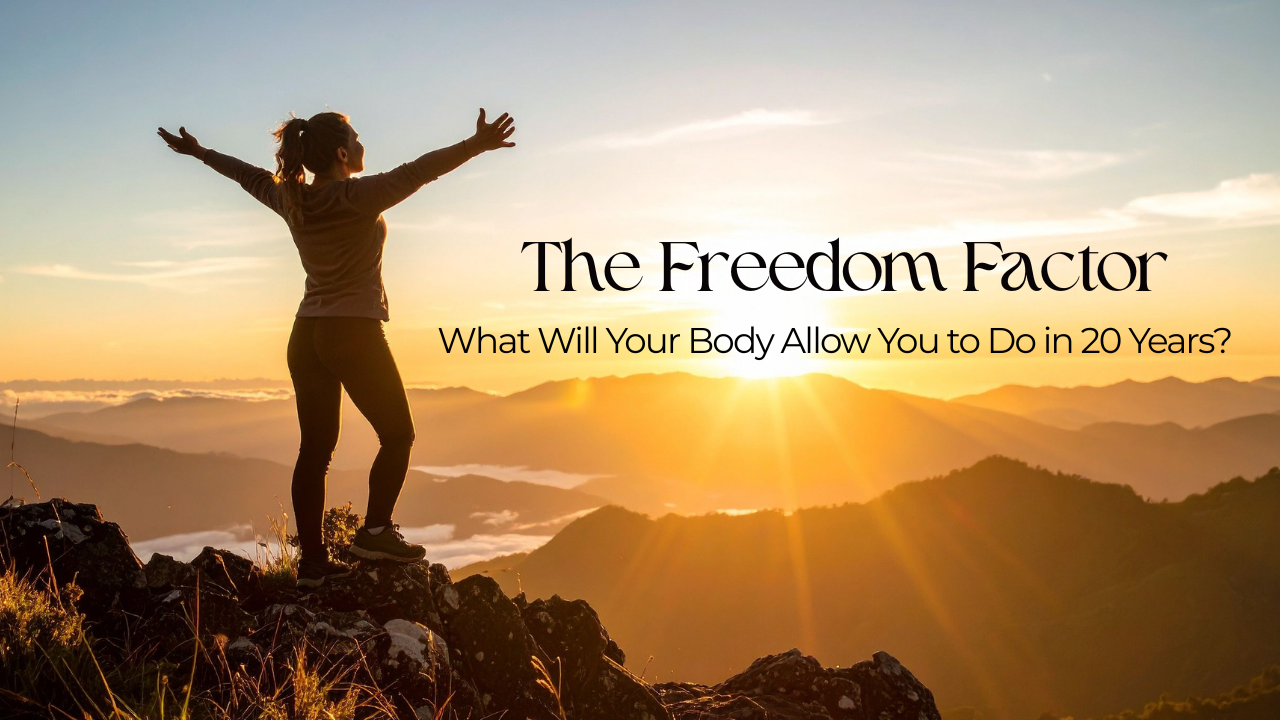
Take a moment and imagine yourself twenty years from now. What do you see? Perhaps you're exploring a beautiful city you've always wanted to visit, walking along a coastal path, carrying your own suitcase through an airport, spending time with grandchildren, enjoying long walks with friends, or pursuing hobbies you've finally found time for. For most women, the future they hope for isn't defined by a number on the scales. It's defined by freedom. The freedom to move, travel, explore, and live life on their own terms.
Yet very few women stop to consider what will make that future possible. The reality is that the freedom we hope to enjoy later in life is built much earlier, often during our 40s and 50s. The choices we make today influence how strong, mobile, and independent we will be in the decades ahead. While many conversations about menopause focus on hormones, weight gain, and hot flushes, some of the most important changes happening during midlife are taking place quietly beneath the surface.
According to research highlighted by Harvard Health, maintaining muscle mass, bone strength, balance, and mobility are among the most important factors influencing healthy aging and quality of life. In other words, the goal isn't simply to live longer. It's to remain capable, active, and independent while you're living.
One of the challenges of menopause is that many physical changes happen gradually. You may notice that you're not quite as strong as you once were, that recovery takes a little longer, or that certain activities feel slightly more demanding than they used to. These changes can seem small at first, but they often reflect important shifts taking place within the body. As estrogen levels decline during perimenopause and menopause, women naturally begin to lose muscle mass and bone density at a faster rate. Research shows that both muscle and bone health can be significantly affected during this stage of life.
While these changes may be invisible, their impact can be far-reaching. Muscle is about much more than appearance. It supports balance, mobility, posture, strength, and metabolism. It helps us climb stairs, carry shopping, lift grandchildren, get up from the floor, and navigate everyday life with confidence. Harvard researchers have repeatedly highlighted the importance of preserving muscle as we age because it plays a key role in maintaining independence and reducing the risk of frailty later in life.
Bone health is equally important, although it often receives less attention because we cannot see it. Bones are living tissue that are constantly being broken down and rebuilt. During menopause, declining estrogen levels can accelerate bone loss, increasing the risk of osteoporosis and fractures later in life. What makes this particularly challenging is that bone loss usually occurs without symptoms. Many women are unaware there is a problem until they experience a fracture.
The encouraging news is that both muscles and bones respond positively to the choices we make. Research consistently shows that strength training and weight-bearing activities can help maintain muscle mass and support bone health. Walking, climbing stairs, dancing, hiking, resistance training, and other forms of regular movement all provide important benefits. Every time you challenge your body, you're investing in your future ability to move confidently and independently.
This is where the conversation becomes about far more than exercise. The real goal isn't to fit into a smaller dress size or achieve a particular number on the scales. The real goal is freedom. Freedom to travel without worrying whether your body can keep up. Freedom to remain active and engaged in the activities you love. Freedom to maintain your independence and continue living life on your own terms.
The good news is that protecting your future health doesn't require extreme measures. In fact, the research suggests that consistency matters far more than perfection. Two or three strength-training sessions each week can help preserve muscle and support bone density. Regular walking can improve cardiovascular health, mobility, and balance. Eating adequate protein helps provide the building blocks needed for muscle maintenance, while nutrients such as calcium and vitamin D help support healthy bones. Prioritising sleep allows the body to recover, repair, and adapt to the demands placed upon it.
These habits may seem simple, but over time they create something incredibly valuable. They create resilience. They help build a body that remains capable, strong, and adaptable as the years pass.
Perhaps the most powerful question to ask yourself is this: what would your future self thank you for? Twenty years from now, she is unlikely to care what the scales said today. But she may be incredibly grateful that you chose to move your body, build strength, nourish yourself well, and invest in your health. She may be grateful for the strong muscles that allow her to remain active and the healthy bones that support her independence.
The choices you make today become the reality she lives tomorrow.
The Bottom Line
The freedom to travel, stay active, enjoy family, pursue hobbies, and remain independent doesn't happen by chance. It is built through years of small, consistent actions that strengthen your body from the inside out. Midlife is not the beginning of decline; it is an opportunity to invest in the future you want. Every walk, every strength session, every nourishing meal, and every positive choice helps build the body you'll rely on for decades to come. Because when it comes to healthy aging, the greatest goal isn't simply living longer. It's preserving the freedom to live well.
Stay connected with news and updates.
Join our mailing list to receive the latest news and updates from our team.
Don't worry, your information will not be shared.
We hate SPAM. We will never sell your information, for any reason.