The Exercises Your Bones Are Waiting For After 40
Jun 18, 2026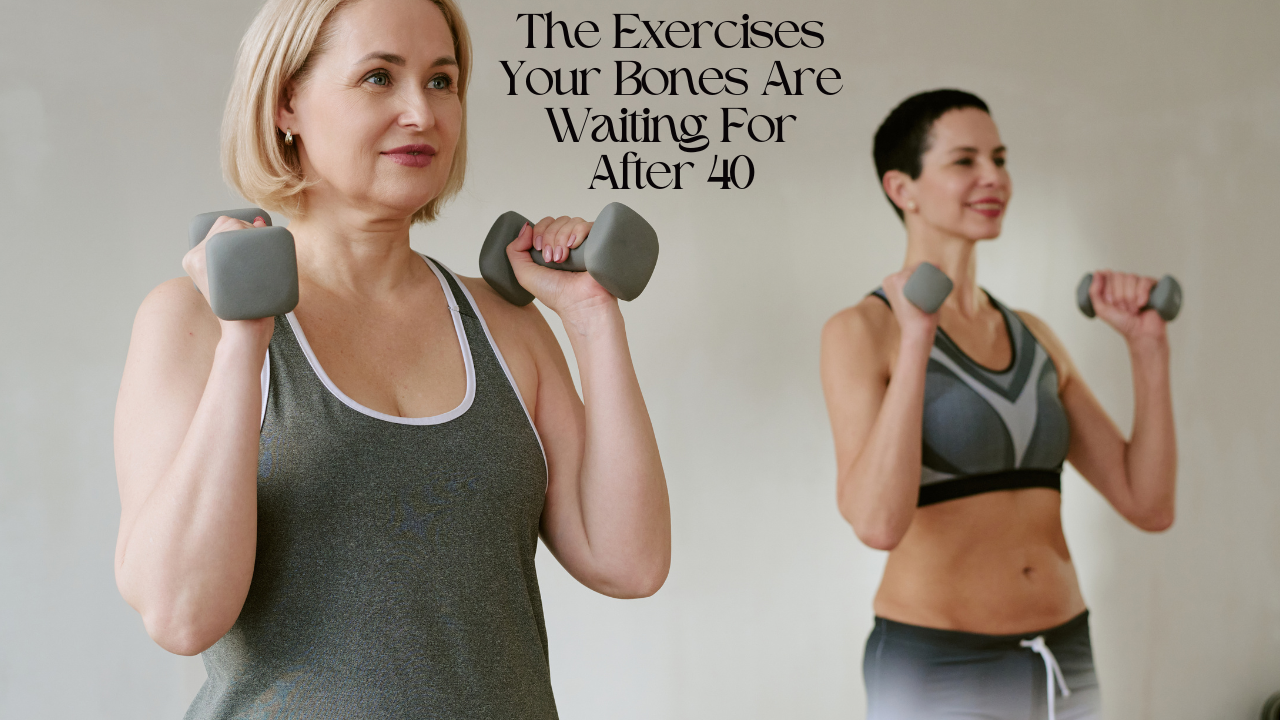
When most women think about exercise after 40, their goals are usually familiar.
They want more energy. They want to feel stronger. They want to manage their weight, improve their fitness, reduce stress, or perhaps ease some of the symptoms of menopause.
What few women realise is that every workout is doing something else too.
It's sending a message to their bones.
The surprising thing about bone health is that your bones are constantly listening to how you move. Unlike muscles, which often tell you immediately when they've been challenged, bones work quietly in the background. They adapt over time to the demands placed upon them.
The question is: what message are you sending?
Why Bone Health Suddenly Matters After 40
Most women don't spend much time thinking about their bones.
After all, if nothing hurts, everything must be fine, right?
Unfortunately, bone loss doesn't work that way.
Bone density can begin declining years before symptoms ever appear. During perimenopause and menopause, falling estrogen levels accelerate this process, increasing the risk of weaker bones and osteoporosis later in life.
According to research highlighted by Harvard Health, women can lose a significant amount of bone density during the years surrounding menopause. Because bone loss is silent, many women are completely unaware it's happening.
This is why the years after 40 are such an important opportunity.
Not because something is wrong.
But because your bones are still responding to what you do today.
The Common Mistake Many Women Make
One of the biggest misconceptions about bone health is that walking is enough.
Now, don't misunderstand me.
Walking is wonderful.
It's one of the best things you can do for your heart, mental wellbeing, mobility, and overall health. A daily walk can improve mood, reduce stress, support healthy aging, and help you stay active.
But when it comes to maintaining bone density, your bones often need a little more challenge.
Bones respond best when they are asked to work harder than normal.
Think of it this way. If you carried the same light handbag every day for ten years, your body would quickly adapt to that demand. But if you occasionally picked up a heavier suitcase, carried shopping bags, or challenged yourself physically, your muscles and bones would receive a signal that greater strength is required.
This is exactly how bone-building exercise works.
The Exercises Your Bones Love Most
Research consistently points to two main types of exercise that support bone health particularly well: weight-bearing exercise and resistance training.
Weight-bearing exercises are activities where you support your own body weight against gravity. Examples include brisk walking, hiking, dancing, stair climbing, tennis, and certain forms of aerobic exercise.
These activities create gentle impact forces that encourage bones to remain strong.
Resistance training is equally important. This includes exercises using dumbbells, resistance bands, kettlebells, weight machines, or your own body weight.
Every time a muscle pulls against a bone during exercise, it stimulates the bone tissue too. This is one reason strength training has become one of the most widely recommended forms of exercise for women during and after menopause.
Why Strength Training Is About So Much More Than Muscle
Many women still worry that strength training will make them bulky.
In reality, strength training is one of the most powerful tools available for healthy aging.
It helps preserve muscle mass, supports balance, improves posture, enhances mobility, and strengthens the body for everyday life. At the same time, it provides the stimulus that bones need to remain healthy.
Think about the things you want to be able to do in ten or twenty years.
Carry your own luggage.
Lift shopping bags.
Get up from the floor easily.
Walk confidently on uneven ground.
Travel independently.
Play with grandchildren.
Strength training supports all of these goals.
Don't Forget About Balance
One aspect of bone health that often gets overlooked is balance.
The strongest bones in the world are still vulnerable if a fall occurs.
This is why activities that improve balance and coordination become increasingly important as we age.
Yoga, Pilates, tai chi, and simple balance exercises can all help improve stability and body awareness.
For many women, combining strength training with balance-focused movement creates a powerful foundation for long-term health.
The Best Exercise Is the One You'll Actually Do
Perhaps the most important thing to remember is that you don't need the perfect exercise programme.
You don't need to spend hours in the gym.
You don't need to become a marathon runner.
You simply need to move consistently.
A couple of strength sessions each week. Daily walks. Taking the stairs when possible. Dancing in the kitchen. Gardening. Carrying your own shopping. Practising yoga.
These activities may seem small, but they all contribute to a stronger, more resilient body.
Think Beyond Weight Loss
One of the challenges women face is that exercise is often viewed purely through the lens of weight loss.
If the scales don't move, it can feel as though the effort wasn't worthwhile.
But your bones don't care what the scales say.
Neither do your muscles.
The real question isn't whether you've lost a few pounds this month.
The real question is whether you're building a body that will support the life you want in the future.
The Bottom Line
After 40, your bones are paying attention to how you move.
Walking is valuable, but bones thrive when they are challenged through weight-bearing activities, strength training, and exercises that improve balance and coordination.
The good news is that it's never too late to start.
Every step you take, every weight you lift, and every movement you make is an investment in your future strength, mobility, and independence.
Because the exercises your bones are waiting for aren't really about your bones at all.
They're about helping you keep saying yes to the life you want to live.
Stay connected with news and updates.
Join our mailing list to receive the latest news and updates from our team.
Don't worry, your information will not be shared.
We hate SPAM. We will never sell your information, for any reason.