The Everyday Signs Your Body Is Becoming Stronger
Jun 27, 2026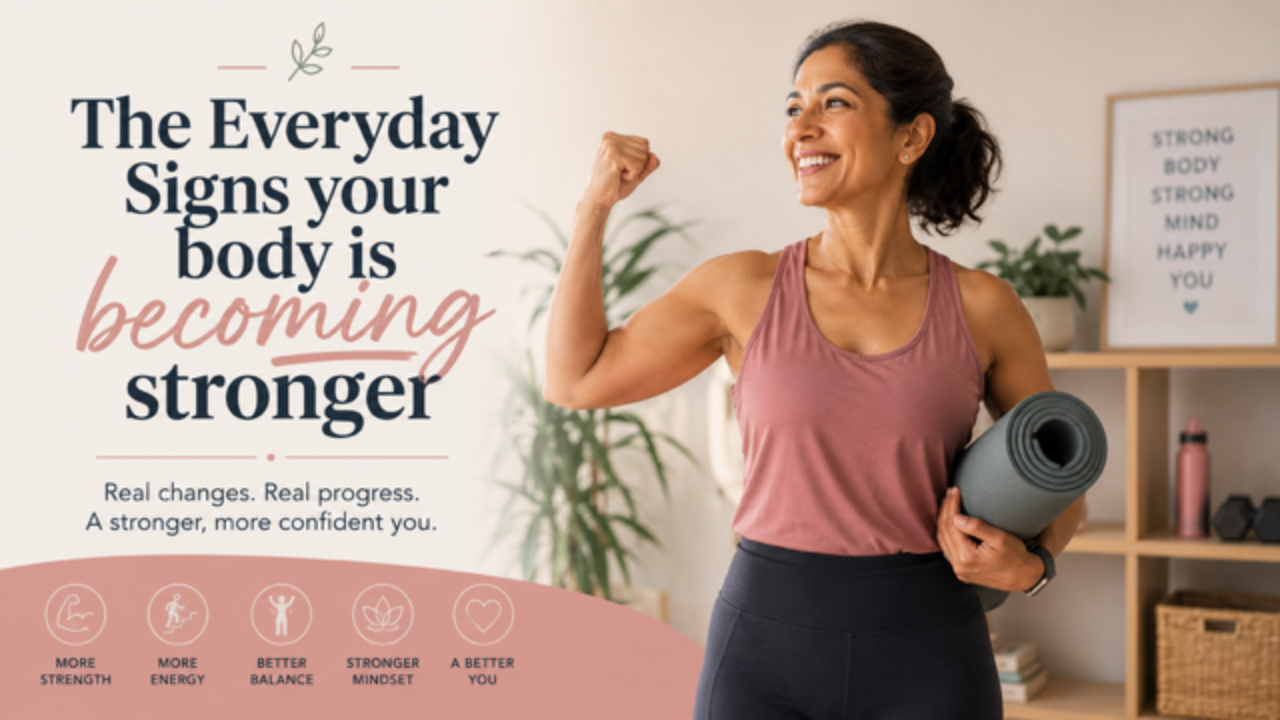
You have been strength training for several weeks. You are turning up, learning the exercises and gradually challenging yourself but the number on the scales has barely changed.
Your clothes may fit much the same, your measurements have not moved, and the mirror does not appear to be offering much encouragement.
It is easy to wonder whether your efforts are making any difference.
Yet the first signs of becoming stronger are often not visible. They appear in the way you move through an ordinary day: getting out of a low chair without pushing through your hands, carrying shopping without swapping bags halfway home, or climbing the stairs without your legs feeling quite so heavy.
These moments can seem too small to count, but they are often the most meaningful evidence that your training is working.
Strength can improve before your appearance changes
Many women begin strength training expecting to see more definition, a lower weight or an immediate change in body shape. When this does not happen quickly, they assume they are doing something wrong.
However, early improvements in strength are not dependent entirely on developing visibly larger muscles. During the first weeks of training, your nervous system becomes more skilled at activating and coordinating the muscles required for a movement. This can help you produce more force and move more efficiently before substantial muscle growth is visible.
This is particularly encouraging in midlife. In a 20-week resistance-training study involving women aged 40 to 60, both premenopausal and postmenopausal participants increased their strength. Visible muscle-growth responses differed between the groups, but postmenopausal women still became significantly stronger.
Your body may therefore be changing in ability before it changes noticeably in appearance.
The weight that once felt heavy now feels manageable
One of the clearest signs of progress is that the same exercise begins to feel easier.
Perhaps you started with 3kg dumbbells and could complete eight repetitions only with considerable concentration. Several weeks later, you can perform ten controlled repetitions without losing your posture.
The dumbbells have not become lighter. You have become stronger.
This does not mean you should immediately double the load. It means your body has adapted and may be ready for a small progression. You could add one or two repetitions, increase the weight slightly or complete another set.
Current resistance-training guidance emphasises gradual progression and regular participation rather than complicated programmes. Training the major muscle groups consistently is more important than constantly changing exercises or following an advanced routine.
Keep a simple record of the exercise, resistance and repetitions you complete. Improvements are much easier to recognise when you are not relying on memory alone.
You can stand up without using your hands
Pay attention to how you rise from a chair, sofa or car seat.
You may previously have pushed against the armrests, placed your hands on your thighs or rocked forwards to create momentum. As your legs, hips and trunk become stronger, you may notice that you can stand with less assistance and greater control.
This is not a minor achievement. The sit-to-stand movement reflects the lower-body strength used in many everyday activities. The 30-second chair-stand test has been shown to provide a reasonably reliable and valid indication of lower-body strength in community-living adults.
You can use a simple version to monitor your progress. Choose a firm chair and count how many controlled sit-to-stands you can complete in 30 seconds without using your hands, provided it is safe and comfortable for you.
Repeat the test every four to six weeks rather than every day. Use the same chair and conditions each time. The aim is not to compete with somebody else; it is to observe your own direction of travel.
The stairs no longer feel like a workout
Stairs reveal lower-body strength very quickly.
You may notice that you can climb a flight without pulling on the bannister, pausing halfway or feeling as though your thighs have run out of power. Walking uphill may feel less demanding, and stepping onto a bus or train may require less effort.
These changes can result from improvements in leg strength, muscular endurance, coordination and confidence. Resistance training can improve both muscular strength and functional capacity, even when changes in muscle size are modest.
Notice how you feel at the top of the stairs. Are you steadier? Do your legs recover more quickly? Can you continue walking without needing to pause?
That is progress you can use.
You carry things without planning around them
Before becoming stronger, you may unconsciously organise life around avoiding heavy objects.
You take several journeys from the car rather than carrying two shopping bags. You wait for somebody else to move a suitcase. You avoid buying a large bag of compost because you are unsure whether you can lift it.
As strength develops, these calculations begin to disappear.
You lift the laundry basket without bracing yourself. You carry your laptop bag without constantly changing shoulders. You move a dining chair, open a heavy door or take the recycling outside without thinking about it first.
This is one of the most powerful outcomes of strength training: activities that once demanded preparation begin to feel ordinary.
It is also why your programme should include movements that resemble real life. Squatting supports sitting and standing. Rows help with pulling. Presses prepare you to push. Hip-hinge exercises teach you to use your hips and legs when lifting, while loaded carries develop grip and whole-body strength.
The exercise is not the final goal. The life it supports is.
Your movements feel steadier and more controlled
Strength is not only the ability to lift a heavier object. It is also the ability to control your body while moving it.
Perhaps your knees previously collapsed inwards during a squat, your body wobbled during a step-up or you dropped quickly into a chair. With practice, you may begin to lower yourself slowly, keep your joints better aligned and move without rushing.
This improved control may be partly related to the nervous system learning the movement more efficiently. Resistance training creates adaptations in both the muscular and nervous systems, helping the body coordinate force more effectively.
Do not dismiss better technique because you have not increased the weight. Completing the same exercise with greater stability, range and control is a genuine form of progression.
A slow, controlled squat can represent more improvement than a heavier squat performed with poor technique.
You use less support
You may initially need both hands on a chair while performing calf raises or split squats. Later, one hand is enough. Eventually, you may only need a fingertip nearby for reassurance.
Perhaps you began with wall press-ups and can now use the kitchen worktop. You may progress from a high chair squat to a lower chair, or from holding a bannister during step-ups to completing them independently.
Needing less support suggests that your strength, balance and confidence are improving together.
Strength and balance exercises can help increase muscular strength, maintain bone density and improve balance, which is why both are included in UK physical activity recommendations.
Remove support gradually. There is no benefit in letting go before you can control the movement safely.
Your grip feels stronger
Grip strength appears in countless ordinary tasks. You use it to carry bags, open jars, hold weights, garden, prepare food and lift pans.
You may notice that a jar lid opens more easily, your hands tire less while carrying shopping or you can hold dumbbells for longer before your fingers begin to give up.
Loaded carries, rows, deadlift variations and exercises performed with dumbbells can all challenge your grip. You do not necessarily need separate hand exercises, although they can be useful in some circumstances.
A stronger grip is particularly valuable because your hands often determine whether the rest of your body can complete a task. Strong legs may be capable of carrying a heavy bag, but they cannot help if your fingers cannot hold it.
Track practical improvements. Notice how long you can carry two evenly loaded bags with good posture, or whether you can hold your weights throughout an entire set without repeatedly adjusting them.
You recover more quickly between efforts
When you first begin, one set of squats may leave your legs trembling. You need a long rest before the next exercise, and mild soreness may linger for several days.
As your body adapts, you may find that your breathing settles sooner, your muscles recover more quickly between sets and ordinary movement feels easier the following day.
This does not mean that every workout should stop feeling challenging. It means your body is becoming better prepared for the work you are asking it to do.
Recovery will still vary during perimenopause and menopause. Sleep disruption, stress, hot flushes and changes in energy can affect how you feel from one week to the next. A difficult session does not erase your progress, and one tired day does not mean you have become weaker.
Look for patterns over several weeks rather than judging yourself after one workout.
Your posture feels more supported
Perhaps you notice that you sit more upright during meetings, stand for longer without leaning on one hip or feel less collapsed through your upper body at the end of the day.
Strengthening the upper back, shoulders, hips and trunk can help your body feel better supported. It will not create permanently “perfect” posture, nor should you try to hold yourself rigidly all day, but greater strength can make a wider range of positions feel comfortable.
Rows, carries, hip hinges and pressing exercises can all contribute. The aim is not to force your shoulders backwards. It is to build enough strength and movement capacity that sitting and standing feel less tiring.
Sometimes the first sign is simply that you catch yourself slumping and can comfortably adjust your position.
You trust your body more
Physical confidence is difficult to measure, but it may be one of the most significant changes.
You agree to a longer walk without worrying that you will hold everyone back. You kneel on the floor because you know you can get up again. You lift your own suitcase instead of immediately looking for help.
A qualitative study exploring postmenopausal women’s experiences of resistance training found that participants described physical and psychological benefits, while support, supervision and growing competence helped motivate continued participation.
Confidence does not always arrive before you begin. It is often built through repeated evidence that your body is more capable than you assumed.
Every completed session becomes part of that evidence.
Your progress may not be perfectly even
Strength does not increase in a straight line.
You may lift more one week and less the next. A poor night’s sleep, a stressful day, illness or menopause symptoms can temporarily affect your performance.
Some exercises will progress faster than others. Your legs may become stronger quickly while upper-body movements take longer. One side may initially feel more coordinated than the other.
This variability is normal. Look at what has changed across six or eight weeks rather than comparing every session with the one immediately before it.
Also remember that maintaining strength during a demanding period can itself be a positive result. Progress is sometimes adding weight. At other times, it is continuing to train when life would previously have stopped you completely.
Create a monthly strength evidence list
Once a month, write down the changes you have noticed. Include both training and everyday life.
Record the weights and repetitions you use for a few key exercises. Note whether you can complete more sit-to-stands, use a lower surface for press-ups or carry a heavier load with good control.
Then include ordinary signs. Perhaps you lifted a suitcase, finished the gardening without feeling exhausted or walked upstairs carrying a basket.
Choose evidence that matters to your life rather than measurements that make you anxious.
A useful monthly check could include:
- How many controlled sit-to-stands can I complete?
- Am I using more resistance or performing more repetitions?
- Can I carry my shopping more comfortably?
- Do I need less support during balance exercises?
- Are my movements steadier and better controlled?
- Which everyday task now feels easier?
- What can I do now that I avoided three months ago?
These questions make progress visible even when the scales remain unchanged.
The scales cannot measure capability
Body weight is influenced by far more than body fat. Hydration, digestion, hormonal fluctuations and many other factors can cause it to change from day to day.
The scales also cannot tell you how easily you climb stairs, how firmly you grip a weight or whether you can rise from the floor independently.
Resistance training may improve strength and function even without dramatic weight loss or obvious muscle growth. This distinction is especially important for postmenopausal women, who may gain strength without seeing the same hypertrophy response as younger or premenopausal women.
That does not make the result less valuable.
Your stronger body is present in every task that requires less effort, every movement that feels more secure and every moment when you no longer need to ask whether you are capable.
The number on the scales may not celebrate these changes.
You should.
Becoming stronger is not only something that happens in the gym. It is revealed in the quieter moments of your day—when you lift, carry, climb, balance and move with greater trust in yourself.
Those everyday moments are not separate from your progress.
They are the progress.
Stay connected with news and updates.
Join our mailing list to receive the latest news and updates from our team.
Don't worry, your information will not be shared.
We hate SPAM. We will never sell your information, for any reason.