What to Do When Your Energy No Longer Matches Your Ambition
Jul 04, 2026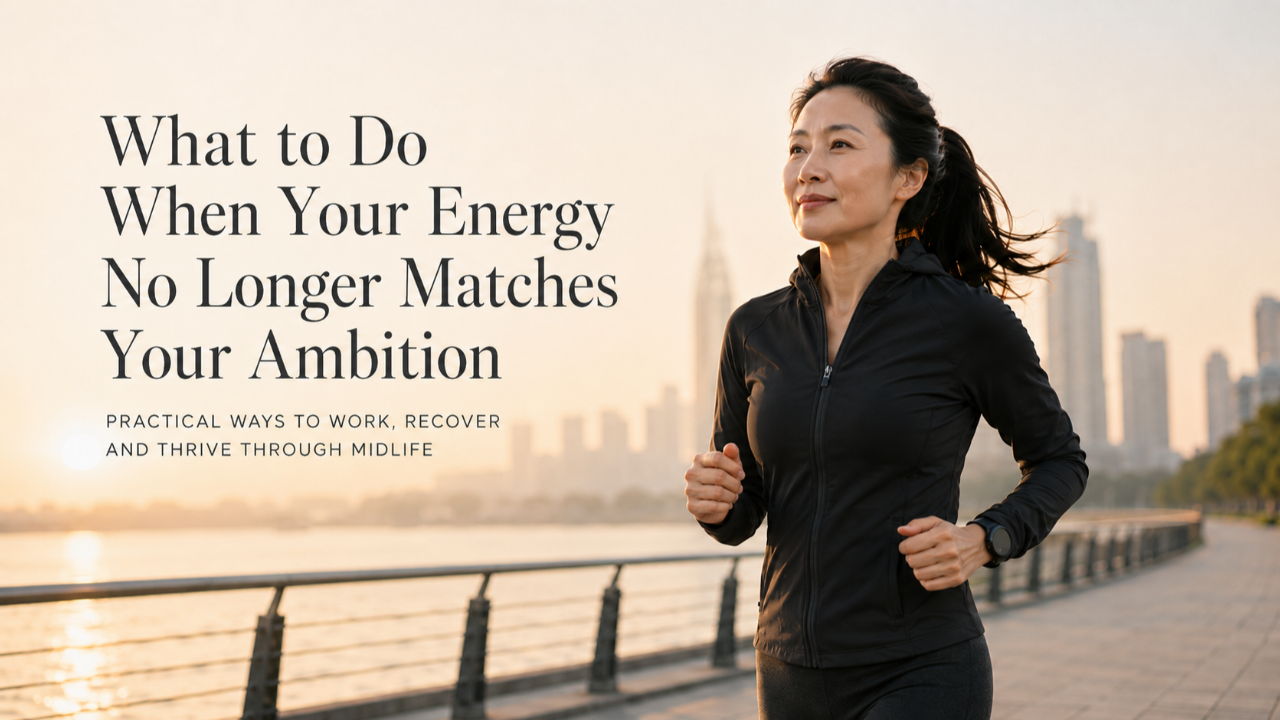
You may still be ambitious, capable and deeply committed to your work. You may have people relying on you, projects you care about and personal goals you have no intention of abandoning.
Yet your energy may not always match the pace you expect from yourself.
You begin the day with a full list, but by mid-afternoon your concentration drops. You recover more slowly after a demanding week, need more time between social commitments or find that working late affects you for several days afterwards.
For many professional women in midlife, this can feel deeply frustrating. The mind remains willing, but the body begins asking for a different way of working.
This does not mean that you are becoming less motivated, less capable or less successful. It may simply mean that the habits and routines that supported you ten years ago no longer provide enough recovery for the life you are living now.
Why your energy may feel less predictable
Midlife often arrives during one of the busiest periods of a woman’s life. Careers may be at their most demanding, family responsibilities can increase, parents may need more support and there is often less space for uninterrupted rest.
Hormonal changes may also influence sleep, temperature regulation, mood, concentration and recovery. Some women notice obvious symptoms, while others simply feel that they are operating with a smaller margin for error.
A late night that once felt manageable may now leave you exhausted. Skipping lunch can lead to an afternoon slump, and several stressful days without adequate recovery may make everything feel more difficult than it should.
The problem is not always a lack of energy. Sometimes it is the expectation that your energy should remain identical every day.
Stop planning for your most energetic self
Many women build their schedule around the version of themselves who is well rested, highly motivated and completely uninterrupted.
That woman plans to exercise before work, prepare every meal, complete a full working day, answer every message, support everyone else and still feel calm by bedtime.
She may appear occasionally, but she is not available every day.
A more sustainable approach is to plan for your typical energy rather than your highest energy. This means creating a week that still works when you have slept poorly, your workload increases or you simply do not feel at your best.
You are not lowering your ambitions. You are giving them a structure that can survive real life.
Decide what matters most before the day becomes busy
When energy is limited, everything cannot receive the same level of attention.
Choose the one or two tasks that genuinely matter most that day. Complete important work during the part of the day when your concentration is usually strongest, and leave less demanding jobs for lower-energy periods where possible.
The same principle applies to your wellbeing. You may not manage a full workout, a long walk and a perfectly prepared dinner on the same day. However, you may be able to take a short walk, eat a nourishing meal and go to bed slightly earlier.
A smaller number of supportive actions completed consistently will usually help you more than an ambitious plan you cannot maintain.
Work with your energy rather than constantly pushing through it
Professional women often become skilled at overriding tiredness. They continue through meetings, deadlines and responsibilities because that is what the situation requires.
Occasionally, this may be necessary. Repeatedly doing it, however, can turn temporary tiredness into a constant state of depletion.
Start noticing when your energy naturally rises and falls. You may think more clearly in the morning, feel physically stronger later in the day or need a quieter hour after several meetings.
Use those patterns when arranging your work and wellbeing habits. Protect your strongest periods for tasks that require focus, and use lower-energy moments for admin, preparation or recovery.
Managing energy is not the same as avoiding effort. It is choosing where your effort will have the greatest value.
Create a lower-energy version of your routine
One of the most useful habits in midlife is having two versions of your routine: the full version and the minimum version.
On a good day, you might complete a thirty-minute strength session, prepare a balanced evening meal and take time to unwind properly before bed.
On a difficult day, the minimum version might be ten minutes of movement, a simple meal containing protein and vegetables, and putting your phone away fifteen minutes earlier.
The minimum version keeps the habit alive without demanding more than you can realistically give.
It also prevents the all-or-nothing thinking that causes many women to abandon their routines completely during busy periods.
Support your energy before it disappears
Many women wait until they feel exhausted before responding to their needs.
They eat when they are ravenous, drink when they are thirsty and rest only when they can no longer continue. By that point, recovery becomes harder.
Try supporting your energy earlier. Eat regularly enough to avoid reaching the afternoon depleted. Keep water where you can see it. Stand, stretch or walk briefly before stiffness builds. Create a natural stopping point in the working day rather than continuing until every task is finished.
These choices may appear small, but they reduce the need to rescue yourself later.
Be careful with the story you tell yourself
A change in energy can quickly become a judgement about your identity.
You may tell yourself that you have become lazy, lost your discipline or are no longer as capable as you used to be. These conclusions are rarely helpful and may not be accurate.
Energy is influenced by sleep, stress, nutrition, workload, recovery, physical health and hormonal changes. It is not a measure of your character.
Instead of asking, “Why can’t I keep up anymore?” try asking, “What would help me work and live well at this stage of my life?”
That question creates room for practical solutions rather than self-criticism.
Success does not require constant intensity
Ambition does not have to disappear in midlife. It may simply need to become more selective.
You can still build, lead, create, travel, learn and pursue meaningful goals. The difference is that sustainable success requires you to respect your capacity as carefully as you respect your commitments.
There will be days when you can do more and days when you need to do less. Neither defines your overall potential.
Your energy may not always match the pace you once demanded from yourself, but that does not mean your best work is behind you. It may mean that your next chapter requires a wiser rhythm: one that allows your ambition and your wellbeing to exist together.
Stay connected with news and updates.
Join our mailing list to receive the latest news and updates from our team.
Don't worry, your information will not be shared.
We hate SPAM. We will never sell your information, for any reason.