The Science Behind Midlife Belly Fat And Why It’s Not Just Calories
May 02, 2026
There’s a particular frustration many women experience in midlife.
You haven’t dramatically changed how you eat. You’re still mindful, still active, still trying to do the right things. And yet, weight begins to settle around your middle in a way that feels unfamiliar and difficult to shift.
It’s easy to assume this is about eating too much or moving too little.
But the science tells a more complex story.
Your Body Is Not Storing Fat the Same Way Anymore
In earlier years, fat storage was more evenly distributed. In midlife, the body begins to favour the abdominal area.
This shift is closely linked to hormonal changes, particularly the decline in estrogen. Research from Harvard Medical School shows that lower estrogen levels influence where fat is stored, increasing the tendency for central or abdominal fat.
This is not simply about calorie balance. It is about how your body is being directed to store energy.
Belly Fat Is More Than Just Surface Level
The fat that accumulates around the midsection is often not just under the skin. It can include visceral fat, which surrounds internal organs.
Visceral fat is metabolically active. It interacts with hormones and can influence inflammation, insulin sensitivity, and overall metabolic health.
This is why midlife belly fat can feel different. It is not only about appearance. It reflects deeper changes in how the body is functioning.
Insulin Sensitivity Changes With Age
One of the key drivers behind abdominal fat is how your body manages blood sugar.
As you move through midlife, insulin sensitivity can decline. This means your body is less efficient at processing glucose, making it more likely to store excess energy as fat.
You may notice:
- Stronger cravings
- Energy dips, especially in the afternoon
- Greater sensitivity to certain foods
These are not random. They are linked to how your metabolism is adapting.
Stress Plays a Bigger Role Than You Think
Cortisol, your primary stress hormone, has a direct impact on fat storage.
When cortisol remains elevated over time, it encourages the body to store fat, particularly around the abdomen. This is part of a protective response, but in a modern lifestyle with ongoing stress, it can become a persistent pattern.
This means that even with a balanced diet, high levels of stress can influence how your body stores fat.
Muscle Loss Changes the Equation
Another important factor is muscle.
As muscle mass naturally declines with age, a process known as Sarcopenia, your metabolism becomes less efficient.
Muscle helps your body burn energy and regulate blood sugar. When it decreases, your body becomes more likely to store fat rather than use energy effectively.
This is one of the reasons why the same lifestyle can produce different results in midlife.
Why “Eating Less” Often Backfires
When faced with weight gain, many women instinctively reduce calories.
But in midlife, undereating can:
- Slow metabolic processes
- Increase stress hormones
- Reduce muscle mass further
This creates a cycle where the body becomes more resistant to weight loss, not less.
What worked before can now work against you.
The Shift Toward a Smarter Strategy
Understanding the science changes how you respond.
Instead of focusing only on calories, the approach becomes more supportive and strategic.
Support Blood Sugar Stability
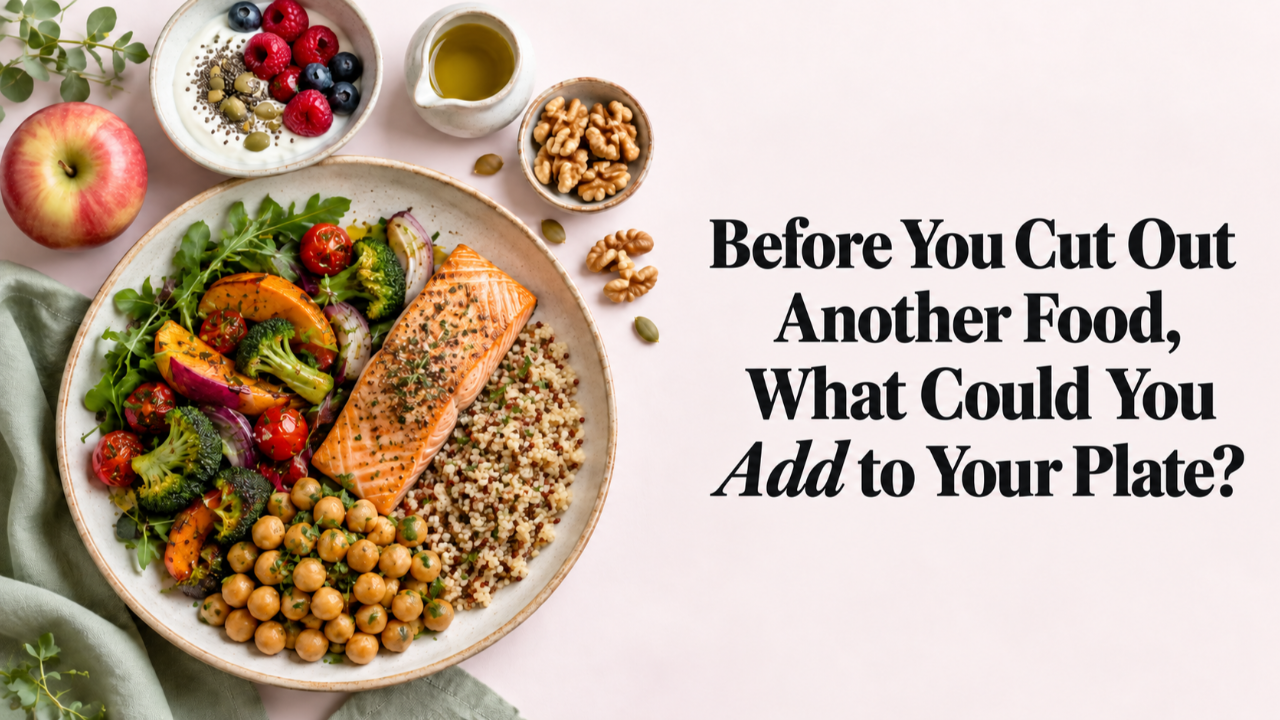
Balanced meals that include protein, fibre, and healthy fats help regulate blood sugar and reduce spikes that lead to fat storage.
This creates a more stable energy pattern and reduces cravings.
Build and Maintain Muscle
Strength training becomes essential.
By supporting muscle, you improve metabolic function, enhance insulin sensitivity, and create a body that uses energy more effectively.
Manage Stress as Part of Fat Loss
Stress management is no longer optional.
Small, consistent practices such as walking, stretching, or simply creating moments of pause can help regulate cortisol levels and reduce its impact on fat storage.
Prioritise Sleep
Sleep directly affects hormones that regulate hunger, energy, and fat storage.
Improving sleep quality supports the body’s ability to maintain a healthy weight.
A Different Way to Understand Your Body
Midlife belly fat is not just about willpower or discipline.
It is the result of a body that is responding to hormonal shifts, metabolic changes, and lifestyle demands in a new way.
When you understand this, the frustration begins to ease.
The Takeaway
Your body is not working against you.
It is adapting.
And when you begin to support those changes with the right approach, your body becomes more responsive again.
Not through restriction or pressure, but through understanding and alignment.
Stay connected with news and updates.
Join our mailing list to receive the latest news and updates from our team.
Don't worry, your information will not be shared.
We hate SPAM. We will never sell your information, for any reason.