How Strength Training Rewires Your Metabolism
May 03, 2026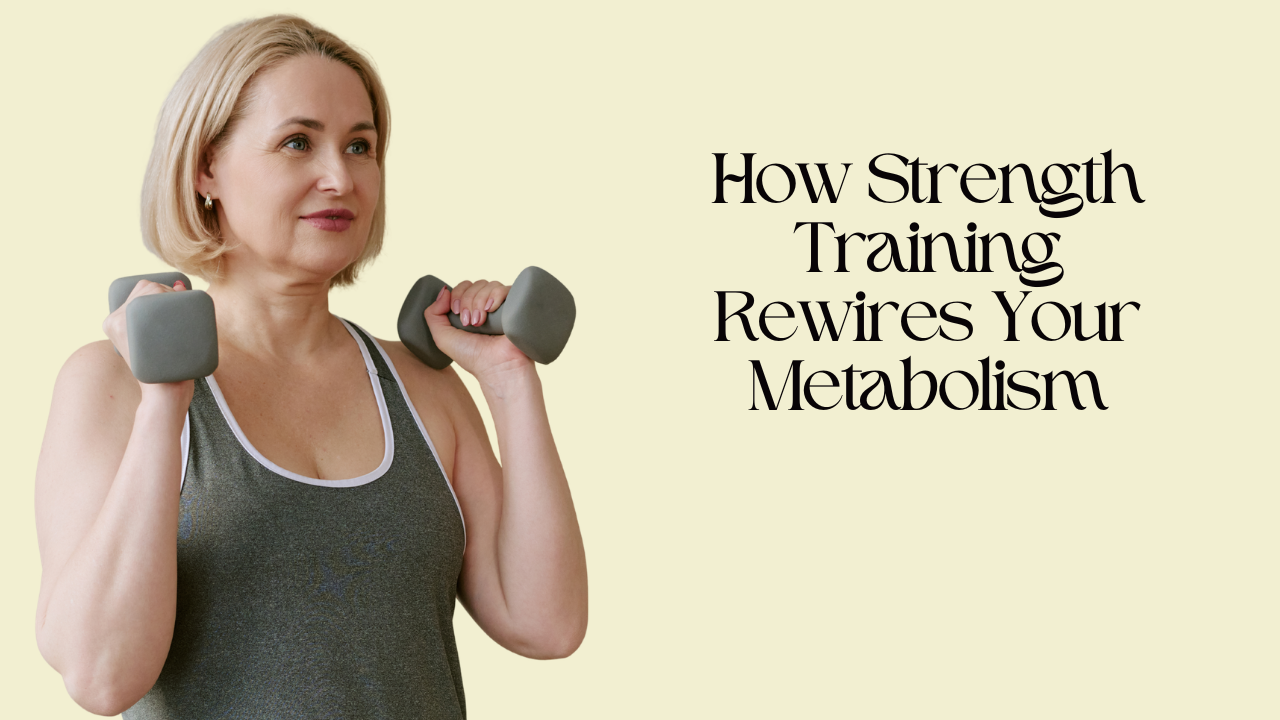
There’s a moment many women reach where their body no longer responds the way it used to.
You might be eating the same foods, staying active, doing your best to stay consistent. And yet, energy feels lower, weight feels harder to manage, and your body seems slower to respond.
It’s often described as a “slowing metabolism.”
But what if your metabolism isn’t broken… just under-supported?
Your Metabolism Is Not Fixed
Metabolism is often thought of as something that simply declines with age. But in reality, it’s more dynamic than that.
Your metabolism reflects how your body uses energy. It is influenced by muscle mass, hormones, activity levels, and how well your body processes nutrients.
Research from Harvard Medical School highlights that while metabolic rate doesn’t suddenly drop in midlife, the factors that support it, particularly muscle, begin to change.
This is where strength training becomes so powerful.
Muscle Is Your Metabolic Engine
Muscle is not just about strength or appearance. It is one of the most important tissues for metabolic health.
It helps your body:
- Burn energy more efficiently
- Regulate blood sugar
- Support hormone balance
- Maintain strength and stability
As you move through your 40s and 50s, muscle mass naturally declines, a process known as Sarcopenia.
When muscle decreases, your metabolism becomes less responsive. This can lead to lower energy, increased fat storage, and a body that feels harder to manage.
Strength Training Sends a New Signal
Strength training changes the message your body receives.
Instead of adapting to conserve energy, your body begins to adapt to build and maintain muscle. This creates a shift in how energy is used.
Over time, strength training helps:
- Increase resting energy expenditure
- Improve insulin sensitivity
- Enhance the body’s ability to use glucose
- Support fat metabolism
This is what it means to “rewire” your metabolism. You are not forcing change. You are creating the conditions for it.
Energy Becomes More Stable
One of the first changes many women notice is in their energy.
With more muscle and better blood sugar regulation, energy levels become more consistent. The dips that once felt inevitable begin to smooth out.
Everyday tasks feel easier.
Everyday tasks feel easier. You recover more quickly. Your body feels more capable.
This is not just about fitness. It’s about how your body functions throughout the day.
Fat Loss Becomes More Responsive
When your metabolism is supported by muscle, your body becomes more efficient at using stored energy.
This doesn’t mean immediate or dramatic weight loss. But it does mean your body becomes more responsive over time.
Fat loss becomes less about restriction and more about balance.
Hormones Begin to Work With You
Strength training also supports hormonal health.
It helps regulate insulin, reduce the impact of cortisol, and support the overall balance that influences how your body stores and uses energy.
In midlife, where hormonal shifts are significant, this support becomes essential.
Why Cardio Alone Is Not Enough
Cardio has many benefits, particularly for heart health. But on its own, it does not provide the same metabolic support as strength training.
Without resistance work, muscle continues to decline. And without muscle, the body has less capacity to maintain a healthy metabolism.
This is why many women find that adding more cardio does not lead to better results.
Consistency Over Intensity
Strength training does not need to be extreme to be effective.
What matters most is consistency.
Simple, regular sessions that challenge your muscles are enough to create change. Over time, these small efforts build a foundation that supports your metabolism in a lasting way.
Supporting Strength With Nutrition
Muscle needs fuel.
Protein becomes especially important, as it provides the building blocks for muscle repair and growth. Balanced meals help stabilise blood sugar and support energy levels.
Undereating can work against this process, limiting your body’s ability to adapt and improve.
A Different Way to Understand Your Body
When you begin to see your metabolism as something that can be supported, not something that is failing, your approach changes.
You move away from frustration and toward strategy.
You begin to work with your body, rather than against it.
The Takeaway
Strength training is not just another form of exercise.
It is a way of sending a new message to your body.
A message that supports energy, balance, and resilience.
And over time, that message changes how your metabolism works.
Not overnight, but steadily.
In a way that feels sustainable, supportive, and aligned with the stage of life you are in.
Stay connected with news and updates.
Join our mailing list to receive the latest news and updates from our team.
Don't worry, your information will not be shared.
We hate SPAM. We will never sell your information, for any reason.