The Desk Job Body : How Long Working Days Affect Women Over 50
Feb 27, 2026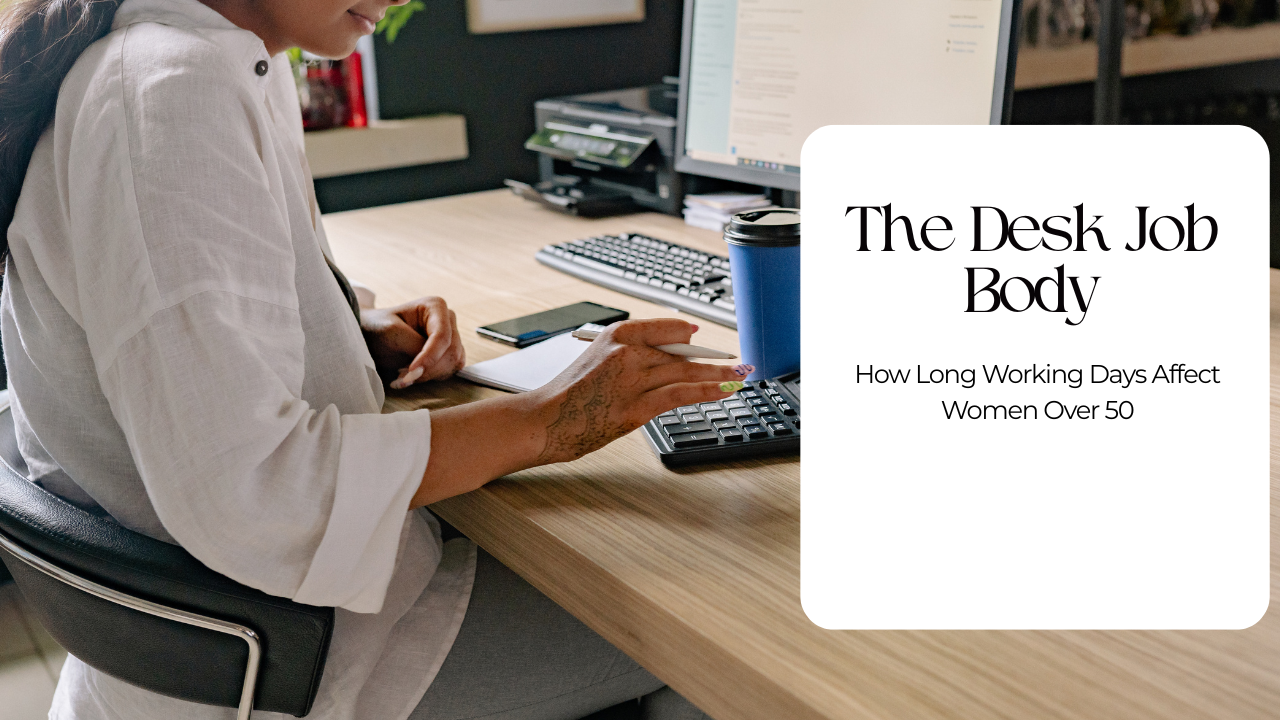
Many professional women spend decades building their careers sitting at desks, attending meetings, working on laptops, and managing full schedules.
At first, the body adapts easily. Long working days feel normal. Sitting for hours seems harmless.
But after 50, many women begin to notice subtle physical changes.
Stiff hips when standing up.
Tight shoulders after a day at the computer.
An aching lower back that was never there before.
Energy that dips more noticeably in the afternoon.
These changes are not random. They are often the result of what many health professionals now call the desk job body.
The good news is that small daily movement habits can make a remarkable difference.
Why Sitting Affects the Body More After 50
As we age, the body naturally begins to lose muscle mass and flexibility if we are not actively maintaining them.
Hormonal changes during perimenopause and menopause can also affect joint health, muscle recovery, and circulation.
When the body spends long hours sitting, several things happen:
• Hip flexors tighten
• Shoulders round forward
• Core muscles become less active
• Circulation slows
• Energy levels drop
Over time, this can create the feeling of a body that is stiff, sluggish, and harder to move.
Many women notice that they feel fine while working but uncomfortable when they finally stand up at the end of the day.
The body simply needs more movement than the modern workday provides.
Stiff Hips and Tight Shoulders from Sitting
Sitting for long periods keeps the hips in a constant bent position. Over time, the muscles at the front of the hips shorten and tighten.
This can lead to:
• lower back discomfort
• restricted hip movement
• difficulty standing upright comfortably
At the same time, working at a computer often causes the shoulders to round forward and the neck to lean toward the screen.
This position places strain on the upper back and neck muscles, creating the familiar tight shoulders many women experience by the end of the day.
Reduced Circulation and Afternoon Energy Dips
Another effect of prolonged sitting is slower circulation.
When the legs remain still for hours, blood flow becomes less efficient. This can contribute to heavy legs, reduced alertness, and the well known mid afternoon energy slump.
Movement stimulates circulation, bringing oxygen and nutrients to the muscles and brain.
Even short movement breaks throughout the day can restore energy and improve focus.
Why Strength and Flexibility Matter More After 50
In earlier decades, the body can often compensate for long hours of sitting.
After 50, maintaining strength and flexibility becomes more important for protecting joints, posture, and overall mobility.
Strong muscles support the spine and improve posture.
Flexible muscles allow the body to move comfortably and reduce strain on joints.
Together, strength and mobility help counteract the physical effects of long working days.
This does not require hours in the gym.
Often, a few intentional minutes of movement throughout the day can keep the body feeling far more comfortable.
Small Movement Breaks That Make a Big Difference
You do not need to overhaul your workday to support your body.
Small, regular breaks can help reset posture and stimulate circulation.
Try simple habits such as:
• standing up every 45 to 60 minutes
• walking around the room or office
• gently rolling the shoulders and neck
• stretching the hips or hamstrings for a minute or two
• taking a short walk during lunch
These small resets tell the body it is meant to move, not remain fixed in one position for hours.
3 Simple Yoga Stretches Every Working Woman Should Know
These gentle stretches can be done beside your desk or at home after work. They help release tension in the hips, back, and shoulders.
1. Seated Spinal Twist
Sit tall in your chair with both feet on the floor.
Place one hand on the opposite knee and gently rotate your upper body toward that side. Keep the spine tall and the shoulders relaxed.
Hold for 20 to 30 seconds, then switch sides.
This stretch releases tension in the spine and improves mobility after long periods of sitting.
2. Standing Hip Opener
Stand up and place your hands on your hips.
Step one foot slightly behind you and gently bend the front knee while keeping the back leg straight.
You should feel a stretch across the front of the hip.
Hold for 20 seconds and switch sides.
This helps release tight hip flexors caused by prolonged sitting.
3. Shoulder and Chest Opener
Stand tall and clasp your hands behind your back.
Gently draw the shoulders back and lift the chest slightly while keeping the neck relaxed.
Hold for 20 to 30 seconds.
This stretch counteracts the rounded shoulder posture that often develops when working at a computer.
A Small Daily Reset for a Stronger Body
A desk job does not have to lead to chronic stiffness or fatigue.
The body simply needs small reminders to move.
A few stretches, short walks, and posture resets throughout the day can keep the hips mobile, the shoulders relaxed, and energy levels more stable.
For many women, these small habits become a powerful way to support the body during midlife.
Not by working harder.
But by working with the body instead of against it.
Stay connected with news and updates.
Join our mailing list to receive the latest news and updates from our team.
Don't worry, your information will not be shared.
We hate SPAM. We will never sell your information, for any reason.