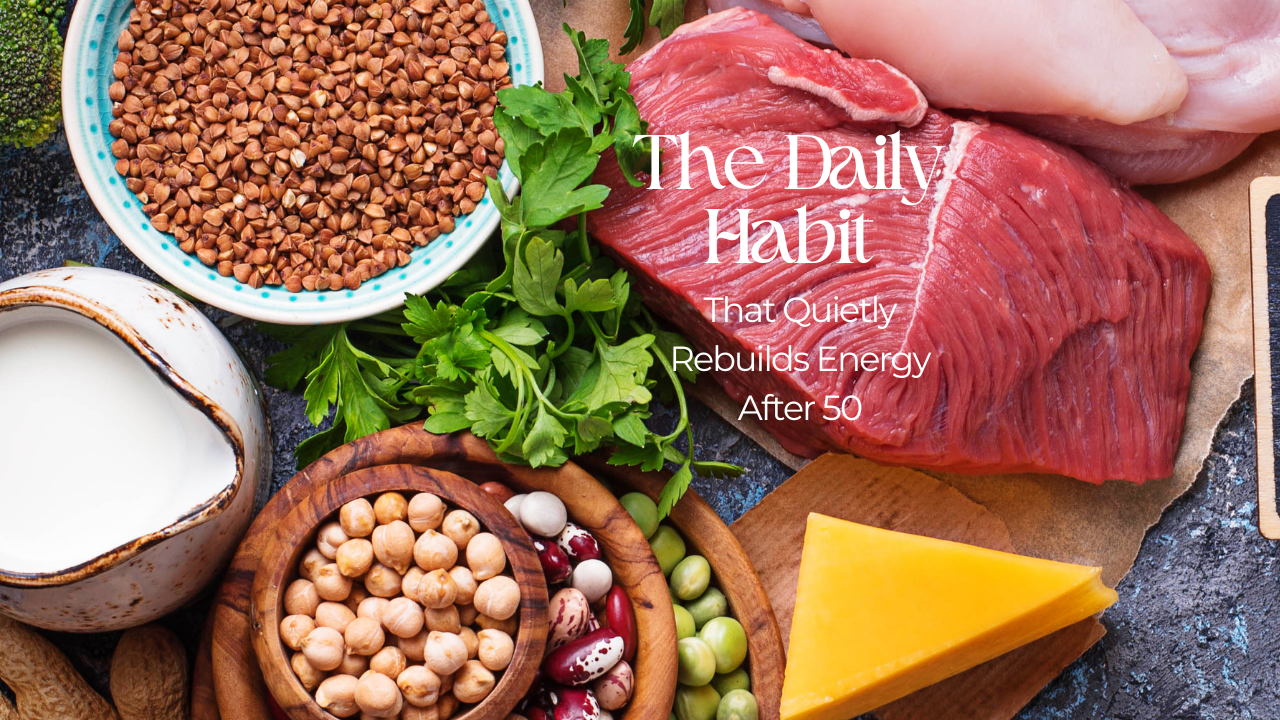
For many women over 50, energy becomes unpredictable.
You wake up tired, even after a full night in bed. Afternoons feel heavier than they used to. And the steady energy you once relied on throughout a busy working day now comes in waves, often followed by dips that are hard to ignore.
It is easy to assume this is just part of getting older. Or that you need to push through it, drink more coffee, or try to power your way back to how you used to feel.
But what if your energy is not something you need to force… but something you need to rebuild?
Because in midlife, that is exactly what is happening.
Why Energy Changes After 50
As women move through perimenopause and beyond, the body undergoes significant hormonal shifts. Estrogen and progesterone begin to decline, and this affects far more than reproductive health. These hormones play a role in how your body regulates blood sugar, manages stress, and produces energy at a cellular level.
At the same time, muscle mass naturally decreases with age, slowing metabolism. Insulin sensitivity can also decline, meaning your body becomes less efficient at using glucose for energy. This is why many women experience energy crashes, particularly in the afternoon.
Add in the demands of a career, ongoing responsibilities, and often disrupted sleep, and it becomes clear why energy feels harder to sustain.
The solution is not simply to do more.
It is to support the systems that create energy in the first place.
The Habit That Changes Everything: Stabilising Your Blood Sugar
If there is one habit that consistently makes the biggest difference to energy levels after 50, it is this:
Building meals that stabilise your blood sugar.
It sounds simple, but it is one of the most overlooked strategies, especially for women who have spent years dieting, skipping meals, or relying on quick, convenient foods during busy workdays.
When blood sugar spikes quickly, often from refined carbohydrates or eating meals without enough protein or fat, it is followed by a rapid drop. This drop is what creates that familiar feeling of fatigue, brain fog, and cravings.
Over time, repeated spikes and crashes place additional stress on the body, increasing cortisol and contributing to energy instability.
When blood sugar is stable, energy becomes steady.
What the Science Shows
Research consistently links stable blood sugar levels with improved energy, cognitive function, and metabolic health.
Protein plays a key role here. Studies show that meals higher in protein help slow the absorption of glucose, preventing sharp spikes in blood sugar. This leads to more sustained energy and reduced cravings later in the day.
Fibre also supports this process. Whole foods such as vegetables, legumes, and whole grains slow digestion and provide a more gradual release of energy.
Healthy fats further stabilise blood sugar and support hormone production, which becomes increasingly important in midlife.
This combination, protein, fibre, and fat, creates a steady, reliable energy source that your body can use throughout the day.
What This Looks Like in Real Life
This is not about complicated meal plans or rigid rules.
It is about building balanced meals that work with your body.
Instead of grabbing toast or a pastry on the go, you might start your day with eggs, Greek yoghurt, or a protein-rich smoothie.
At lunch, rather than a quick sandwich alone, you could add a source of protein such as chicken, salmon, or lentils, alongside vegetables and healthy fats like olive oil or avocado.
Snacks shift too. Instead of reaching for something sugary, you choose options that combine protein and fat, such as nuts, yoghurt, or hummus with vegetables.
These small adjustments create a powerful shift in how your body produces and maintains energy.
Why This Habit Works for Professional Women
For women balancing demanding careers, energy is not just about how you feel physically. It affects your ability to think clearly, make decisions, and stay focused throughout the day.
Stable blood sugar supports cognitive performance. It helps reduce brain fog and keeps concentration levels steady, which is critical in high-responsibility roles.
It also reduces the need for constant stimulation from caffeine or sugar, allowing your energy to feel more natural and sustainable.
Perhaps most importantly, it removes the cycle of peaks and crashes that can make long working days feel overwhelming.
The Quiet Shift That Builds Momentum
What makes this habit so powerful is that it does not rely on willpower.
It works with your biology.
You are not forcing energy. You are creating the conditions for it.
Over time, this leads to more consistent energy, fewer cravings, improved mood, and better overall metabolic health. It also supports other areas of wellness, including weight management and hormonal balance.
And unlike extreme diets or intense fitness routines, it is sustainable.
Energy After 50 Is Not Lost. It Is Rebuilt
There is a common belief that low energy is something women simply have to accept after 50.
But that belief misses something important.
Your body is not failing you. It is asking for a different kind of support.
When you begin to stabilise your blood sugar through balanced, nourishing meals, you are addressing one of the most fundamental drivers of energy in midlife.
It is not dramatic. It is not extreme.
But it is effective.
And for many women, it is the shift that quietly changes everything.
Stay connected with news and updates.
Join our mailing list to receive the latest news and updates from our team.
Don't worry, your information will not be shared.
We hate SPAM. We will never sell your information, for any reason.

A soulful, nurturing retreat experience for women, what might change if you gave yourself four days?
At the REVIVAL retreat, you can step away from the demands of everyday life and make space for yourself. We will walk through the Peak District, enjoy gentle yoga and guided meditation, and share gratitude sessions and fireside chats.
Personality profiling and habit transformation sessions will give you time to reflect on where you are now and what you would like to take home with you. Come as you are, alongside a small group of women who have made this time for themselves too.
21–24 June 2027 | Just 10 places
Registration opens soon.
Support Your Body
40 plus body reset anti inflammatory food balance balance hormones balancing hormones beginners strength training bloating blood sugar blood sugar balance body confidence bone density health brain fog brain help breakfast recipes breathwork building resilience core exercises creating space in midlife detox detox your body diabetic management digestion easter recipes emotional balance emotional eating energy evening routines exercise for women exercise recovery in midlife fatigue tips fibre for midlife fitness transformation fixing energy in midlife flexibility fuel guided walking uk gut health health accountability health goals health strategy healthy healthy ageing healthy foods healthy recipes heart health hormonal hormonal balance hormone balance hormone balancing breakfast hormone health hormones hot flashes hydration insulin and midlife january detox joint health joint pain lifestyle foods losing muscle through ageing losing weight low impact cardio making time meal prep meditation meditation tips menopase wellness menopause menopause and digestion menopause exercise menopause fatigue menopause moods menopause nutrition menopause supplements menopause support menopause support for career women menopause symptoms menopause wellness menopause workout mental health for menopause and perimenopause mental health wellness metabolism midlife midlife boundaries midlife energy midlife health & well being midlife reflection midlife reset midlife weight gain midlife wellness milestones mindfulness mindset mobility morning routine morning routine for midlife movement movement and mobility muscle strength nature nutrition nutrition for busy women nutrition for menopause nutrition mistakes made nutriton nutritonal snacks outdoor perimenopause perimenopause nutrition perimenopause support perimenopause symptoms perimenopause wellness perimenopause yoga post menopause support protein reducing cancer risk reducing stress tips reflection for busy women resistance band training retreats 2026 self care self care for professional women self care tips set boundaries sleep sleep and menopause sleep and perimenopause sleep tips spring detox strength training strength training for women 50 plus stretching stretching routines the 30 day detox challenge for midlife women the desk job body tracking fitness vitamins walking weight gain weight loss weight training for women wellness wellness habits womens wellness freedom yin yoga yoga yoga and menopause yoga routine yoga routines yoga stretch