The Gentle Yoga Flow for Winter Hormone Support
Jan 20, 2026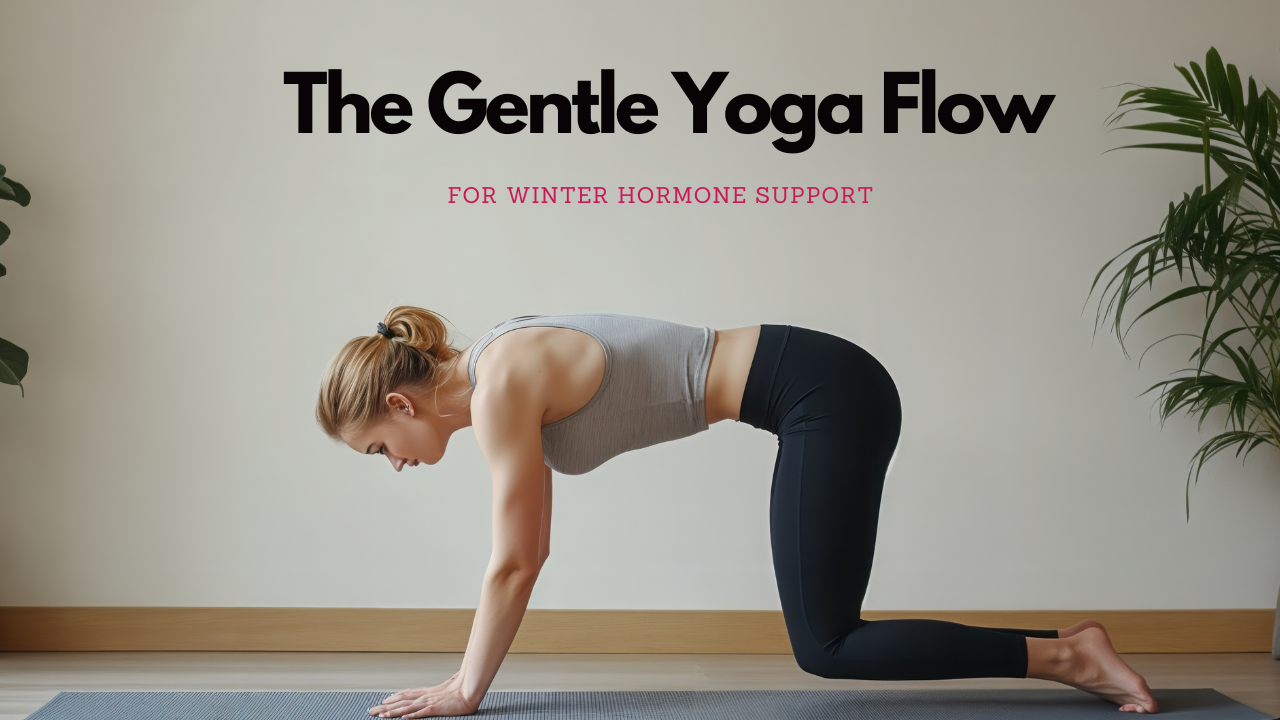
Winter asks something different of your body.
Less pushing.
More listening.
More warmth, steadiness, and care.
For midlife women, winter can amplify hormone-related symptoms. Sleep may feel lighter. Joints stiffer. Energy lower. Mood flatter. This isn’t a failure of fitness or motivation. It’s your nervous system and hormones responding to season, light, and load.
Gentle yoga can be one of the most supportive tools during winter, not because it burns calories or builds strength, but because it helps regulate stress hormones, circulation, and the nervous system.
This is not about powering through a flow.
It’s about moving in a way that helps your hormones exhale.
Why gentle yoga supports hormones in winter
Hormones are highly responsive to stress, temperature, sleep, and nervous system input. Winter already places more demand on your system due to reduced daylight and lower vitamin D levels.
Gentle yoga helps by:
-
Lowering cortisol
-
Improving circulation and lymphatic flow
-
Supporting digestion
-
Calming the nervous system
-
Encouraging deeper, more restorative breathing
All of these directly affect how hormones behave in midlife.
Fast, intense workouts can sometimes worsen winter fatigue and stress. Gentle yoga sends a different message: you are safe to slow down.
What “gentle” really means (and why it matters)
Gentle yoga is not ineffective yoga.
It is:
-
Slower transitions
-
Longer holds
-
Fewer poses
-
More breath awareness
This style of movement supports parasympathetic activation, the state where repair, digestion, and hormone regulation happen.
If you leave a session feeling calmer and warmer, not depleted, it’s doing its job.
A winter-friendly hormone-supporting flow
You don’t need a long session. Even 10–20 minutes can be beneficial. Move slowly. Pause when needed. Use blankets, cushions, or blocks for warmth and support.
1. Seated breathing or gentle rocking (2–3 minutes)
Begin seated or lying down. Place one hand on your belly.
Inhale through the nose.
Exhale slowly through the mouth.
This immediately signals safety to your nervous system and helps lower cortisol.
2. Cat–cow (slow and small)
Move gently between flexion and extension of the spine.
Benefits:
-
Supports spinal mobility
-
Aids digestion
-
Improves circulation
Keep the movement small and slow. This is about lubrication, not range.
3. Child’s pose with support
Use a cushion or folded blanket under your chest.
Benefits:
-
Calms the nervous system
-
Relieves lower back tension
-
Encourages diaphragmatic breathing
Stay here longer than feels “productive.” Time is part of the medicine.
4. Gentle twists (seated or lying)
Twists support digestion and help relieve bloating, which many women notice more in winter.
Move slowly.
Avoid forcing depth.
Let the breath guide the twist.
5. Supported forward fold
This can be seated or standing with knees bent and support under the torso.
Benefits:
-
Soothes the nervous system
-
Relieves tension in the back and hips
-
Encourages inward focus
Forward folds are naturally calming and grounding.
6. Legs up the wall or supported recline
This is especially helpful in the evening.
Benefits:
-
Supports circulation
-
Reduces leg heaviness
-
Signals the body to prepare for rest
Stay for several minutes if comfortable.
7. Final rest (essential, not optional)
Lie down with warmth. Cover your body. Place a hand on your belly or heart.
This is where much of the hormonal benefit happens.
Stillness allows the nervous system to fully shift into repair mode.
When to practise in winter
Winter-friendly yoga works best when it supports your natural rhythm.
Good times include:
-
Morning, to gently wake the body
-
Late afternoon, to reduce stress buildup
-
Evening, to support sleep
Avoid forcing yourself into energising practices when your body is clearly asking for rest.
What to let go of
In winter, especially in midlife, it helps to release:
-
The idea that every workout must be challenging
-
Guilt around slowing down
-
Comparing your movement to other seasons or other people
Yoga is not about performance. It’s about response.
The winter yoga mindset shift
Think of gentle yoga as hormone hygiene.
Like sleep or nourishment, it doesn’t need to be dramatic to be effective. Small, regular practices matter more than occasional intense sessions.
In winter, consistency beats intensity.
Warmth beats effort.
Support beats pushing.
The bottom line
Gentle yoga in winter isn’t about doing less.
It’s about doing what actually helps.
When you move in a way that calms your nervous system, your hormones respond with more steadiness, better sleep, and improved resilience.
That’s not weakness.
That’s wisdom.
Stay connected with news and updates.
Join our mailing list to receive the latest news and updates from our team.
Don't worry, your information will not be shared.
We hate SPAM. We will never sell your information, for any reason.