Why Emotional Eating Peaks in Winter and How to Support Yourself
Feb 02, 2026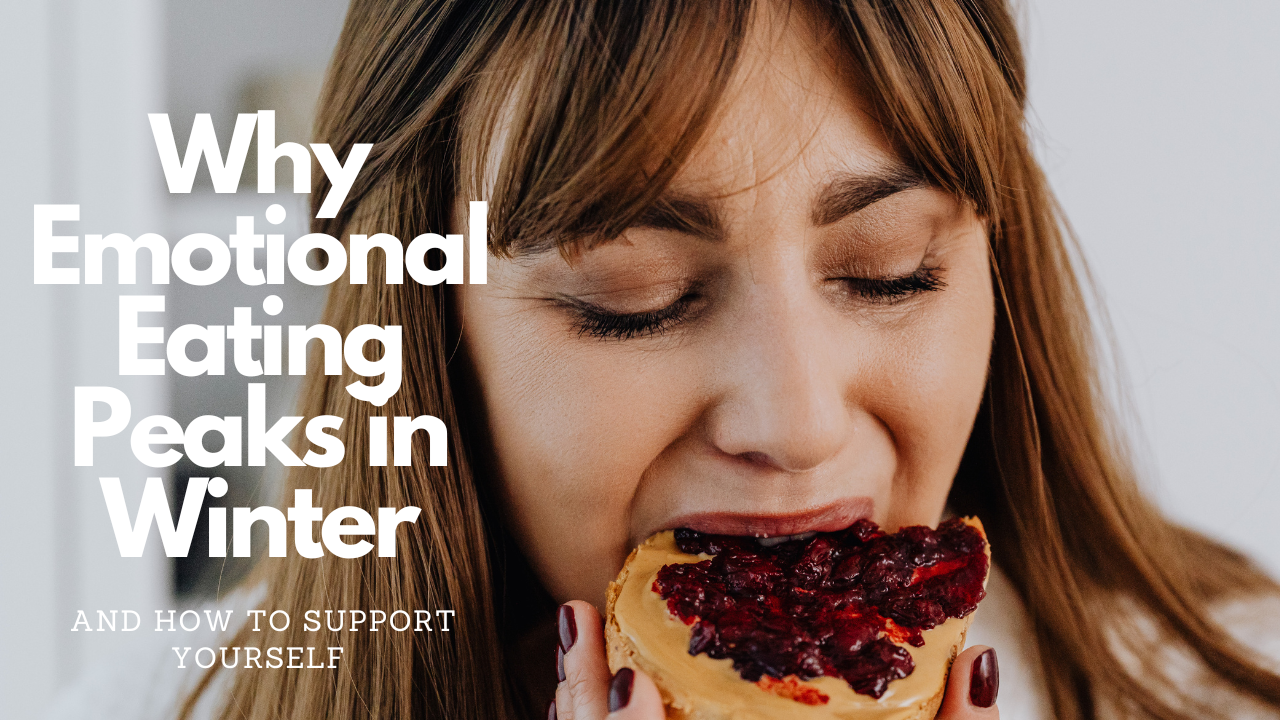
A compassionate, practical guide for women
Emotional eating tends to feel louder in winter.
Cravings are stronger. Comfort foods call more often. Willpower feels lower. And many women find themselves eating not out of hunger, but out of exhaustion, loneliness, stress, or the quiet heaviness that winter can bring.
This is not a lack of discipline.
It is a nervous system and hormone response to the season.
When you understand why emotional eating increases in winter, you can stop fighting yourself and start supporting yourself instead.
Winter changes how your brain and body seek comfort
Winter is a biological stressor, even when life feels calm.
Shorter days, colder temperatures, disrupted routines, and less outdoor time all influence the brain systems that regulate mood, appetite, and reward.
Your body is wired to seek comfort and energy when conditions feel harder.
Food is one of the fastest ways the brain knows how to do that.
The science behind winter emotional eating
Reduced daylight affects mood and cravings
Lower light exposure reduces serotonin activity in the brain. Serotonin plays a role in mood stability and appetite regulation.
When serotonin drops, the brain often looks for quick boosts, especially carbohydrate rich foods that temporarily increase serotonin levels.
This is why cravings feel more urgent in winter.
It is chemistry, not weakness.
Blood sugar swings increase emotional eating
Cold weather often brings:
• Less movement
• Longer gaps between meals
• More refined comfort foods
In midlife, insulin sensitivity is already lower due to hormonal shifts. This makes blood sugar drops sharper and cravings more intense.
Low blood sugar can feel like anxiety, irritability, sadness, or urgency around food.
Many women are not emotionally eating.
They are underfuelled.
Cortisol rises with winter stress
Winter increases cortisol demand due to immune challenges, disrupted sleep, and reduced daylight.
Elevated cortisol increases appetite and drives cravings for high energy foods.
In women navigating perimenopause or menopause, cortisol clearance is slower, which means stress driven eating patterns are more likely to appear.
Emotional needs change in winter
Winter is quieter and more inward. Social interaction often decreases. Motivation dips. Old emotions surface more easily when life slows down.
Food becomes:
• Comfort
• Distraction
• Warmth
• Routine
• Relief
This does not mean food is the problem.
It means food is filling more than one role.
Why fighting emotional eating makes it worse
Restriction increases stress.
Stress increases cravings.
Cravings increase guilt.
This cycle trains the brain to associate winter with control battles rather than care.
When the body feels threatened by restriction, it pushes harder for comfort and safety.
Support calms the system.
Punishment escalates it.
How to support yourself through winter emotional eating
Start with steadier nourishment
Emotional eating reduces when physical needs are met.
Focus on:
• Regular meals
• Enough protein
• Warm cooked foods
• Balanced plates with fibre and fat
Stability reduces urgency.
Add comfort without food first
Ask gently:
What am I actually needing right now
Sometimes the answer is:
• Warmth
• Rest
• Connection
• Quiet
• Reassurance
Tea, blankets, baths, journaling, gentle movement, or early nights meet emotional needs without turning food into the only tool.
Normalise comfort eating without shame
Some comfort eating in winter is human.
Removing guilt lowers stress, which often reduces the behaviour naturally.
You do not need to eliminate emotional eating.
You need to reduce the intensity and frequency.
Regulate the nervous system daily
Simple practices help calm the system:
• Morning light exposure
• Walking
• Gentle stretching
• Slow breathing
• Consistent sleep timing
A calmer nervous system asks for less soothing from food.
Notice patterns without judgment
Instead of asking why do I keep doing this, try:
• When does this show up
• What was my day like
• What support was missing
Awareness builds trust.
Trust reduces urgency.
A kinder winter reframe
Winter is not the season for rigid control.
It is the season for warmth, steadiness, and care.
When emotional eating increases, it is not a signal to clamp down harder. It is a signal to support yourself more fully.
Food is not the enemy.
Your body is not failing you.
It is asking for safety in a season that asks more of you.
Stay connected with news and updates.
Join our mailing list to receive the latest news and updates from our team.
Don't worry, your information will not be shared.
We hate SPAM. We will never sell your information, for any reason.