Why Cardio Alone Isn’t Enough After Forty
Feb 15, 2026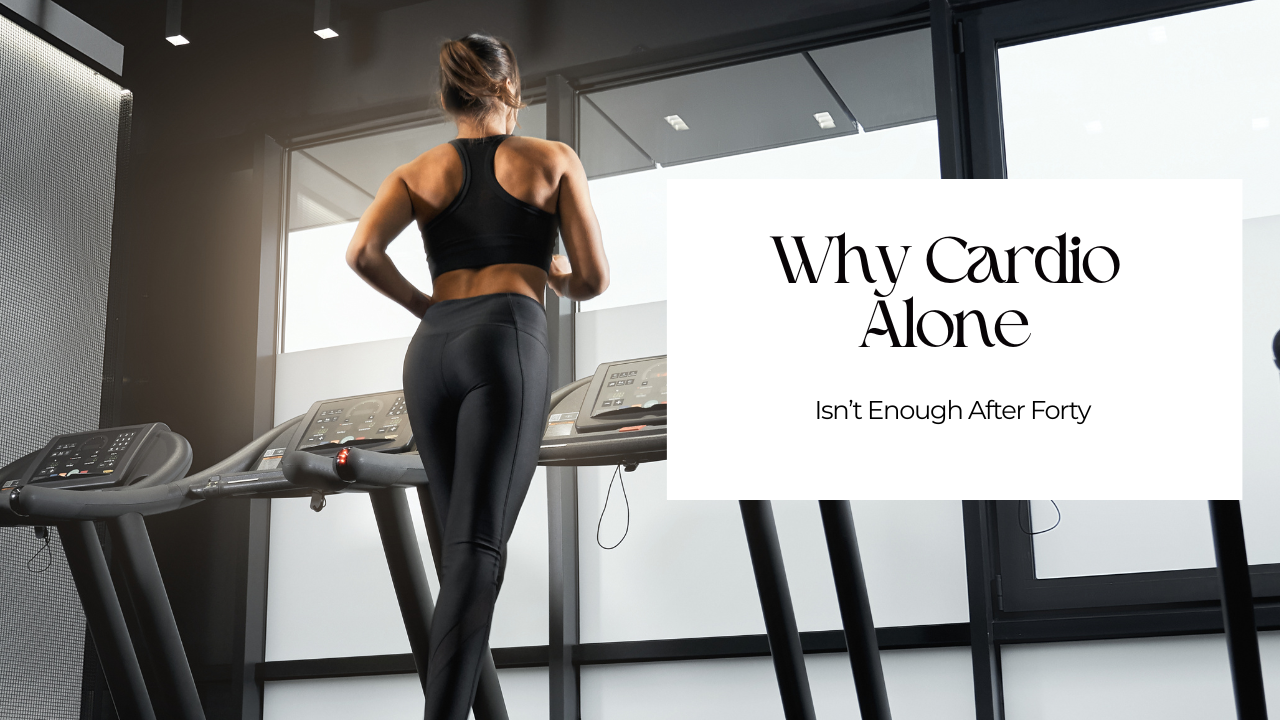
If you built your fitness around sweating, spinning, running, or long cardio sessions…
You are not wrong.
Cardio is powerful. It strengthens your heart, improves circulation, boosts mood, and supports metabolic health.
But after forty, it is no longer enough on its own.
And this is not a trend. It is biology.
The Hormone Shift That Changes the Rules
As women move through perimenopause and menopause, estrogen declines. Estrogen is not just a reproductive hormone. It plays a direct role in:
-
Muscle maintenance
-
Insulin sensitivity
-
Fat distribution
-
Mitochondrial function
Mitochondria are your cellular power plants. Fewer efficient mitochondria means lower metabolic output.
Research from organizations like the North American Menopause Society highlights how estrogen loss accelerates muscle decline and shifts fat storage toward the abdominal region.
So what does that mean for cardio?
It means the old formula of “burn more calories” does not address the deeper metabolic changes happening in midlife.
The Muscle Loss You Cannot See
After the age of 30, women naturally begin losing muscle mass. This process accelerates in the 40s and 50s due to hormonal shifts.
This age related muscle loss is known as sarcopenia.
Muscle is not just about strength or aesthetics. It is metabolically active tissue. It:
-
Improves insulin sensitivity
-
Increases resting metabolic rate
-
Stores glucose
-
Protects bone density
When muscle declines, metabolism slows.
You can run five miles a day and still struggle with weight gain if muscle mass continues to drop.
Cardio burns calories in the moment.
Muscle changes how you burn calories all day.
The Cortisol Factor
Long duration cardio, especially when done intensely and frequently, increases cortisol.
Cortisol is not bad. It helps mobilize energy. But chronically elevated cortisol can:
-
Increase insulin resistance
-
Promote abdominal fat storage
-
Disrupt sleep
-
Increase cravings
For women already navigating hormonal shifts, layering high stress cardio on top of life stress can create a perfect storm.
This is why some women notice that more cardio leads to more fatigue, not more results.
Bone Density Cannot Be Jogged Back
After menopause, bone density declines rapidly due to lower estrogen levels.
The World Health Organization recognizes osteoporosis as a major global health concern, particularly in postmenopausal women.
Weight bearing exercise helps, yes. But resistance training creates mechanical load on bone in a way steady state cardio cannot.
Lifting weights stimulates osteoblast activity, which supports bone remodeling and strength.
Walking is wonderful.
Lifting is protective.
The Metabolic Reality After Forty
Metabolism is not just calories in versus calories out.
It is influenced by:
-
Lean muscle mass
-
Hormonal environment
-
Sleep quality
-
Stress levels
-
Insulin sensitivity
Cardio supports cardiovascular health beautifully.
But it does not directly rebuild muscle.
It does not significantly increase resting metabolic rate long term.
It does not counteract age related muscle loss.
Strength training does.
What the Research Now Suggests
Current exercise science increasingly supports combining resistance training with moderate cardiovascular exercise for optimal metabolic health in midlife women.
Strength training:
-
Preserves lean mass
-
Improves glucose regulation
-
Enhances functional independence
-
Reduces fall risk
-
Improves metabolic flexibility
Cardio:
-
Strengthens the heart
-
Improves endurance
-
Supports mental health
-
Enhances circulation
The magic is in the combination.
A Smarter Midlife Formula
Instead of asking, “How many calories did I burn?”
Ask:
-
Did I challenge my muscles?
-
Did I support my bones?
-
Did I improve insulin sensitivity?
-
Did I reduce stress or increase it?
A balanced week might include:
-
Two to three strength sessions
-
Two moderate cardio sessions
-
Daily low intensity movement
-
Mobility or stretching
This is not about abandoning cardio.
It is about evolving your strategy.
The Emotional Shift
Many women built their identity around cardio. The long runs. The sweaty classes. The endurance mindset.
Letting go of cardio as the primary strategy can feel uncomfortable.
But midlife is not about doing more.
It is about doing what works for your changing physiology.
Strength is not bulk.
Strength is longevity.
Strength is independence.
Strength is metabolic protection.
The Takeaway
After forty, your body is asking for:
-
Muscle preservation
-
Hormonal support
-
Bone protection
-
Nervous system balance
Cardio supports your heart.
Strength supports your future.
And midlife fitness is no longer about burning yourself down.
It is about building yourself up.
Stay connected with news and updates.
Join our mailing list to receive the latest news and updates from our team.
Don't worry, your information will not be shared.
We hate SPAM. We will never sell your information, for any reason.