The Three Habits That Make Midlife Weight Loss Easier
Jan 16, 2026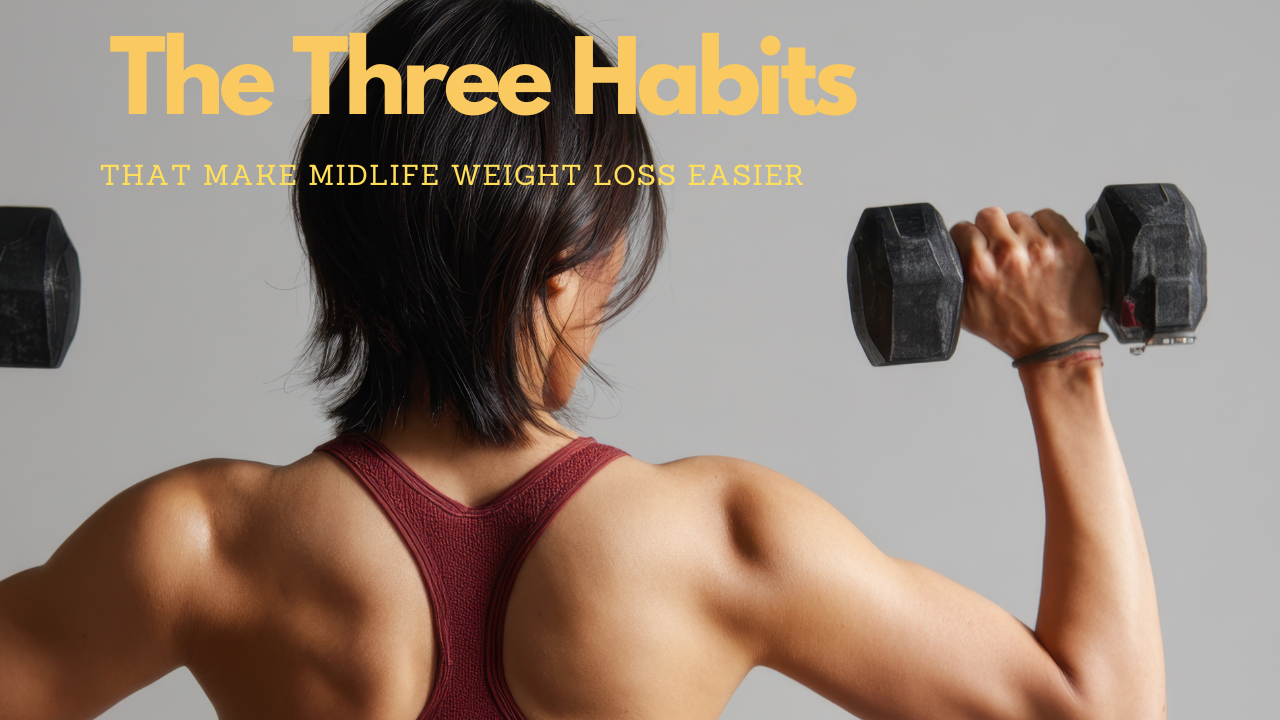
The Three Habits That Make Midlife Weight Loss Easier
Midlife weight gain isn’t a willpower problem.
It’s a biology problem that’s often misunderstood.
As oestrogen fluctuates and then declines, the body changes how it stores fat, regulates blood sugar, builds muscle, and responds to stress. What once worked for weight loss may now lead to fatigue, stubborn belly fat, or rebound weight gain.
The good news is this:
weight loss in midlife can become easier when you focus on the right habits. Not more effort. Better strategy.
These three habits are strongly supported by science and consistently help women in perimenopause, menopause, and post-menopause lose weight more sustainably.
Habit 1: Prioritise blood sugar stability at every meal
One of the biggest drivers of midlife weight gain is blood sugar volatility.
When blood sugar rises sharply and then crashes, insulin increases. Chronically high insulin makes it harder to access stored fat and easier to store more of it, particularly around the abdomen.
Hormonal changes in midlife also reduce insulin sensitivity, meaning your body reacts more strongly to refined carbs and skipped meals than it once did.
What helps:
-
Eating regular meals instead of skipping
-
Including protein, fibre, and fat together
-
Avoiding refined carbs on their own
This doesn’t mean cutting carbohydrates. It means choosing slower-digesting carbs and pairing them properly.
Practical tips:
-
Eat protein at breakfast, even if it’s small
-
Build meals around whole foods rather than snacks
-
If cravings hit mid-afternoon, it’s often a sign lunch was too light
When blood sugar stabilises, fat loss becomes metabolically possible instead of hormonally blocked.
Habit 2: Build and protect muscle (even gently)
From around age 40, women naturally lose muscle mass unless they actively work to preserve it. This process accelerates after menopause.
Muscle matters because it:
-
Raises resting metabolic rate
-
Improves insulin sensitivity
-
Supports joint and bone health
-
Shapes the body even without large weight changes
Many women try to lose weight by eating less and moving more, but without strength work, this often leads to muscle loss. Less muscle means a slower metabolism and harder fat loss.
What helps:
-
Resistance training 2–3 times per week
-
Bodyweight, resistance bands, or weights all count
-
Short, consistent sessions are enough
You don’t need intense workouts. You need regular signals telling your body to keep muscle.
Practical tips:
-
Start with 15–20 minutes twice a week
-
Focus on large movements: squats, pushes, pulls
-
Pair strength training with adequate protein intake
Weight loss becomes easier when your metabolism is supported rather than stripped down.
Habit 3: Lower cortisol before you try to lose weight
This is the habit most women skip. And it’s often the missing piece.
Cortisol, your main stress hormone, naturally rises during perimenopause and menopause. Chronic stress keeps cortisol elevated, which:
-
Promotes fat storage, especially abdominal fat
-
Increases cravings
-
Disrupts sleep
-
Makes the body resistant to weight loss
No amount of calorie cutting can override a body that feels under constant threat.
What helps:
-
Adequate sleep
-
Not under-eating
-
Gentle movement alongside intense exercise
-
Emotional and mental load reduction
This is not about avoiding stress completely. It’s about improving recovery.
Practical tips:
-
Avoid very low-calorie diets
-
Protect sleep before pushing harder on food or exercise
-
Build at least one daily wind-down habit
When cortisol lowers, weight loss often becomes noticeably easier, even without drastic changes.
Why these habits work together
These three habits are powerful because they’re connected.
Stable blood sugar lowers cortisol.
Muscle improves insulin sensitivity.
Lower stress improves fat metabolism and sleep.
Together, they shift your body out of survival mode and into a state where fat loss can happen naturally.
What to let go of in midlife
If weight loss feels hard, it’s often because you’re relying on strategies that no longer fit your physiology.
Midlife weight loss becomes easier when you stop:
-
Skipping meals
-
Over-exercising
-
Under-eating protein
-
Treating stress as irrelevant
And start supporting your body instead of battling it.
The bottom line
Midlife weight loss isn’t about trying harder.
It’s about:
-
Eating in a way that stabilises hormones
-
Moving in a way that protects muscle
-
Living in a way that lowers chronic stress
When these three habits are in place, weight loss often feels less like a fight and more like a by-product of better balance.
Stay connected with news and updates.
Join our mailing list to receive the latest news and updates from our team.
Don't worry, your information will not be shared.
We hate SPAM. We will never sell your information, for any reason.