A Simple Evening Ritual to Improve Sleep
Jan 26, 2026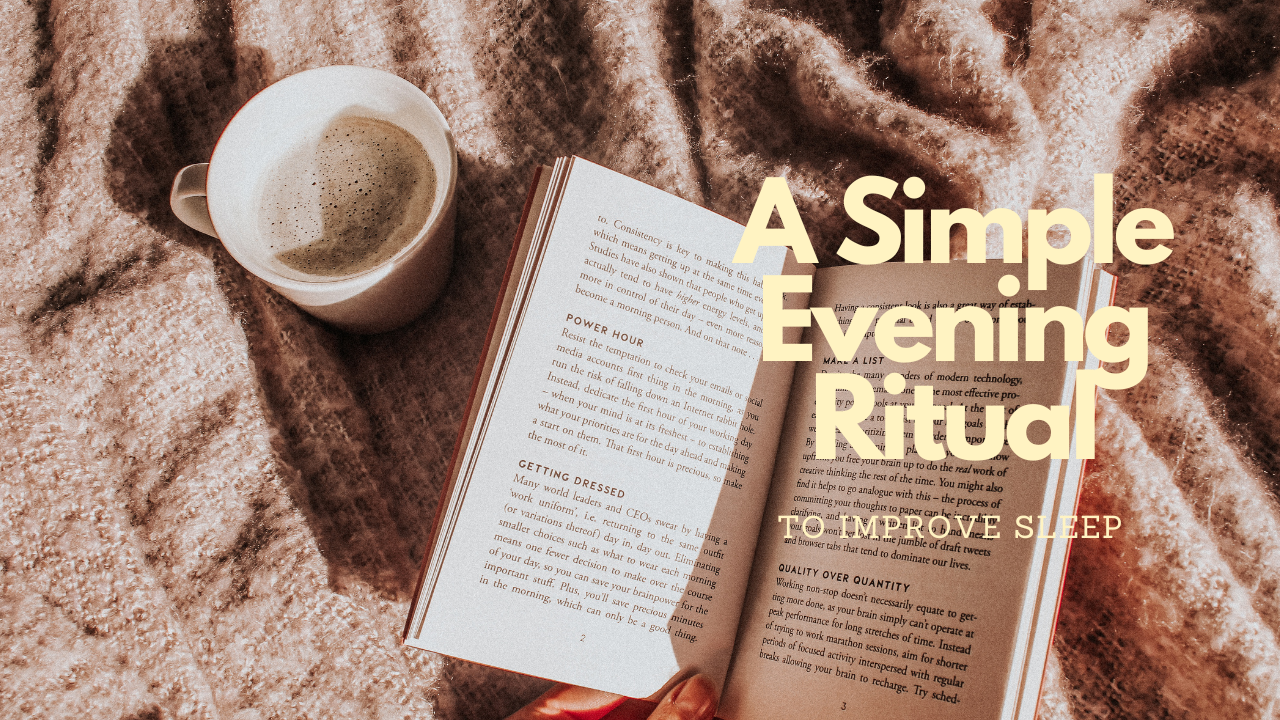
If sleep feels lighter, broken, or unpredictable in midlife, it is not because your body has forgotten how to sleep.
It is because it no longer responds well to abrupt transitions.
Perimenopause and menopause change how your nervous system, brain chemistry, and stress hormones behave in the evening. Falling asleep now requires a different approach.
Not more effort.
More rhythm.
A simple evening ritual can make a measurable difference. And it works not by forcing sleep, but by preparing your body for it.
Why sleep gets harder in midlife
As estrogen and progesterone fluctuate, several sleep related systems are affected.
Progesterone has a calming, sedative like effect on the brain. As it declines, the nervous system becomes more alert at night.
Estrogen influences body temperature regulation and serotonin. Changes can lead to night waking, restlessness, and early morning wake ups.
Add stress, late eating, screen exposure, and busy evenings, and the body never fully shifts into rest mode.
Sleep problems are often a regulation issue, not a bedtime issue.
The science of falling asleep
Sleep begins before you get into bed.
Your brain looks for signals that it is safe to power down. These signals include
• Consistent timing
• Lowered light exposure
• Warmth followed by cooling
• Slower breathing
• Reduced cognitive stimulation
When these cues repeat night after night, the brain starts releasing melatonin earlier and more efficiently.
This is why rituals matter more than hacks.
The simple evening ritual that works
This ritual takes about 15 minutes. Consistency matters more than duration.
Step one Change the light
Around 60 to 90 minutes before bed, dim overhead lights and switch to lamps.
Lower light signals the brain that daytime activity is ending. This supports melatonin production.
Step two Warm the body
Have a warm shower, bath, or even a cup of herbal tea.
Warmth causes blood vessels to dilate. When you cool down afterward, your core body temperature drops. This drop is a powerful sleep cue.
Step three Slow the breath
Sit or lie comfortably and breathe slowly through the nose.
Inhale for four seconds.
Exhale for six seconds.
Longer exhales activate the parasympathetic nervous system, which tells the brain it is safe to rest.
Just three to five minutes is enough.
Step four Same final action every night
Choose one gentle, repeatable activity
Light stretching
Journaling one or two sentences
Reading a familiar book
Prayer or reflection
This final step becomes a psychological anchor. Over time, your brain associates it with sleep.
Why this ritual improves sleep quality
This sequence lowers cortisol, supports melatonin release, and reduces nervous system arousal.
You are not forcing sleep.
You are removing the barriers to it.
Women who struggle with sleep often try to fix the night while ignoring the transition into night.
Ritual creates that transition.
Common mistakes to avoid
• Waiting until you feel tired to slow down
• Scrolling to relax the mind
• Doing intense workouts late evening
• Eating heavy or sugary foods close to bed
• Changing routines every night
The brain loves predictability. Sleep improves when evenings become familiar.
If nights are still restless
This ritual is foundational, not a cure all.
Sleep is also influenced by blood sugar stability, daytime light exposure, movement, caffeine timing, and stress load.
But without an evening ritual, those changes struggle to stick.
Think of this as the doorway into sleep. Not the entire house.
The takeaway
Better sleep in midlife does not come from trying harder.
It comes from creating safety and rhythm for a changing nervous system.
A simple evening ritual works because it speaks the language your body understands now.
Stay connected with news and updates.
Join our mailing list to receive the latest news and updates from our team.
Don't worry, your information will not be shared.
We hate SPAM. We will never sell your information, for any reason.